
When I first got an iPhone in 2008, I remember checking out web apps, which were basically websites that I would keep bookmarked on the home screen. Every time I opened them up, they somehow didn’t look like I just launched mobile Safari. Eventually, Apple launched the App Store in July 2008, mostly eliminating the need for antiquated web apps.
Since the App Store opened up, we’ve gotten to see innovative new apps and games that took our iPhones to a completely new level — showing us what our devices were capable of. I was excited to see and hear about new apps for a variety of things, from task managers to camera replacement apps to photo editors to journals and so much more. Games were also making use of the iPhone’s accelerometer and gyroscope sensors, so it wasn’t just always about touchscreen controls.
Back then, you could easily find “lite” versions of apps and games that allowed you to try them out before you even considered the full version. A lot of titles had a price tag ranging from $1 to $5 or more, depending on what the developer thought their work was worth (remember the “I Am Rich” app that cost $1,000 to show you could afford it?).
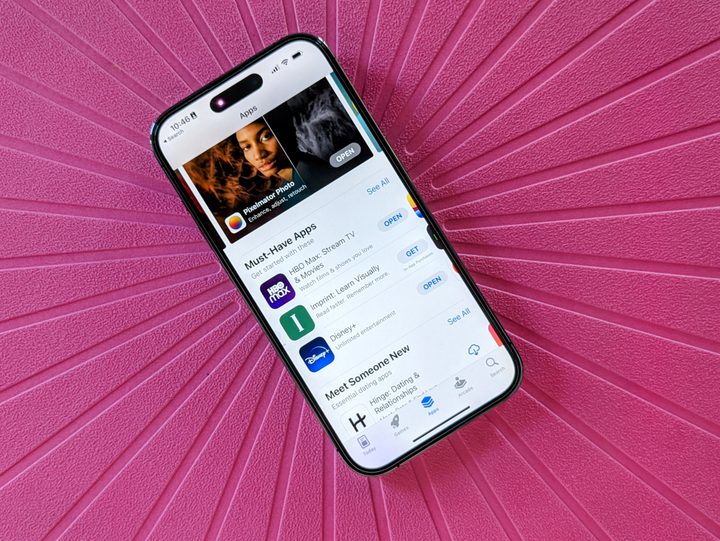
If you take a look at the App Store nowadays, you’ll find most apps and games are “free,” but the moment you open them, they’ll pester you with a subscription model of some kind. It’s something that litters countless apps in 2022. I’m so over the subscription-based business model, and I know I’m not the only one.
Let me pay once for an app and be done with it

If you take a look at the App Store or Google Play, you will find endless free apps and games to choose from. And I’ll admit, there have been a lot of apps that actually look good from a UI perspective, which is one of the main things I look for in software. But then I open it up only to be bombarded with some kind of prompt for a monthly or annual subscription — and I just “NOPE” right on out of there and delete the app. Other times I will look at an app listing and see that there are dozens of various in-app purchases for every little feature, and I know they’re just nickel-and-diming users. That’s also a big red flag for me.
I miss the days when I could just pay once for an app or game and then use it forever, as long as it was on my device or was downloadable from the app store I downloaded it from. When it was an app that I knew I would get a lot of use out of daily, like Fantastical or Things, I didn’t mind paying upward of $50 (or more) to have those apps on my iPhone, iPad, and Mac, as these were apps I used daily to make my work life easier.
Of course, developers put major work into their apps, especially for the next major versions. As long as the new version added a lot of big new features, I also didn’t mind paying again for the latest version of their app that I’dbeen using for the past year or longer.
However, the days of pay-once-and-use-forever apps are long gone. It’s rare to find them nowadays, so I’m actually a little surprised when I encounter them every so often. I miss those kinds of apps terribly, but I understand that this method was not sustainable in the long run for the people who worked on the software.
Subscriptions make sense in moderation

As I’ve continued in my career, I’ve come across some software that I just can’t do without, especially on my iPhone 14 Pro. Some examples include Fantastical, 1Password, Things, Ulysses, Tweetbot, and more. When it’s something that I see value in using every day to make my work or personal life easier, I don’t mind paying the subscription fee. After all, some things really are worth it (for me), and if you spread the cost out over the course of a year, it’s negligible.
But if it’s something that I only need every now and then, I’m much less inclined to subscribe. For example, if I’m looking for an iPhone app that has Google Pixel Magic Eraser functionality and find out that I need to subscribe to even get into the app itself, then I’m just going to delete it and look elsewhere.
Again, I don’t see an issue with subscribing if it’s something that is invaluable and can’t be replaced in my workflow. But there are always alternatives that I can look for, though it just seems like more and more developers are going the route of subscriptions these days — and I simply can’t keep up.
All of those monthly charges add up
A lot of the subscriptions I see are just a few dollars a month, or maybe upward of $50 for an entire year. When you look at these numbers just by themselves, it may not look like much, and really, it’s not. But when everything comes with a subscription, do you really need that email app that costs $5 a month? Or the calendar app that is asking you for $5 each month for some extra features that you may not even use?
And it’s not just subscriptions for apps. We already have other monthly payments for things like cell phone service, maybe several streaming services for music and video, cloud syncing and storage solutions, and whatever else. All of these monthly payments are exhausting, and it just feels like everything is moving to a subscription-based business model lately. Something’s got to give.
I don’t enjoy apps the way I used to
Many years ago, I got my start in the industry by reviewing mobile apps and games for iOS. I remember I loved seeing whatever hot new app just released, and I was eager to grab a copy and check it out myself.
It’s different now. Most apps today are now very similar to something that I’ve already used before — innovation is rare to see, and everything is pretty much a reskin of something else. And it’s just so disappointing when I launch a new app that does pique my interest, and I see a pop-up on the first launch talking about in-app purchases or subscriptions.
I used to download and try multiple news apps on a weekly or even daily basis. Now, I’m super selective about what I download, and I’m lucky if I even grab something new each week (I don’t count Apple Arcade games because that’s a separate thing). I know I’m not alone on this either, right?
I loved finding and discovering new apps — it was a part of the reason why I loved having a smartphone, such as the iPhone. Now, almost everything needs a subscription to use, and it’s just ruining my overall smartphone experience, especially on iOS. There has to be a better way. Right?


