
Smartphone apps have truly come a long way in terms of convenience and versatility. From facilitating conversations and accessing cutting-edge AI tools like ChatGPT to keeping track of human health, their scope is only limited by human imagination. One such class of useful apps is those that identify plant species by just focusing the phone’s camera on a shrub or tree, clicking a few pictures, and identifying it against an online database.
These apps can prove to be a savior, especially if you are out there in the wild and seek to double-check before snacking on a few unidentified wild berries. However, research suggests that even some of the most popular plant identification apps can falter — something that can quickly escalate into a life-threatening scenario if the misidentified plant species contains toxins.
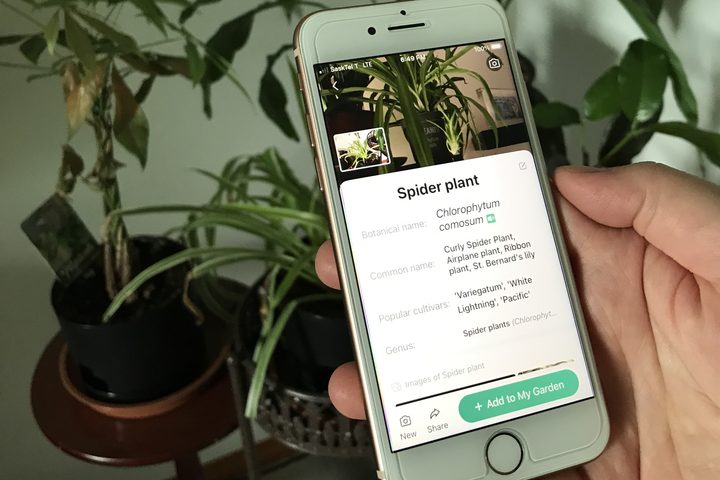
Researchers from the University of Galway and the University of Leeds analyzed six well-known smartphone apps that claim to identify plants. In doing so, they found that even the best of the lot could only achieve a peak accuracy of 80% to 88%.
“This is of particular importance when we consider people trying to identify a plant that an animal or young child may have ingested — how sure can you be that your app is giving the right identification,” notes Dr. Karen Bacon, a member of the research team.
As part of their analysis, the research team tested these smartphone apps on 38 species of herbaceous plants. What they found was that the results of plant identification vary considerably with each app. Plus, they were less effective at identifying a plant variety from a photograph of leaves compared to photos where flowers are visible. Imagine trying to identify a plant that is not blooming at that particular time with one of these apps!
Don’t entrust your life to these apps.
The six apps tested by the team were Leaf Snap, PlantNet, Seek, Plant Snap, iNaturalist, and Google Lens, all of which were installed on a Samsung Galaxy A50 smartphone. The research paper, published in the PLOS ONE journal, notes that none of the apps “achieved a highly consistent level of accuracy.” Plus, there is no proper expert-driven and widely-accepted vetting system to test and certify these apps.
On a general note, Google Lens performed fairly well, while PlantNet proved to be the most accurate one in the niche. The overall conclusion, however, is that these apps should be treated more like a secondary method for plant identification and should not be assumed to be fool-proof — especially if there is even an iota of doubt that a particular plant species might be toxic or harmful to any given extent.


