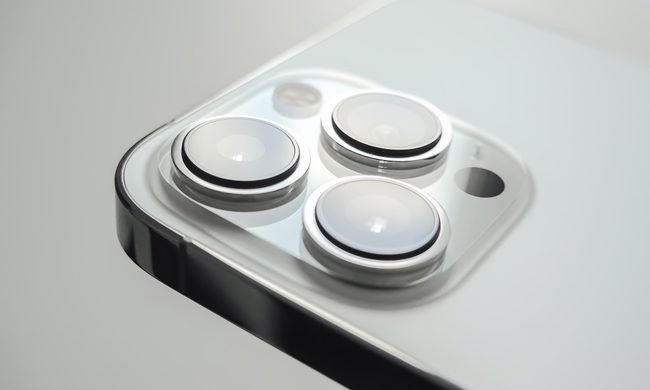
“The Sony Xperia 10 Plus feels great in your hand, but the camera disappoints.”
- 21:9 aspect ratio screen is immersive
- The slender body is comfortable to hold
- Speedy performance
- Limited 21:9 content
- Poor camera performance


“Why you can trust Digital Trends – We have a 20-year history of testing, reviewing, and rating products, services and apps to help you make a sound buying decision. Find out more about how we test and score products.“
Smartphone screens are getting bigger, and bezels are getting smaller. That is, unless you’re Sony, where bezels are staying about the same and screens are getting longer. The Xperia 10 Plus has a 21:9 aspect ratio, and although it measures 6.5-inches, the slender shape makes it considerably more comfortable to hold than a phone with a more traditional aspect ratio and this size screen.
Why does it have this unusual ratio? Sony said it’s better for multitasking; it can show a greater amount of text on the screen at one time; and it delivers a more immersive movie viewing experience. Is it successful? Moderately, but the benefits aren’t enough to make the Xperia 10 Plus a truly desirable phone, despite the reasonable price.
Elongated design
To give you an idea of the Xperia 10 Plus’ size, the iPhone XS Max has a 6.5-inch screen, and measures 157mm long, 77mm wide, and 7.7mm thick. The Sony Xperia 10 Plus also has a 6.5-inch screen, but is 167mm long, 73mm wide, and 8.3mm thick. The 21:9 aspect ratio screen makes the phone longer, and thinner. At first, it’s quite jarring, and the screen feels almost restrictive. The style has grown on me though, and it stands out on a table of “standard” phones.


It has a plastic rear panel with a metallic finish, and Gorilla Glass 5 over the screen. The phone gets covered in messy smudges, and looks ugly. The black model pictured in our review is also the least attractive of the colors — the silver, blue, or gold versions are far more special. The camera bump is thick, and rests against any surface the phone is on. Another consequence of the longer-than-usual phone is the way it fits in your pocket. Expect to feel it more, and sitting down with it still in your front pocket makes it feel like the phone may bend. It never did, but the fear is there.
There is no SIM removal tool needed on the Xperia 10 Plus, but a pull-out tray instead that accepts two SIMs, and a MicroSD card. This is convenient, but the phone does restart when the SIM tray is removed, making it unwise to absentmindedly play with it. Another quirk is the side-mounted fingerprint sensor, set in-between the sleep/wake key, and the volume keys. The fingerprint sensor is fast, and falls neatly to thumb when you pick up the phone. But the sensor’s placement makes setting up additional prints — especially from your left hand — a pointless endeavour, as it’s plain awkward to use with anything other than your right hand thumb.
The major advantage of the slender frame is it’s easy to grip the phone, even with small hands.
The major advantage of the slender frame is it’s easy to grip the phone, even with small hands. It’s one of the most comfortable phones to hold, and while the length of the phone takes a short while to get used to, it’s a joy once you get the hang of it. You’ll wish more phones adopted the style, and that 21:9 content was easier to find and more plentiful, a problem we’ll come back to shortly.
The volume and sleep/wake keys are very small, and closely recessed against the body making them easy to miss. I often found myself feeling around for the volume button, as it’s flush against the body. It’s frustrating. On the bottom of the phone is a USB Type-C charging port, flanked by two speaker grills. Only the one on the right actually has a speaker behind it. On the top of the phone is a 3.5mm headphone jack.
Provided you choose the right color, the Xperia 10 Plus looks attractive and like few other phones available — a welcome trend for 2019, generally. There are some quirks, but none are deal breakers. The Xperia 10 Plus may not be made of metal or glass, but it definitely has a high quality air about it. It’s solidly made, understated, and isn’t a crowd-follower.
21:9 screen
Sony’s right about the 21:9 aspect ratio being great for watching widescreen films. It really does look excellent, but you’re still going to have to live with a bezel at the top of the phone, and minimal bezels around the side and bottom too. The Full HD+ resolution is expected today, but the LCD panel does have its drawbacks. There’s no always-on display, for example, and it’s not as colourful or as high-contrast as an OLED screen.
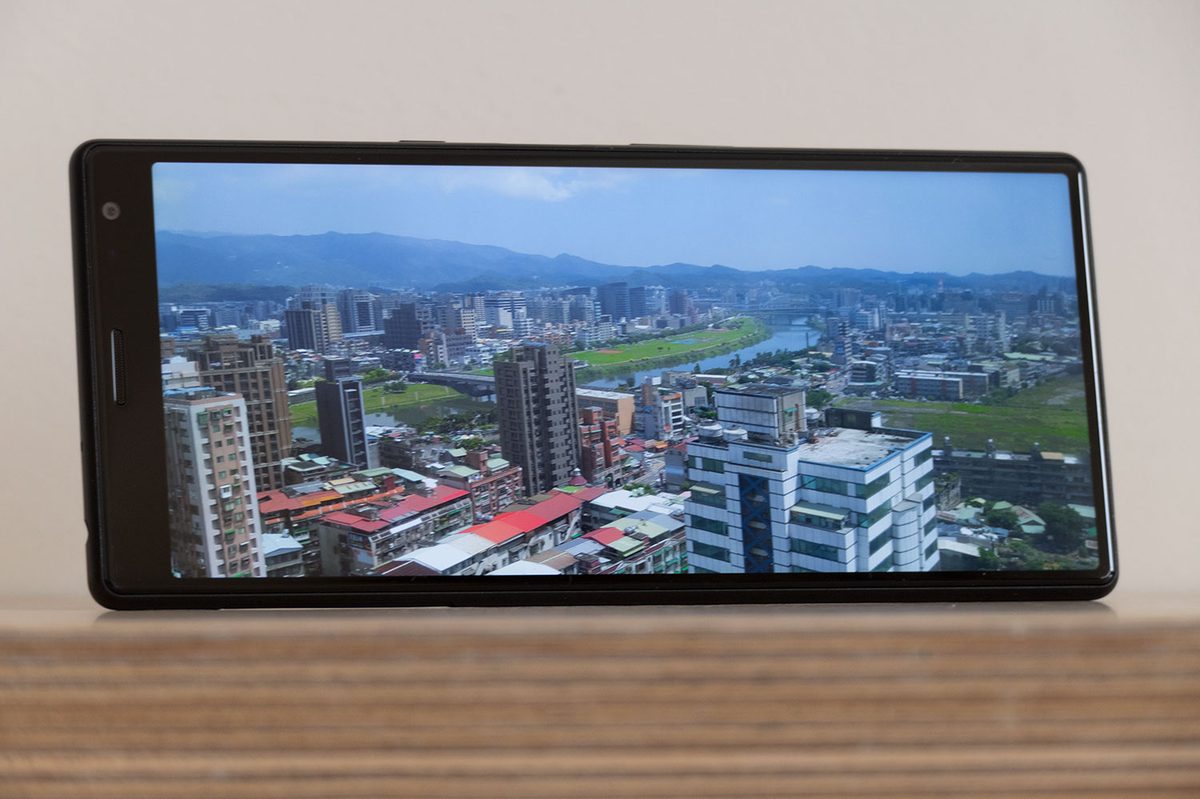
But the real problem is the relative lack of 21:9 content. Search YouTube and you’ll mostly find trailers. Netflix is a good source of movies in the ultrawide format, and Guardians of the Galaxy vol.2 looks awesome. Claims of being immersed in the video are not overblown. There’s a good reason cinematographers have embraced the format over the years. Sadly, I didn’t find any non-movie content in the format.
Sony’s right about the 21:9 aspect ratio being great for watching widescreen films.
When you’re watching non-ultrawide video, there are bars down either side of the video, and the viewing benefits of the 21:9 screen completely disappears. The long screen does work well for multi-tasking, which is activated using a shortcut button when you long-press an app icon. However, there isn’t a giant difference between split screen app use on the Xperia 10 Plus and other big-screen phones. It’s the same with text-heavy apps, or reading web content. Yes you get more on one screen, but not enough that it makes the phone indispensable.
Performance and software
A Snapdragon 636 is Sony’s processor or choice for the Xperia 10 Plus, along with 4GB of RAM. It’s a mid-range smartphone, but never feels underpowered or sluggish. It’s perfectly acceptable for general use. Browsing Twitter, using Instagram, playing music, and other everyday tasks are carried out without a problem.
Gaming is not so great. The screen is excellent — Riptide GP: Renegade is just as immersive as any movie — but the phone doesn’t have the guts to handle high frame rates, or graphically-intensive games. Casual games are acceptable though. Here are the benchmark results:
⦁ AnTuTu 3DBench: 67,705
⦁ Geekbench 4 CPU: 1,338 single-core; 4,940 multi-core
⦁ 3DMark Sling Shot Extreme: 933 (Vulkan)
This beats its smaller sister phone, the Xperia 10, and the results are all close to the Nokia 7.1 — its main rival. For about $100 more, the OnePlus 6T obliterates it though, thanks to a superior processor.
It has Android 9.0 Pie with Sony’s own simple user interface over the top, which doesn’t deviate far from the visual experience you get on a Google Pixel 3, or Android One phone. Sony has a handful of pre-installed apps, from Netflix to its own Xperia Lounge store, plus has added a helpful on-screen shortcut button it calls Side Sense. Tap this and frequently used apps fall easily to hand, or swipe down on it to go back. It’s really helpful for one-handed use, which is already an Xperia 10 Plus strong point.


It’s the camera app that suffers, with a slow shutter speed, and also the gesture control system is overly sensitive. Swipe up to access the running apps, and it’s too easy to bypass this and open the app tray. Otherwise, the software is good, and it’s great to see a major manufacturer edging away from complex user interfaces and own-brand assistants. Google Assistant is available with a long press of the home button.
Disappointing camera
Sony’s camera on the Xperia 10 Plus is a disappointment, and not just because of the slow shutter. The photos it takes are often drab and without vibrancy, unless conditions are absolutely perfect. Show it blue skies and epic scenery, and it’s solid, but the photos can still lack detail. Show it an overcast day in England, and the results somehow make even the least inspiring conditions even more depressing.


There are two lenses on the back — a 12-megapixel camera with an f/1.75 aperture, and an 8-megapixel telephoto with an f/2.4 aperture — which provide both portrait shots and a 2x zoom feature. The portrait mode is dimwitted, and struggles to find its subject, with endless recommendations to move closer or further away, without ever focusing. It’s better with faces than objects, but neither are great experiences. When it does capture a subject, edge detection is good.
For selfies it has an 8-megapixel, f/2.0 camera. It doesn’t enjoy bright backlighting, and washes out colors. However, it’s good at capturing facial details.

To match the 21:9 aspect ratio screen, you can shoot photos and video in 21:9. It’s like taking photos in a closely cropped wide-angle format, and for stills it’s creatively restrictive. Photos of vistas look excellent; but almost everything else suffers because of the tight field of view. It works better for video, if you’re going for a very cinematic look, but you need understanding of the format and its benefits to make the most of it. If that’s you, then the rest of the Xperia 10 Plus’s camera may be a let down.
Battery
One day at the most is what to expect from the 3,000mAh cell inside the Xperia 10 Plus. Heavy use from 7 a.m., with games, photos, and at least four hours of screen time saw the battery require a recharge by 10pm.
Use Ultra Stamina mode and a day’s worth of use will become five days.
Light use is more successful, and there are various battery modes to stretch out the standby time, if you’re prepared to make some sacrifices. Stamina Mode turns off location services when the phone is sleeping, dims the screen, and restricts background data collection. Use Ultra Stamina mode and a day’s worth of use will become five days, but you can only use a selection of key apps, and no data services at all.
Price, warranty, availability
You can buy the Xperia 10 Plus for $430 in the U.S, through Best Buy, Amazon, B&H Photo, and others. In the U.K., it costs 350 British pounds through Sony or the GiffGaff network. The warranty covers defects in design and materials for a single year in the U.S., and two years in the U.K..
Our Take
Its slender frame makes the Xperia 10 Plus a joy to hold, and the operating system’s clean style is a pleasure to use; but the camera disappoints, and there simply isn’t enough 21:9 content out there to make the most of the screen.
Is there a better alternative?
Yes. Although you will pay a little more, the OnePlus 6T (or the OnePlus 7, expected soon) for around $550 is a much better smartphone. It has more power, a better camera, and a longer lasting battery. If you’d rather spend less, the Nokia 7.1 is our choice, with a strong design, Android One, and a good camera (it’s only $350). You could even save money and go for the $300 Motorola Moto G7.
Alternatively, in the U.K. the 450 British pound Honor View 20 is a great smartphone — look out for an Honor 10 (which costs 400 British pounds) replacement in the near future too — and the Pocophone F1 still offers strong value.
How long will it last?
The Xperia 10 Plus is not water resistant, but the plastic body should be more durable than one made from glass. It is not a flagship device, and therefore won’t remain competitive in terms of performance for the three years we’d expect from one with a higher price today. However, if you aren’t a heavy user, then it should serve you well for a couple of years.
Should you buy one?
No. The 21:9 aspect ratio screen is interesting, and makes the phone thin and highly usable, but the lack of video content available for it, and disappointing camera performance doesn’t help boost its appeal. Shorter than preferred battery life, and a price that brings more superior devices into view, makes it hard to recommend.