  1. Home
  2. Phones
  3. Android
  4. Apple
  5. Mobile
  6. News

Digital Trends may earn a commission when you buy through links on our site. Why trust us?

Verizon undercuts its own lowest price with 2GB postpaid plan for $40 a month

Add as a preferred source on Google

Verizon, apparently not content with introducing one disruptive data plan, introduced another this week. On Monday, the U.S.’s largest carrier announced a new postpaid option that starts at $40 a month — a full $10 cheaper than the lowest-priced plan it previously sold.

The plan is relatively no-frills, as you might expect. Customers, who pay upfront, get unlimited texting, calling, and 2GB of data per month, down slightly from the 5GB offered on its $50 prepaid plan.

Recommended Videos

That’s significantly less expensive than Verizon’s postpaid subscription plans. The cheapest, which starts at $55, includes 2GB of data per month. And it comes with benefits like Always-On Data, which allows you to download files at a reduced rate of 128kbps after you’ve exceeded your data cap, and CarryOver data, which lets customers roll over unused data for one month.

But it’s more expensive that comparable plans from its biggest competitors. Sprint’s Boost Mobile prepaid brand offers a 2GB plan for $30 a month, while AT&T’s Cricket Wireless and T-Mobile’s MetroPCS sell 1 GB tiers for $30. T-Mobile offers $40 a month for 3GB and an unadvertised $50 a month for 5GB. And AT&T offers a $40 for 4GB.

The new plan come of the heels of Verizon’s new unlimited data plan, which starts at $70 a month and includes unlimited texts, calls, plus 10GB of mobile hot spot data. It kick-started something of a trend: Last week, Sprint and T-Mobile dropped restrictions on their data plans and AT&T reintroduced unlimited data for customers who haven’t purchased a DirecTV or U-Verse package.

It’s a postpaid dichotomy, Fortune notes. Increasingly, carriers are splitting offerings into two distinct camps: Data-plus family and individual plans on the high end, and constricted data plans on the low end. T-Mobile, for example, recently eliminated its least expensive regular monthly plans, leaving customers with the stark choice of opting for unlimited plan starting at $70 a month or switching to MetroPCS.

There’s logic behind the industry’s effort — family plans and heavy data plan users are likely to spend more for a larger buckets of data. But competition’s helped to drive down prices. AT&T and Verizon reduced the price of high-data plans to bring them in line with Sprint and T-Mobile’s low-cost unlimited tiers. And now, every major carrier offers an unlimited data plan for $100 or less a month.

See more at Verizon

Kyle Wiggers
Kyle Wiggers is a writer, Web designer, and podcaster with an acute interest in all things tech. When not reviewing gadgets…
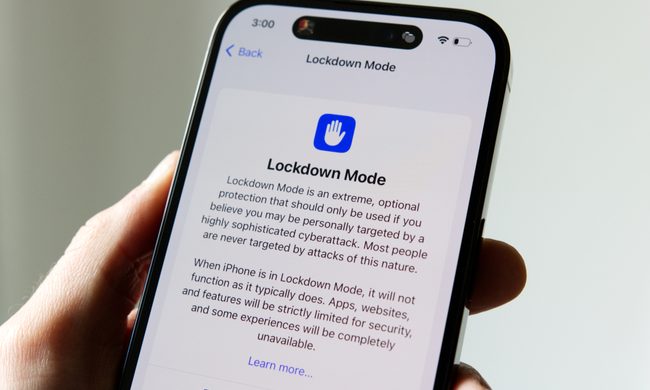
Apple says Lockdown Mode thwarted spyware attacks with a clean slate
Apple’s strongest defense is actually holding up
Lockdown Mode information page on an iPhone 14 Pro.

Apple says it has not seen a successful spyware attack on any iPhone with Lockdown Mode enabled, a claim it shared with TechCrunch.

Lockdown Mode arrived in 2022 as an opt-in feature for iPhone, iPad, and Mac. It was introduced as a stricter security mode for people at high risk of targeted attacks, such as journalists, activists, and government officials.

Read more
The Dynamic Island could shrink on the iPhone 18 series, and not just on the Pro models
One leaker, one claim, and a big question: is Apple genuinely ready to give every iPhone buyer the same design treatment as Pro owners this cycle?
Apple iPhone 17 Pro in Cosmic Orange leaning on a gray wall.

Apple’s Dynamic Island has been around long enough that most people have made their peace with it or forgotten it’s there. In fact, I’ve seen people associating the pill-shaped notch with newer iPhone models (released in the last 3 years). Now, a fresh leak suggests that the notch replacement is about to shrink, not just on the expensive models. 

What did the leaker actually say?

Read more
Apple Podcasts finally gets serious about video, adds multiple YouTube-inspired features
With offline downloads, Picture-in-Picture, and a dedicated video hub, iOS 26.4 turns Apple Podcasts into a platform creators can no longer afford to ignore.
Electronics, Phone, Mobile Phone

For years, the Apple Podcasts app supported video, at least it did technically, but nobody used it. Creators ignored it, while listeners forgot it. Meanwhile, other platforms like YouTube and Spotify quietly built empires on video podcasting. However, that changes with the iOS 26.4 update, or at least that is what Apple hopes for. 

Video podcasting exploded in popularity in recent years, with audiences gravitating toward platforms that treated the format well (as already mentioned above). Despite being an iPhone user, I personally consume podcasts on YouTube (I briefly paid for the Premium membership as well). 

Read more