
“Why you can trust Digital Trends – We have a 20-year history of testing, reviewing, and rating products, services and apps to help you make a sound buying decision. Find out more about how we test and score products.“
The EOS 80D is Canon’s successor to the midrange, enthusiast 70D DSLR. The 70D, released in 2013, was one of our favorite cameras at the time, and the 80D adds some useful improvements, such as a higher-megapixel sensor and 45-point autofocus system.
It also has an upgrade in video capture, which means this DSLR can cater to both photographers and videographers. We are currently testing the camera, but here are our first impressions.
Features and design
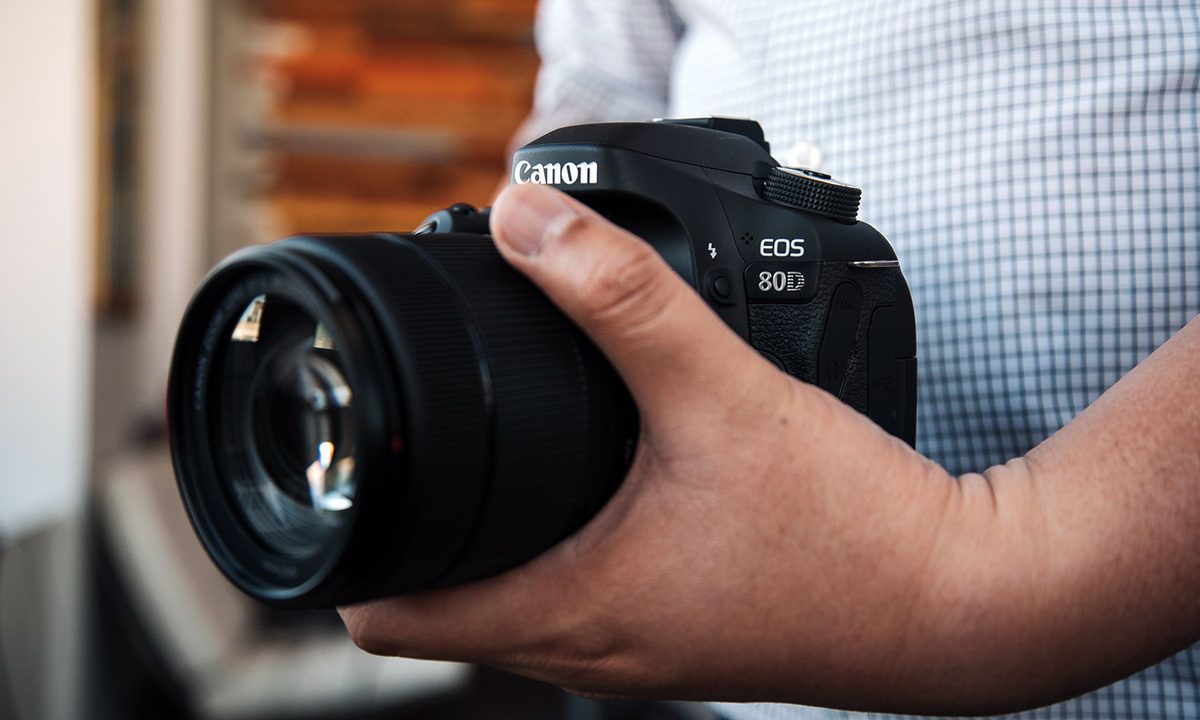
Design-wise, the 80D hasn’t changed dramatically from the 70D, and it’s your typical all-black DSLR body style. The dimensions and weight of the new camera are nearly the same as its predecessor, and we doubt you’ll notice the extra ounce. Yes, it’s bulky, but a lot of photographers like the large grip and substantial body, helping you keep the thing steady when held. You’ll feel the weight if you attach a lens like the new EF-S 18-135mm f/3.5-5.6 IS USM, but it’s surprisingly comfortable if you attach a compact prime lens. From a usability standpoint, much of what we said about the 70D is applicable here.
It may not look different, but there are significant improvements under the hood.
Only the eagle-eyed will notice the minor cosmetic changes, like some buttons on the back (quick menu, playback, delete) are now rounded. The big noticeable addition you should care about is the headphone port that’s next to the microphone jack, which is useful for shooting videos.
With the upgrade to Full HD 1080 at 60p (the 70D maxes out at 30p), Canon has improved the filmmaking capabilities. The 70D’s video resolution was one of our complaints, since the competition at the time was already at 60p. While we’re happy to see this upgrade, the competition is now touting 4K. Canon tends to take a wait-and-see approach with certain features, but the company has a great reputation when it comes to pro video, so we wish it would take the lead more often.


The big improvements are inside, namely the 24.4-megapixel APS-C CMOS sensor, 45-point autofocus system, and Digic 6 image processor (up from 20.2 megapixels, 19 points, and Digic 5+ in the 70D, respectively). The viewfinder now gives you 100-percent coverage of the frame. The 80D retains the Dual Pixel CMOS AF system, but this has also been enhanced to deliver improved speed and tracking. We liked this feature in the 70D, especially for video when you want to create smooth shifts in focus; no longer do you get focus-grabbing issues when using autofocusing in movies.
Performance and use
Overall performance is very good. Like the 70D, the 80D focuses very quickly. With the 45-point, all cross-type AF system, it covers more of the frame and performs more accurately in low light. Indeed, some low-light shots came out looking nice, with good noise control and details – even at ISO 2,000 (the native ISO range has increased to 16,000, from 12,800). The camera didn’t have any problems focusing in low light, either. Once you hit ISO 3,200 or 6,000, you’ll notice the noise washing things out, but it’s still very usable at smaller sizes.


The new 18-135mm lens, which Canon included for our review (and available as kit lens option), is very quiet when autofocusing, thanks to a new ultrasonic motor. You can barely hear it, which is key for video since you don’t want to hear the focusing motor.
Compared to a less expensive lens like Canon’s “nifty-fifty,” you’ll notice the speed and noise difference. We wish the zoom ring was less stiff, as the mic picked up that noise when we zoomed in and out. But, for shooting videos, definitely use a stronger lens with the quiet motor. And, having a headphone jack is really handy, as well. The one thing we wish it had is the ability to monitor sound levels on the main LCD screen (you have to hit the quick menu to see it, and there doesn’t seem to be a way to turn it on in the settings menu).
We’ll save our comments on image quality for our full review, after we’ve had some time with the camera, but our first impressions mirror what we said in our 70D review: Photos and videos are high-quality. Color accuracy is mostly very good, if a tad oversaturated in some cases, but nothing deal breaking or that can’t be adjusted. However, when viewed in their full sizes, the images don’t seem as sharp as we would have liked. We aren’t sure if this is an issue with the upgraded sensor or lens, so we will report back in our full review. Otherwise, when viewed onscreen or printed at 8.5 × 11 paper, images look excellent.
Videos quality is also terrific, and with the Dual Pixel AF and new lens, autofocusing is responsive and smooth. There’s some hesitation when using a cheaper lens like the aforementioned nifty-fifty, but all you need to do is to set that on manual focus and you should be fine. Having a 60p option is also useful; now, you can switch between TV broadcast-like quality (60p) or cinematic (30p/24p).
We weren’t thrilled with the 70D’s wireless connectivity. It’s better in the 80D. There still isn’t a dedicated Wi-Fi button, but you can find it in the quick menu. Initial, one-time setup (up to three mobile devices) was relatively straightforward with an iPhone 6S, although it might require some menu-drilling or referencing the instruction manual. It’s slightly faster with a Samsung Galaxy S6, since we could use NFC; you’d still need to manually connect the phone to the camera when using a Wi-Fi direct connection, however.
Once connected, you can transfer JPEG images from the camera, and control the camera remotely. Canon has done away with its various apps, and consolidated them into the Camera Connect app that works with all new Wi-Fi-enabled Canon cameras. With the app, you can change settings like ISO and white balance, select a focus area, as well as focus manually.
Initial thoughts
The 80D is a proper upgrade to the 70D, a camera we awarded our Editors’ Choice. It may not look different, but there are significant improvements under the hood, namely the autofocusing. We also like improvements to video capture, although we will need to do more testing of image quality. The 80D is a nice step-up for entry-level Canon Rebel DSLR users, but the enhancements are also worth considering if you own the 70D or other older enthusiast-level Canon DSLRs.
As we put the 80D through the review process, we will be asking ourselves: Does it have what it takes to compete against other enthusiast DSLR and mirrorless cameras? The 80D is a fine camera and a joy to use, but since the 70D, we have looked at several high-quality, highly capable interchangeable lens cameras, like the Sony A6300, for example. So far, we like what we’ve experienced, but stay tuned for our full review and second opinion.


