
The Canon EOS Rebel T5 and Nikon D3300 are the newest entry-level DSLRs from the two largest manufacturers. Both models are designed to take great photos and to be easy to operate – especially for new users who are buying a DSLR for the first time. While both cameras will satisfy the DSLR beginner, our tests found that the Nikon D3300 comes out on top.
|
Canon EOS Rebel T5 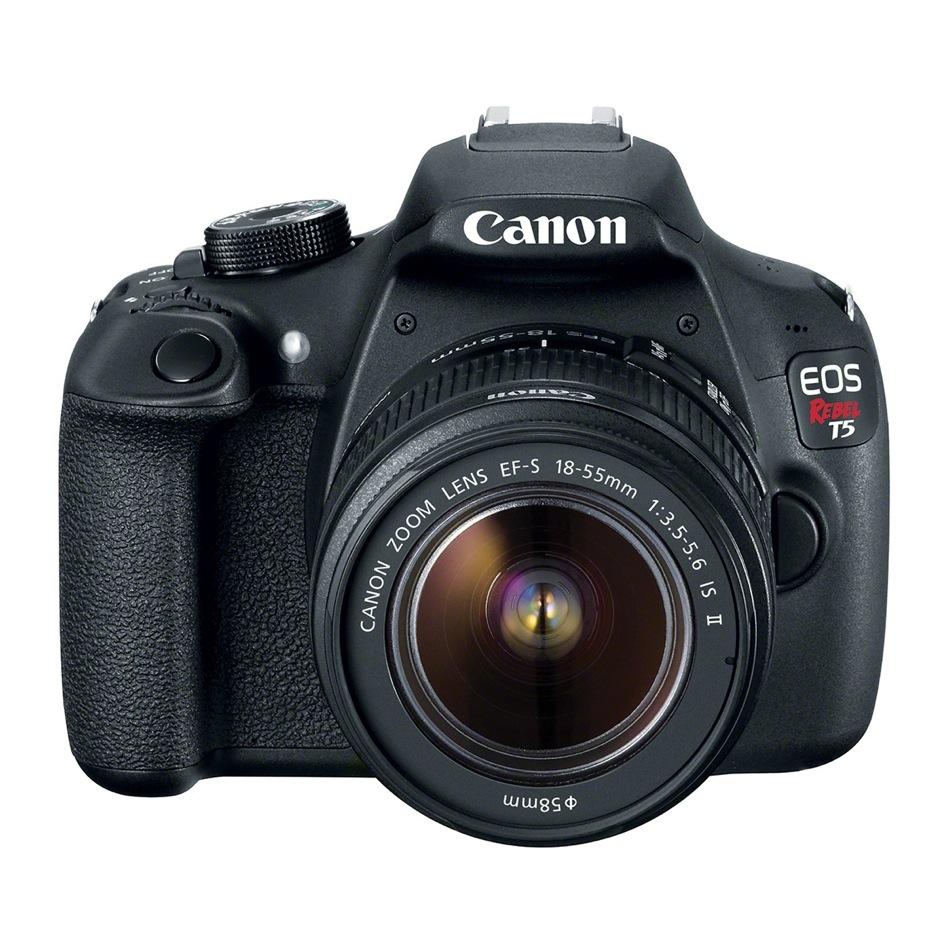 |
Nikon D3300 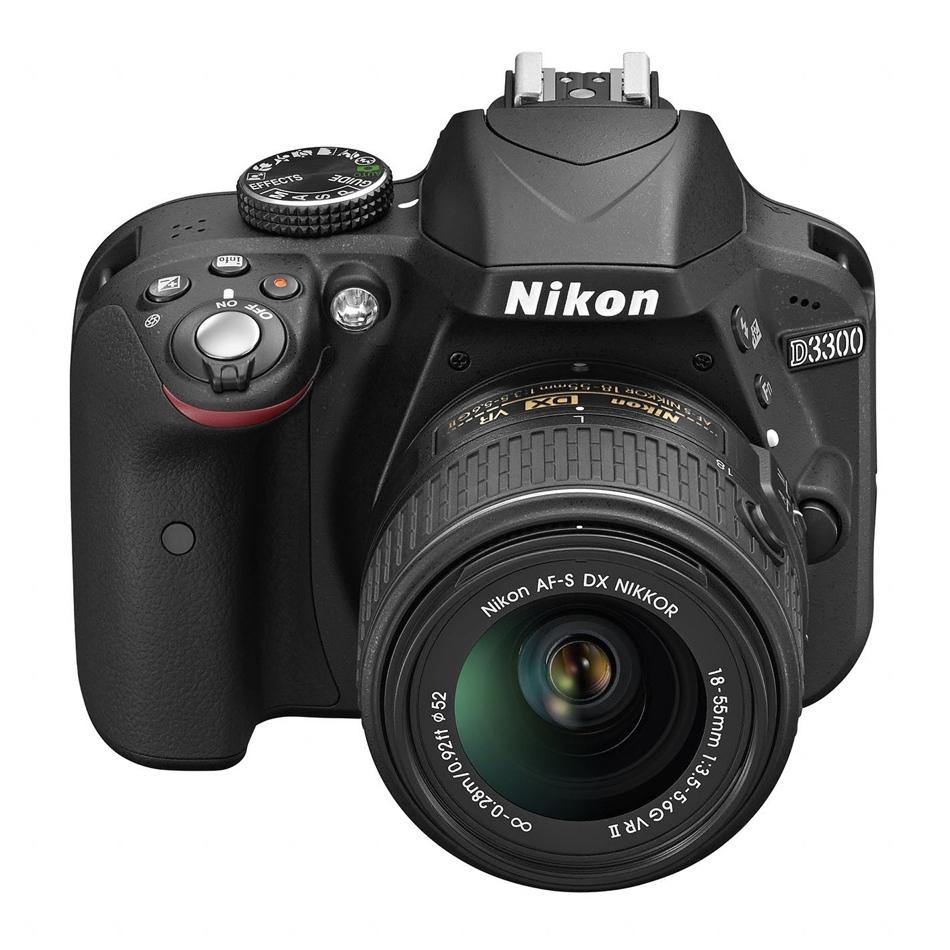 |
|
| Imaging Device | 18MP APS-C CMOS | 24MP APS-C CMOS |
| Lens Mount | Canon EF Mount | Nikon F Mount |
| Digital Factor | 1.6x | 1.5x |
| Image Processor | Digic 4 | Expeed 4 |
| Maximum Still Size (Pixels) | 5184 x 3456 | 6000 x 4000 |
| Maximum Video Resolution | 1920 x 1080/30p | 1920 x 1080/60p |
| Top Burst Mode | 3 frames per second | 5 frames per second |
| LCD Size, Pixels | 3 inches, 460,000 | 3 inches, 921,000 |
| Viewfinder | 95-percent field of view, 0.8x magnification | 95-percent field of view, 0.85x magnification |
| ISO Range (Expanded) | 100-6,400 (12,800) | 100-12,800 (25,600) |
| Shutter Ranger | 30-1/4000th of a second | 30-1/4000th of a second |
| AF System | 11-point, 1 cross-type | 11-point, 1 cross-type |
| Metering | 63-zone dual layer | 420-pixel RGB sensor |
| Connectivity | None | Optional (WU-1a Wi-Fi Adaptor, $59) |
| Microphone | Mono | Mono |
| Battery Life (Per CIPA) | 600 shots | 700 shots |
| Dimensions (Inches) | 5.1 x 3.9 x 3 | 4.9 x 3.9 x 3 |
| Weight (Body Only, Ounces) | 15.3 | 15.2 |
| Price | $550 with 18-55mm IS II kit lens | $650 with AF-S DX NIKKOR 18-55mm f/3.5-5.6G VR II kit lens |
Just based on specs alone (see above), the D3300 proves to be a stronger camera. Whereas the T5 felt like a rebadged T3 with some minor upgrades, Nikon gave the D3300 a bit more oomph. The D3300 has a new sensor that not only has a higher megapixel count, but it doesn’t use a low-pass filter, which helps it achieve better image quality. It also uses Nikon’s latest image processor, the Expeed 4, whereas the T5 is a using the Digic 4, which is about two generations behind. The D3300 also trumps the T5 in movie capture, LCD brightness, high ISO range, faster burst mode, and battery life. The T5, meanwhile, suffers from a noisy shutter mechanism and doesn’t handle high ISOs well. But the plusses for the T5 include that Canon “tone and feel” image quality we love, as well as a lower price – cost is always a deciding factor for many consumers. Both cameras get a thumbs down for their mono microphones, considering both can shoot at Full HD 1080. Although both models lack built-in Wi-Fi, it’s an option on the D3300. Compared to their respective predecessors (the T3 and D3200), the D3300 went through more of an evolution; the T5 seems like old technology. Plus, the D3300 comes in three color choices.
As for performance, we found both cameras easy to use, and both take very good photographs. Newbies would find the D3300’s handholding guides particularly helpful in learning about all the features. Surprisingly the D3300 is better at recording video, which tends to be Canon’s strength. Both cameras include 18-55mm kit lenses that are okay to start out with, but eventually you’d want to invest in new glass. Overall, in terms of features and performance, the D3300 gets our Recommended vote, even though it’s slightly more expensive. The T5 isn’t a terrible camera, but it left us wanting more. (With that said, if you’re on a super tight budget, it doesn’t hurt to look at the outgoing EOS Rebel T3.)
(Les Shu contributed to this article.)


