  1. Home
  2. Social Media
  3. Computing
  4. News

Facebook is joining Google in open-sourcing its AI hardware

Add as a preferred source on Google

Facebook is the latest in a line of tech giants that are giving away the designs of their computers servers dedicated to AI.

Built with the aid of Nvidia, the social network’s state-of-the-art server, codenamed Big Sur, can run the latest AI algorithms, and comes wielding a huge number of GPUs — built with the aid of Nvidia. At Facebook, the “deep learning” technology helps identify faces in user photos, curates the news feed, and even powers parts of the company’s upcoming “M” personal assistant, reports Wired.

Recommended Videos

But why are the likes of Google, Microsoft, and now Facebook so keen for the tech industry to get their hands on their hardware? It’s mainly due to the fact that all three companies currently don’t have the manpower to grow the technology at the pace they would like. It also doesn’t help that the entire field of deep learning researchers is still fairly small.

Facebook is hoping that by submitting its AI hardware to the Open Compute Project — a group through which it shares the designs of its computer infrastructure with other tech giants including Microsoft and Apple — it can attract more industry talent into its fold.

Yann LeCun, the man in charge of Facebook’s AI research group, believes that opening up Big Sur can help unlock design ideas for the newly created server, reports MIT Technology Review. “Companies like us actually thrive on fast progress; the faster the progress can be made, the better it is for us,” says LeCun.

In the increasingly competitive field of AI research, the recruitment process is the new battlefront for companies such as Facebook and Google. Although Google beat it to the punch by sharing its AI hardware last month, Facebook’s inception of the Open Commute Project established it as the frontrunner in open-sourcing technology. Facebook claims that this approach helps drive down costs and accelerate the growth of technology.

Saqib Shah
Saqib Shah is a Twitter addict and film fan with an obsessive interest in pop culture trends. In his spare time he can be…
Snapchat Planets Meaning: Order, Rankings, and How Friend Solar System Works
Snapchat Planets turns your best friends list into a solar system, and yes, your orbit says a lot
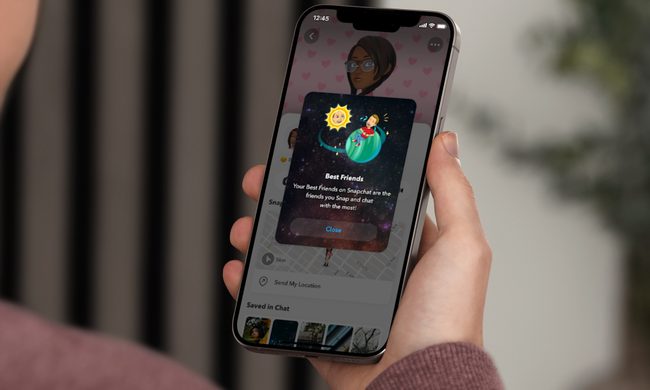
Snapchat Planets being shown on the Snapchat app on iPhone.

Snapchat+ includes several exclusive features, but few have generated as much curiosity as Snapchat Planets. Part of the app's Friend Solar System, it transforms your Best Friends list into a planetary ranking, assigning each of your top eight friends a planet based on how often you interact.

From Mercury, which represents your closest friend, to Neptune, which represents your eighth closest, the system offers a quick visual snapshot of your interactions. But what do the different planets actually mean, and how does Snapchat decide who gets which one?

Read more
Instagram lands on Samsung TVs, with episodic series and live TV coming to your screen soon
Instagram for TV adds new features for group watching.
instagram-samsung-tv

Meta just expanded Instagram for TV to Samsung Smart TVs across the US, rolling out a bunch of new features built for group viewing. With Samsung now on board, Instagram for TV has officially landed on the three biggest connected TV platforms in the country.

https://twitter.com/metanewsroom/status/2069062429821026732?s=46

Read more
TikTok’s AI slop problem is worse than you think — and kids are seeing the most of it
TikTok

TikTok has spent years perfecting the art of knowing exactly what you want to watch next. Open the app, scroll a few times, and suddenly it’s serving videos that feel uncannily tailored to your interests. But what happens before TikTok learns who you are? According to new research from video editing platform Kapwing, the answer is increasingly AI slop.

The study found that nearly 60% of the videos shown to a brand-new TikTok account were low-quality AI-generated content. That’s not a niche problem buried in obscure corners of the platform. It’s the first impression TikTok is making on new users before the algorithm even begins personalizing their feed. And if that sounds concerning, the findings around children’s content are even harder to ignore.

Read more