  1. Home
  2. Social Media
  3. Audio / Video
  4. News

Facebook now offers auto-subtitling for Page videos

Add as a preferred source on Google

Facebook has quietly rolled out its auto-subtitling function for videos to Pages in the United States.

The feature, which was released exclusively for video ads in February 2016, provides captions for English-language clips through an automated process. Facebook confirmed to TechCrunch that it began rolling out the function to Pages in October.

Recommended Videos

Video captions on Facebook are powered by voice recognition, allowing Pages and marketers to manually edit the transcriptions in case of errors. Over time, as more people use the AI-assisted subtitling system, it could develop into a powerful tool — especially since the social network itself predicts that by 2021 video will generate 70 percent of its traffic.

It’s also important to note that auto-play videos (introduced to the platform in late 2013) are traditionally served with the sound off, although that may be changing judging by the company’s tests in August.

As a result, advertisers were initially forced to create clips with hard-coded subtitles that appealed to users even when muted. Viewers could then decide whether to turn the sound on or not. Either way, eyeballs glued to a clip equal higher engagement metrics for Facebook, which equals more ad revenue.

Auto-captioning made the entire process easier for advertisers, and now too for Page admins. When a video is uploaded to a Page, a “generate” button can be selected in the video editor (or above the clip in the feed) to automatically create subtitles. The captions are then broken down for short segments of the video, so that Page admins can manually make corrections and play back the snippet to see transcriptions alongside the action on screen.

The move should appeal to small and medium-sized businesses on Facebook looking to create more promotional content, and to video creators and influencers. Facebook has not disclosed if the tool will be made available to general users in the future.

Saqib Shah
Saqib Shah is a Twitter addict and film fan with an obsessive interest in pop culture trends. In his spare time he can be…
Snapchat Planets Meaning: Order, Rankings, and How Friend Solar System Works
Snapchat Planets turns your best friends list into a solar system, and yes, your orbit says a lot
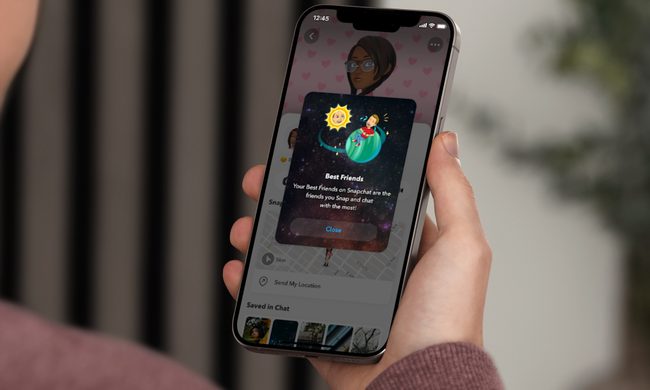
Snapchat Planets being shown on the Snapchat app on iPhone.

Snapchat+ includes several exclusive features, but few have generated as much curiosity as Snapchat Planets. Part of the app's Friend Solar System, it transforms your Best Friends list into a planetary ranking, assigning each of your top eight friends a planet based on how often you interact.

From Mercury, which represents your closest friend, to Neptune, which represents your eighth closest, the system offers a quick visual snapshot of your interactions. But what do the different planets actually mean, and how does Snapchat decide who gets which one?

Read more
Instagram lands on Samsung TVs, with episodic series and live TV coming to your screen soon
Instagram for TV adds new features for group watching.
instagram-samsung-tv

Meta just expanded Instagram for TV to Samsung Smart TVs across the US, rolling out a bunch of new features built for group viewing. With Samsung now on board, Instagram for TV has officially landed on the three biggest connected TV platforms in the country.

https://twitter.com/metanewsroom/status/2069062429821026732?s=46

Read more
TikTok’s AI slop problem is worse than you think — and kids are seeing the most of it
TikTok

TikTok has spent years perfecting the art of knowing exactly what you want to watch next. Open the app, scroll a few times, and suddenly it’s serving videos that feel uncannily tailored to your interests. But what happens before TikTok learns who you are? According to new research from video editing platform Kapwing, the answer is increasingly AI slop.

The study found that nearly 60% of the videos shown to a brand-new TikTok account were low-quality AI-generated content. That’s not a niche problem buried in obscure corners of the platform. It’s the first impression TikTok is making on new users before the algorithm even begins personalizing their feed. And if that sounds concerning, the findings around children’s content are even harder to ignore.

Read more