1. Home
  2. Social Media
  3. Computing
  4. Virtual Reality
  5. News

Facebook launches beta of interactive social virtual reality platform Spaces

Add as a preferred source on Google

Facebook unveiled its new Spaces virtual reality platform at the F8 conference in San Jose, California, on Tuesday. The project aims to take the social experience one step further, providing Facebook users with virtual environments where they can interact with their friends.

Inside Spaces, users are represented by an avatar, which can be customized. You can even choose a photograph of yourself that you like, and Facebook will pick an option that resembles you.

Recommended Videos

The experience is built around interacting with up to three friends, but there’s more to do than simply talk to one another and gawp at each other’s avatars. Users will be able to share 360-degree video content, draw with virtual markers, and, inevitably, take selfies.

Facebook users who haven’t invested in a VR headset aren’t going to be left out of Spaces entirely. You can receive a standard video call from a group of users taking part in a Spaces session, and get a window into their virtual world, avatars and all.

Spaces demonstrates why Facebook purchased Oculus for $2 billion in 2014. While much of the VR content that’s hit the scene has been akin to traditional video games, it’s clear that the social media giant sees the technology’s potential to underpin a different kind of social media.

What’s unclear is whether users will latch onto what Spaces has to offer. The footage shown at the event made it look like an amusing diversion — but not the kind of thing that warrants spending upwards of $1,000 on a compatible headset and a sufficiently powerful PC.

Anyone with an Oculus Rift headset and an Oculus Touch controller can now try out the experience. The beta version of the app is available now from the Oculus Store for free. More information, including recommended specs, is available via the Oculus website.

Brad Jones
Brad is an English-born writer currently splitting his time between Edinburgh and Pennsylvania. You can find him on Twitter…
Snapchat Planets Meaning: Order, Rankings, and How Friend Solar System Works
Snapchat Planets turns your best friends list into a solar system, and yes, your orbit says a lot
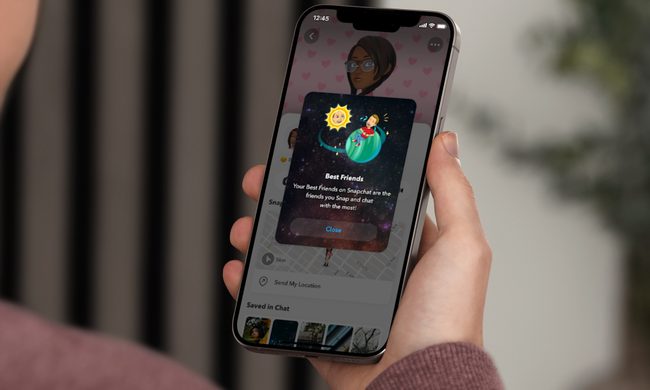
Snapchat Planets being shown on the Snapchat app on iPhone.

Snapchat+ includes several exclusive features, but few have generated as much curiosity as Snapchat Planets. Part of the app's Friend Solar System, it transforms your Best Friends list into a planetary ranking, assigning each of your top eight friends a planet based on how often you interact.

From Mercury, which represents your closest friend, to Neptune, which represents your eighth closest, the system offers a quick visual snapshot of your interactions. But what do the different planets actually mean, and how does Snapchat decide who gets which one?

Read more
Instagram lands on Samsung TVs, with episodic series and live TV coming to your screen soon
Instagram for TV adds new features for group watching.
instagram-samsung-tv

Meta just expanded Instagram for TV to Samsung Smart TVs across the US, rolling out a bunch of new features built for group viewing. With Samsung now on board, Instagram for TV has officially landed on the three biggest connected TV platforms in the country.

https://twitter.com/metanewsroom/status/2069062429821026732?s=46

Read more
TikTok’s AI slop problem is worse than you think — and kids are seeing the most of it
TikTok

TikTok has spent years perfecting the art of knowing exactly what you want to watch next. Open the app, scroll a few times, and suddenly it’s serving videos that feel uncannily tailored to your interests. But what happens before TikTok learns who you are? According to new research from video editing platform Kapwing, the answer is increasingly AI slop.

The study found that nearly 60% of the videos shown to a brand-new TikTok account were low-quality AI-generated content. That’s not a niche problem buried in obscure corners of the platform. It’s the first impression TikTok is making on new users before the algorithm even begins personalizing their feed. And if that sounds concerning, the findings around children’s content are even harder to ignore.

Read more