  1. Home
  2. Social Media
  3. Business
  4. News

IRS sues Facebook over 2010 asset transfers it made to Ireland

Add as a preferred source on Google

Facebook is finding itself in some hot water this week with the Internal Revenue Service (IRS) over some asset transfers to its Ireland subsidiary. The IRS is of course one cat you don’t want to mess with and in this case, Facebook attempted to play the ‘if we ignore it, it will go away’ strategy — leading to today’s revelation that the IRS is now suing the social network.

The crux of the issue is the 2010 transfer of business assets from Facebook USA to Facebook Ireland and the listed value of those assets. The IRS think they could have been undervalued by billions of dollars, but can’t prove it because Facebook ignored the IRS request for data and documentation related to the asset transfer.

Recommended Videos

The practice, while shady by many people’s standards, has become commonplace for U.S. corporations looking to lighten their taxable assets in the U.S. They send the assets to foreign subsidiaries, and then license those assets back to themselves, allowing them to continue using the assets without having them on their U.S. books — and taxable by the IRS.

The IRS is saying that Facebook representatives failed to show up to a scheduled appointment on June 17 to exchange the documents and answer questions about the asset transfer. It has also not provided the requested documentation to the IRS through any other method, prompting the IRS to file the suit.

“Facebook complies with all applicable rules and regulations in the countries where we operate,” a spokesperson for the company told Fortune.com. Though, in this case, at least from the IRS perspective, it appears that is not true, or at the very least that Facebook is taking its sweet time to comply with the request.

In the end, this should not have any real impact on the social network from a user perspective. Though however it plays out, the IRS is not known to take kindly to being ignored, so it will be interesting to see where things go from here.

Anthony Thurston
Anthony is an internationally published photographer based in the beautiful Pacific Northwest. Specializing primarily in…
Snapchat Planets Meaning: Order, Rankings, and How Friend Solar System Works
Snapchat Planets turns your best friends list into a solar system, and yes, your orbit says a lot
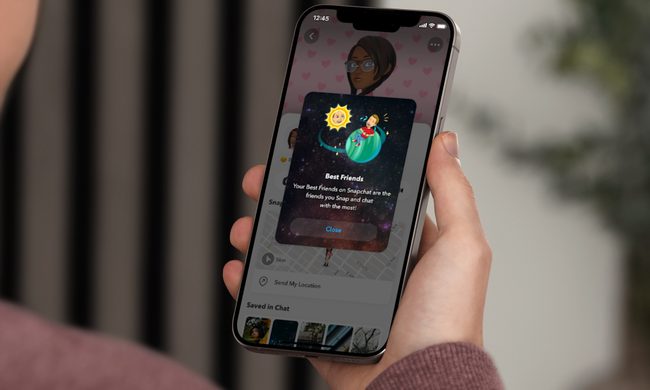
Snapchat Planets being shown on the Snapchat app on iPhone.

Snapchat+ includes several exclusive features, but few have generated as much curiosity as Snapchat Planets. Part of the app's Friend Solar System, it transforms your Best Friends list into a planetary ranking, assigning each of your top eight friends a planet based on how often you interact.

From Mercury, which represents your closest friend, to Neptune, which represents your eighth closest, the system offers a quick visual snapshot of your interactions. But what do the different planets actually mean, and how does Snapchat decide who gets which one?

Read more
Instagram lands on Samsung TVs, with episodic series and live TV coming to your screen soon
Instagram for TV adds new features for group watching.
instagram-samsung-tv

Meta just expanded Instagram for TV to Samsung Smart TVs across the US, rolling out a bunch of new features built for group viewing. With Samsung now on board, Instagram for TV has officially landed on the three biggest connected TV platforms in the country.

https://twitter.com/metanewsroom/status/2069062429821026732?s=46

Read more
TikTok’s AI slop problem is worse than you think — and kids are seeing the most of it
TikTok

TikTok has spent years perfecting the art of knowing exactly what you want to watch next. Open the app, scroll a few times, and suddenly it’s serving videos that feel uncannily tailored to your interests. But what happens before TikTok learns who you are? According to new research from video editing platform Kapwing, the answer is increasingly AI slop.

The study found that nearly 60% of the videos shown to a brand-new TikTok account were low-quality AI-generated content. That’s not a niche problem buried in obscure corners of the platform. It’s the first impression TikTok is making on new users before the algorithm even begins personalizing their feed. And if that sounds concerning, the findings around children’s content are even harder to ignore.

Read more