
Before you head out on a trip to anywhere – may it be a short walk to the local grocery store, a drive into the next city, or an all out road trip along the coast line – checking what the weather will be like through the course of the day (or next few days) is protocol if you want to be appropriately dressed, especially with the wintry months coming up. Another thing to be wary of in the next few weeks is the fact that it’s essentially flu season: If you’re not suitably-clothed or are not beefing up your immune system with a healthy diet and regular exercise regimen, you can easily be bogged down by something as simple as the common cold. That’s where Sickweather hopes to come in.
The concept of the site is pretty simple. It relies on the fact that countless people like to illicit sympathy for their illness on social media sites, where posts like “Ugh I hate being sick” or “my son has chickenpox” are common.
i have the stomach flu #SOS #SENDHELP
— Katherine Wheeler (@katiewheelerr) October 7, 2013
Using an algorithm they developed, Sickweather scours Facebook and Twitter for posts that contain sickness-related keywords and location information and plots them, creating an illness map of sorts. The idea is to give you an “under the weather” forecast so that you may avoid getting sick yourself.
Sickweather currently tracks more than 20 common illnesses, including allergies, cough, and sore throat. If you’re hoping to avoid getting sick, you can visit the site and see which viruses are prevalent near your area. You can connect your Facebook and Twitter accounts and find out which of your friends are out of commission – send them a quick “Get well soon!” post while you’re at it.
If you feel like you’re coming down with something, you can also go directly to the site and anonymously answer, “How are you feeling today?” If your symptom doesn’t match any of the illnesses already being tracked by Sickweather, suggestions will be automatically generated to improve your report so it can be plotted into the map.
Site breakdown
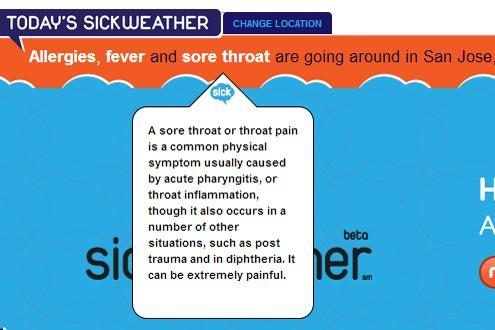
Sickweather immediately detected my location and has summarized in a nutshell what viruses are going around my town. Hovering over terms provide a brief description of the ailment.
An orange polygonal shape on the Sickweather map denotes “storm activity”, or an event when users from the same vicinity all report similar symptoms at approximately the same timeframe.
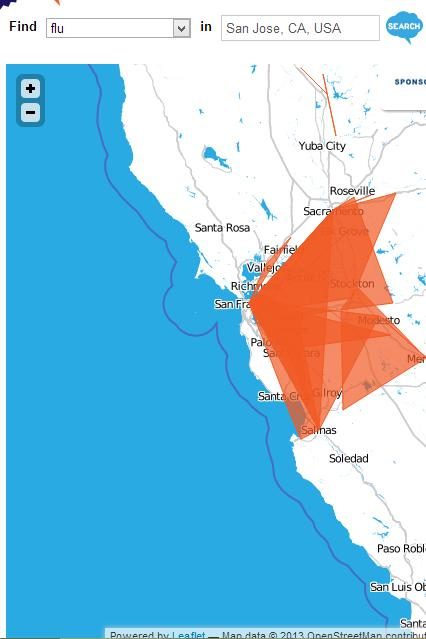
Zooming in on a storm activity will reveal more information, ending with a view of individual reports on street level.

Users can also sign up for alerts, at a monthly rate of $1 per illness.

Sickweather – which has been in beta status since launching in 2011 – is reportedly coming out with a smartphone app within the next month or so, featuring a one-of-a-kind “geosensing” function that alerts users when they are about to go into an area that has had various reports for sicknesses.
Why it might not work
While it can’t be denied that data scavenged from social media is about as real-time as you can get – official information regarding illnesses need to go through channels of verification before actually being put up on the Web – digging for disease data on sites like Facebook and Twitter is not a perfected science. Sometimes, sick people are too sick to post about…being sick. If it were me feeling puke-y with an anvil-like head, I know being in front of the glare of my laptop or phone is something I would like to avoid at all costs.
Any algorithm that scans for keywords may incur issues relating to context – I connected my Facebook account to find out which of my contacts are currently sick, and Sickweather detected a post by a friend congratulating someone for beating cancer. Yes, cancer is a serious disease, but I don’t have to worry about accidentally contracting it, do I?
Sickweather is a helpful tool – the company’s official blog says that it has been actively tracking social media reports for chickenpox since 2011 and was reportedly able to predict last year’s flu epidemic a good six weeks before the Centers for Disease Control and Prevention officially confirmed it – but just to be on the safe side, the data gathered by the site ought to be used only when paired with comprehensive information verified by the right health authorities.
So by all means, use the site’s warnings, but don’t go all bubble boy on us quite yet.


