  1. Home
  2. Social Media
  3. Web
  4. Legacy Archives

Walking the plank: Meme causes man to fall seven stories

Add as a preferred source on Google

planking 2 via facebook.com/planking20-year old Acton Beale is the latest (perhaps only) casualty of the odd pastime known as planking, or the lying down game. Beale plummeted from a seventh story balcony in Brisbane while attempting to plank on a two inch wide railing. His death has prompted Australian prime minister, Julia Gillard, to call for a ban on the extreme aspects of the activity. She said the incident was “really tragic”.

Planking began life as a meme in 2006 and become more popular on Facebook around 2009, though it has frequented other social networking sites. Plankers lie face down on their stomachs with their hands at their side and their feet pointed down, like a rigid plank, and have their pictures taken in this awkward position. They then upload the photo onto Facebook. The more public, more awkward looking and dangerous the position the better.
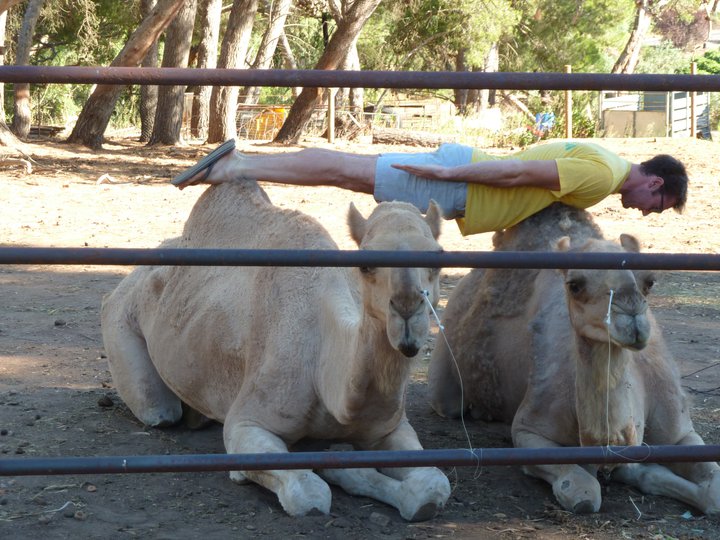
planking 1
Image used with permission by copyright holder

Queensland police fear that the rise in planking’s popularity will trigger more injuries and possibly more deaths. The Australian planking Facebook page jumped from 116,000 fans to 145,000 after the Australian prime minister made her announcement, and there has been a “global spike in the numbers of those trying out the trend,” according to the Herald Sun.

Recommended Videos

Beale’s death happened less than a week after an Australian man was arrested for planking on a police car, but law enforcement isn’t being too strict on the activity as long as plankers aren’t being stupid.

Police deputy commissioner Ross Barnett said, “If you want to take a photography of yourself planking on a park bench two feet off the ground, there are no risks to your health with that. But..when you start doing it seven stories up or lying across a railway line or in a range of other places that invite death or serious injury, that’s what we have a concern about. ”

Jeff Hughes
Former Digital Trends Contributor
I'm a SF Bay Area-based writer/ninja that loves anything geek, tech, comic, social media or gaming-related.
Tinder wants to check your humanity by gazing into an orb. Yes, you read that right
Staring into an orb to prove you are human is no longer science fiction.
tinder-world-id-human-verification

Online dating is already a trust minefield, and now Tinder wants to add an eyeball scan to the mix. The popular dating app has announced a global partnership with World, the biometric identity company founded by OpenAI's Sam Altman. To prove you are a real human on Tinder, you will soon have the option to get your eyes scanned by a physical orb device.

What is World ID and how does Tinder's human verification work?

Read more
I didn’t expect food reels to help my diet – but they might
Scroll now, snack less later
Representative Image

A new study led by researchers at the University of Bristol has found that people trying to resist food cravings may be using social media content featuring indulgent meals as a substitute for actually eating them. The findings challenge the long-held assumption that exposure to tempting food imagery leads to overeating.

The research, conducted in collaboration with the University at Buffalo School of Management, explored how visual engagement with food content influences eating behaviour. Across three experiments involving 840 participants aged between 19 and 77, researchers combined online surveys with a controlled laboratory study to examine how people respond to food-related media.

Read more
AI dating sounds efficient – but I’m not fully convinced
AI dating

Artificial intelligence is steadily expanding into new areas of everyday life, and dating may be next. A new wave of AI “agents” is being developed to simulate personalities, interact with others, and even help users find potential romantic partners - without users having to do the initial work themselves.

According to a report by WIRED, researchers and developers are experimenting with systems that create personalised AI agents, or “digital twins,” designed to represent individuals in virtual environments. These agents can interact with others, hold conversations, and assess compatibility at a scale that would be impossible for humans alone.

Read more