
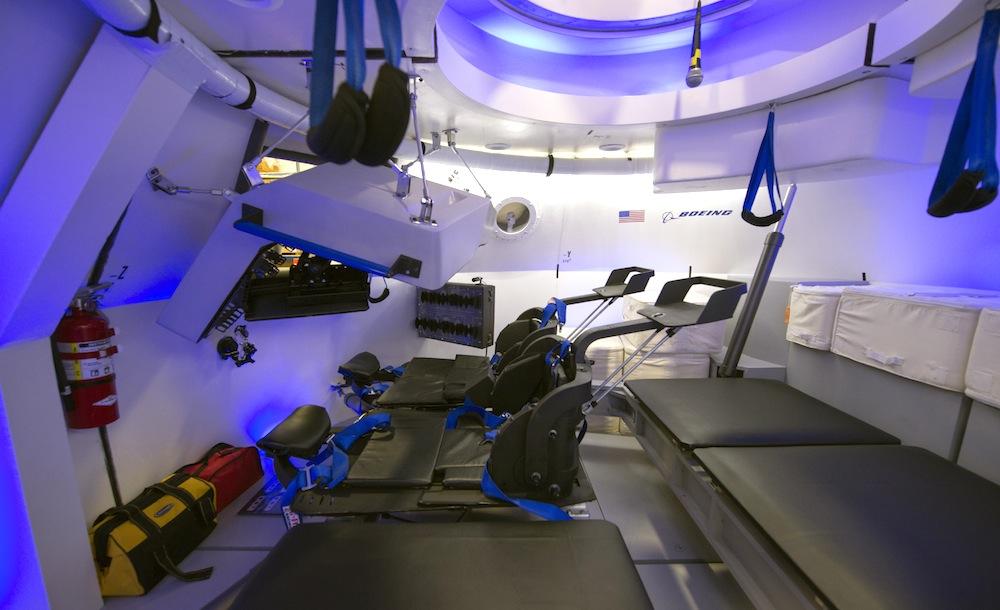
 Boeing this week opened the hatch to the interior of its next-generation space capsule, the CST-100, capable of seating up to seven astronauts on missions to and from the International Space Station.
The company, better known for its commercial aircraft business than its space-related work, created the capsule with a $570 million investment from NASA. Boeing is also investing its own money in the project.
At a special event at Boeing’s Houston Product Support Center in Texas, astronauts Serena Aunon and Randy Bresnik donned NASA’s famous orange launch-and-entry suits and climbed inside the capsule, allowing them, and the media, to give the interior the once over.
“[The astronauts] are our customers. They’re the ones who will take our spacecraft into flight, and if we’re not building it the way they want it we’re doing something wrong,” said former astronaut Chris Ferguson, now working as Boeing’s director of crew and mission operations. “We’ll probably make one more go-around and make sure that everything is just the way they like it.”
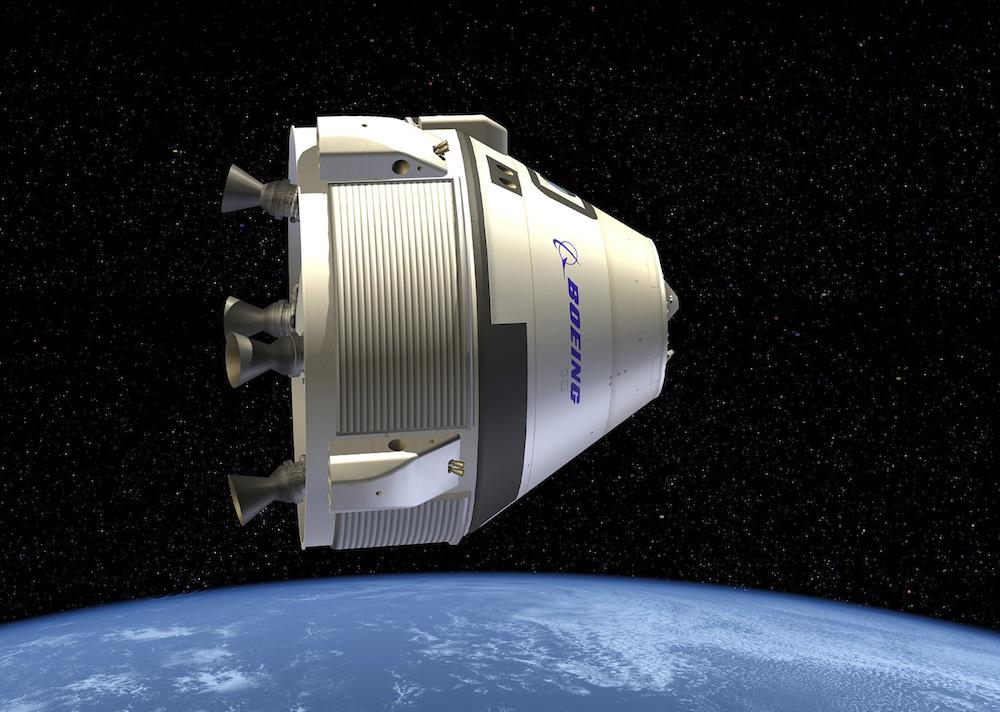
Although the CST-100 resembles the old Apollo modules from the 60s and 70s (Boeing had a hand in building those too, after all), this one is much larger, with enough space for up to seven astronauts – or four plus cargo – compared to just three in the old capsules. It can also be used for up to 10 missions.
According to Ferguson, simplicity is at the heart of the capsule’s design.
“What you’re not going to find is 1,100 or 1,600 switches,” he said. “When these guys go up in this, they’re primary mission is not to fly this spacecraft, they’re primary mission is to go to the space station for six months. So we don’t want to burden them with an inordinate amount of training to fly this vehicle. We want it to be intuitive.”

The interior features ambient sky blue LED lighting – presumably to create an atmosphere of tranquility and calm among the astronauts as they hurtle to and from space at breakneck speed – and controls which incorporate tablet technology, although tech companies haven’t yet had a chance to fight over the contract.
Two hatches enable entry and exit – one on the side for Earth-based boarding and alighting, and one on the top through which astronauts will enter the space station, while windows ahead of the control panel and to the side will offer the astronauts views of the blue planet and beyond.
And in case you were wondering, no, there isn’t a toilet on board.
“We have a couple of options,” Boeing engineer Tony Castilleja told collectSPACE.com. “It’s all about reducing mass, so we do not have a true space toilet like the shuttle did because we just don’t have the room in this vehicle. But there are some design alternatives that we’re looking at, from diapers to mechanical devices.”
Boeing is one of three companies working to create efficient and safe transportation systems to transport NASA astronauts to and from low Earth orbit, with Space Exploration Technologies (SpaceX) and Sierra Nevada Corporation also working on designs.
The CST-100’s first should test flight is expected to take place in the next three to four years.
[Source: NASA]


