  1. Home
  2. Space
  3. Photography
  4. News

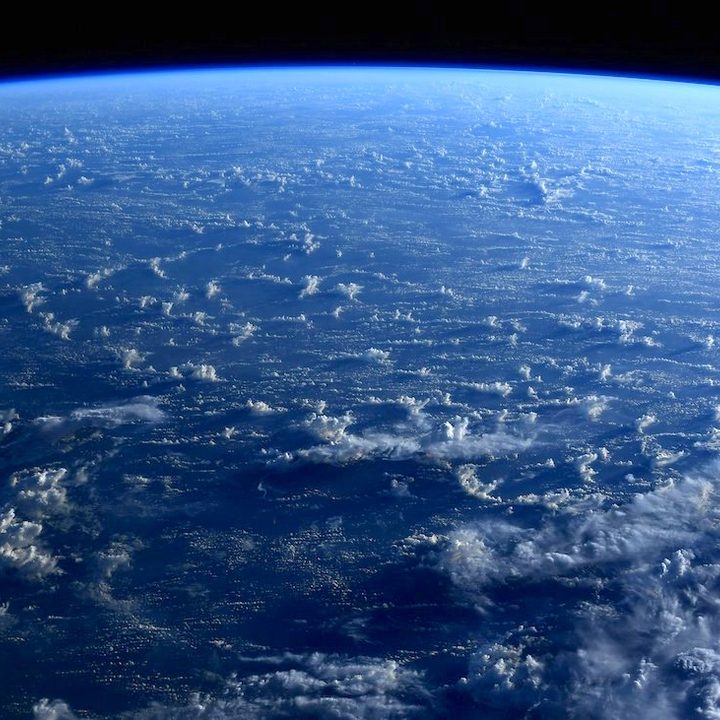
This gorgeous Earth image shot from the space station shows only water

Add as a preferred source on Google
ESA / Thomas Pesquet

A space station astronaut has captured a striking photo of Earth showing only water.

Posting the image on Twitter, European Space Agency astronaut Thomas Pesquet described the scene as “our blue marble,” a nod to the famous image of Earth taken by the Apollo 17 crew in 1972.

Recommended Videos

Pesquet added: “Sometimes, there’s just no land in sight, even from our 400-km [250-mile] crow’s nest. I think of all the sailors and explorers who traveled the world on solitary expeditions.”

🌎 Our blue marble. Sometimes, there's just no land in sight, even from our 400 km crow's nest. I think of all the sailors and explorers who traveled the world on solitary expeditions ⛵️ #MissionAlpha pic.twitter.com/sQ0F33DEZm

— Thomas Pesquet (@Thom_astro) May 26, 2021

As the French astronaut suggests, most images shot from the International Space Station Earth usually contain at least a little bit of land. But Pesquet’s impressive picture is a reminder that our planet actually comprises mostly ocean, with water covering about 70% of its surface.

ISS photography

The ISS crew is constantly changing, with most missions lasting about six months. Among each new crew, a keen photographer often emerges, with Pesquet clearly possessing an eye for an amazing shot.

We recently showcased some of his best Earth pictures snapped in the weeks since his arrival on the space station in April 2021, his second visit to date. Among the last ISS crew, Japanese astronaut Soichi Noguchi revealed himself as a keen Earth observer, regularly sharing his own amazing pictures of our planet.

For the best views, space station astronauts usually head to the Cupola, a seven-window module that was attached to the ISS in 2010, 10 years after the station went into operation.

Pesquet and other crew members have a wide range of advanced cameras and lenses to choose from, including top models made by the likes of Nikon and Sony.

To find out more about life on the space station, take a look at these videos recorded by astronauts who’ve visited the orbiting outpost over the years.

Trevor Mogg
Contributing Editor
Not so many moons ago, Trevor moved from one tea-loving island nation that drives on the left (Britain) to another (Japan)…
Blue Origin’s massive New Glenn rocket explodes in a fiery blaze during tests
The incident leaves NASA's Moon Base ambitions and Amazon's Kuiper constellation without their primary launch vehicle at the worst possible moment.
Explosion, Fire, Nuclear Explosion

Blue Origin's New Glenn rocket exploded during a static fire test at Launch Complex 36 in Cape Canaveral, Florida. The incident took place on the night of May 28, 2026. 

The explosion was captured on a live stream by NASASpaceflight.com and footage of the explosion spread rapidly across X. The Space Launch Complex 45 has confirmed in an official statement (shared by Spaceflight Now on X) that all personnel have been accounted for and there have been no injuries or fatalities.

Read more
Orbot Robotics’ space robot has four arms, but its Goro physique has a purpose
This four-armed robot could make routine space-station work easier for astronauts
Robot with four arms

Helios is a new four-armed robot from Zurich-based Orbit Robotics, and at first glance, it reminded me of Goro from Mortal Kombat. But unlike the prince from Outworld, Helios is not built for combat. It is designed to help astronauts on space stations with the repetitive, time-consuming work that keeps life in space running.

Orbit Robotics says that in microgravity, legs are not much help. Instead of walking or standing, Helios needs to move through tight station interiors, hold itself steady, and handle cargo, tools, or equipment. Its four-arm design turns extra limbs into both mobility aids and working hands.

Read more
A billionaire crypto bro will lead humanity to Mars atop Musk’s Starship
Chun Wang could become one of the first humans to travel toward Mars
Chun Wang in a space suit

Neil Armstrong and Buzz Aldrin became the faces of the Moon landing era. Elon Musk’s Mars era may get a very different public face in Chun Wang, a cryptocurrency billionaire whose fortune traces back to Bitcoin mining.

Wang is expected to lead a future SpaceX Starship mission that would fly past Mars and return to Earth. SpaceX has not announced a launch date, and the plan still depends on Starship proving it can safely carry humans far beyond Earth's orbit.

Read more