  1. Home
  2. Space
  3. News

See the closest-ever image of comet NEOWISE captured by Hubble

Add as a preferred source on Google

The Hubble Space Telescope has captured the closest image taken so far of a recent visitor to our part of the solar system, comet NEOWISE. The image, captured on August 8, shows the comet as it zipped past our planet at 37 miles per second, or over 133,000 mph.

Comet NEOWISE was visible in the skies last month, even with the naked eye. It was notable for being the brightest comet in over 20 years, since the Hale-Bopp comet passed by in 1997.

Recommended Videos

It was named for the NASA mission which first spotted it, the Near-Earth Object Wide-field Infrared Survey Explorer (NEOWISE), and became a popular target among amateur astronomers across the world. But if you missed seeing it while it was passing by this time, too bad — astronomers estimate it won’t be back in our region of the solar system for another 7,000 years.
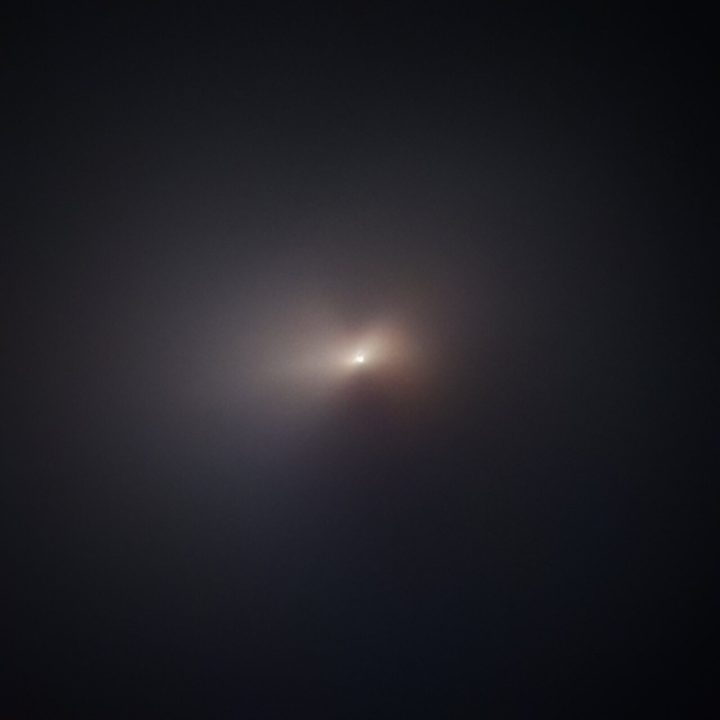
NASA/ESA Hubble Space Telescope has captured the closest images yet of the sky’s latest visitor to make the headlines, comet C/2020 F3 NEOWISE
The NASA/ESA Hubble Space Telescope has captured the closest images yet of the sky’s latest visitor to make the headlines, comet C/2020 F3 NEOWISE, after it passed by the Sun. This color image of the comet was taken on 8 August 2020. The two structures appearing on the left and right sides of the comet’s center are jets of sublimating ice from beneath the surface of the nucleus, with the resulting dust and gas bring squeezed through at a high velocity. The jets emerge as cone-like structures, then are fanned out by the rotation of the comet’s nucleus. NASA, ESA, Q. Zhang (California Institute of Technology), A. Pagan (STScI)

Bright comets like NEOWISE are difficult to photograph as they tend to fall apart due to the immense heat generated as they approach the sun. NEOWISE, however, maintained its solid core of ice so Hubble was able to capture it. The core itself is too small to be photographed, at less than 3 miles across, but the telescope could see the cloud of dust and gas around this core which is more than 11,000 miles across.

The photograph isn’t just for fun, though. It may also teach us more about how comets react to their environments. “The Hubble photos may also help reveal the color of the comet’s dust and how that color changes as the comet moves away from the sun,” the Hubble scientists wrote in a statement. “This, in turn, may explain how solar heat affects the contents and structure of that dust and the comet’s coma. The ultimate goal here would be to determine the original properties of the dust. Researchers who used Hubble to observe the comet are currently delving further into the data to see what they’re able to find.”

Georgina Torbet
Georgina has been the space writer at Digital Trends space writer for six years, covering human space exploration, planetary…
Artemis II crew preps for lunar orbit – and Orion’s cosmic commode
'It's the one place we can go during the mission where we can actually feel like we’re alone.'
The Orion spacecraft's toilet.

Four astronauts are about to embark on a historic voyage that will take them around the moon in a spacecraft about the size of a large camper van.

During the Artemis II mission, NASA astronauts Reid Wiseman, Victor Glover, and Christina Koch, and the Canadian Space Agency’s Jeremy Hansen, will spend 10 days inside the Orion capsule after being blasted to space by the SLS rocket from the Kennedy Space Center in Florida, hopefully next week.

Read more
It’s here! NASA reveals full livestream schedule for crewed moon mission
The coverage starts on Friday.
NASA's SLS lunar rocket on the launchpad at the Kennedy Space Center, with the moon shining brightly in the background.

The excitement is building with NASA now just a few days away from sending four astronauts on a voyage around the moon.

On Wednesday, the space agency shared its schedule for coverage of the final buildup and main event, including a Q&A with the astronauts this Friday, blast off on Wednesday, April 1, and regular updates as the crew make their way to the moon.

Read more
Peek inside NASA’s Mars habitat where humans train for life on the red planet
Four volunteers are staying in isolation for more than a year.
A scene inside NASA's Mars simulation habitat.

NASA has offered a sneak peek inside its Mars simulation habitat where four volunteers have now spent 150 days isolated from the outside world.

By living within the confines of the 1,700-square-foot Mars Dune Alpha habitat at the Johnson Space Center in Houston, Ross Elder, Ellen Ellis, Matthew Montgomery, and James Spicer are helping NASA to better prepare for long-duration missions that will take humans into deep space.

Read more