  1. Home
  2. Space
  3. Photography
  4. Features

The best space imagery from Don Pettit’s incredible 7-month mission

Add as a preferred source on Google
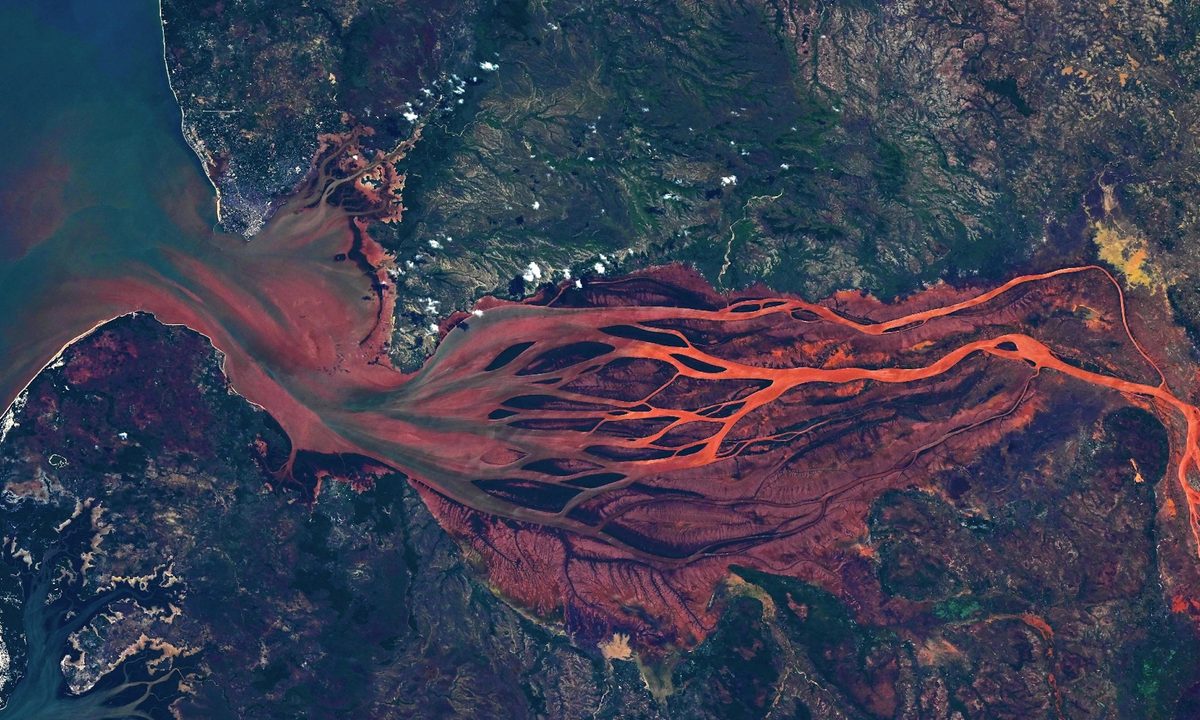
The Betsiboka River estuary in Madagascar.
The Betsiboka River estuary in Madagascar. Don Pettit/NASA

Photographer extraordinaire Don Pettit is about to return to Earth following a seven-month stay aboard the International Space Station (ISS).

During his time in orbit some 250 miles above Earth, Pettit has been sharing breathtaking photos and videos of Earth and beyond, featuring everything from star trails and aurora to rocket launches and cityscapes.

Recommended Videos

To mark Pettit’s successful mission, we’ve pulled together some of his best social media posts from the last seven months. Enjoy!

Pettit is the master of star trail exposures. Here’s one of his best:

Star trail time exposure. Our orbit creates star trails during a time exposure, in this case, about 30 minutes during orbital night. This was assembled from multiple 30 second exposures by @BabakTafreshi. Big thanks to Babak for applying his processing skills with image… pic.twitter.com/4SQrFshmgh

— Don Pettit (@astro_Pettit) February 8, 2025

Next up, a striking shot of the Betsiboka River in Madagascar, which Pettit said reminded him of “the arteries in your retina.” The bright red color is due to the high concentration of iron-rich sediments carried by the waterway.

Betsiboka river in Madagascar, remind me of the arteries in your retina. pic.twitter.com/ZM7KG0nFgx

— Don Pettit (@astro_Pettit) January 23, 2025

Another remarkable shot captured from the space station, this infrared image (converted to black and white) shows sunlight glinting off the Mediterranean Sea.

Sun glint off the Mediterranean Sea (infrared and converted to black and white). When the sun reflects off the ocean, watery details unseen with normal lighting shows up. Small centimeter differences in ocean height become visible, revealing hidden currents.

Here, naturally… pic.twitter.com/szK3mjNxcX

— Don Pettit (@astro_Pettit) October 15, 2024

Astronauts on the space station are often treated spectacular aurora displays, caused by solar particles hitting Earth’s atmosphere. Here’s a video of one that Pettit shared earlier this month.

Green vaporous turbulence; tonight’s show of aurora from @Space_Station pic.twitter.com/ZX0dINFhLa

— Don Pettit (@astro_Pettit) April 5, 2025

Pettit’s photo of Earth and the Milky Way features “cosmic colors at sunrise.”

Cosmic colors at sunrise; never get tired of seeing what the new day brings pic.twitter.com/jLLzMIbOzi

— Don Pettit (@astro_Pettit) February 26, 2025

“Star trail from ISS,” Pettit says of this image showing star trails, city lights, and parts of the ISS. “I think these are a blend of both science and art. There is so much techno-geek stuff to see, or you can simply sit back and think, ‘How cool.’”

Star trail from ISS; I think these are a blend of both science and art. There is so much techno-geek stuff to see, or you can simply sit back and think “How cool”.

This one shows atmospheric airglow, yellow-green at 120km and the fainter upper red at 400km, star trails moving in… pic.twitter.com/c58CeJxIgh

— Don Pettit (@astro_Pettit) December 3, 2024

An incredible view of boats anchored off the coast of Van Hung, Vietnam.

Boat City: a floating city of boats seen at night from @ISS anchored off the coast of Van Hung, Vietnam. pic.twitter.com/Q1PCQ1iLI4

— Don Pettit (@astro_Pettit) February 11, 2025

A stunning image of the Grand Canyon.

The Grand Canyon is an orbital optical illusion. Instead of appearing as a deep trench, it is perceived as a contorted bump. In this photograph, it reminds me of cardiac arteries on the heartland of Earth.
 
Nikon Z9 IR, 70-200mm f2.8 lens set 200mm, 1/3200 sec, f11, ISO 500,… pic.twitter.com/hf2oeJ7wuB

— Don Pettit (@astro_Pettit) October 12, 2024

An “earthly eyeball,” as seen through the station’s seven-window Cupola module.

Earthly eyeball; @Space_Station with a 360 degree view. pic.twitter.com/zWBErFSnNf

— Don Pettit (@astro_Pettit) April 1, 2025

Here we can see Pettit setting up some of his cameras inside the Cupola module.

Setting up in the Cupola. Only 5 cameras this time. :) pic.twitter.com/FUjs1sW8tQ

— Don Pettit (@astro_Pettit) February 18, 2025

Watch the star trails stretch out.

Here is a movie clip (processed by Babak- big thanks) sequentially adding the star trail still frames creating orbital motion. pic.twitter.com/upC4vNC5mA

— Don Pettit (@astro_Pettit) March 12, 2025

The U.K.’s capital city “sparkling at night.”

London sparkling at night.

Nikon Z9, 200mm f2, 1/320 sec, ISO 25600 pic.twitter.com/okPZz6N05f

— Don Pettit (@astro_Pettit) September 18, 2024

Pettit even managed to photograph the second stage of Blue Origin’s New Glenn rocket heading to space on its inaugural flight in January 2025.

New Glenn rocket launch photographed from ISS on Jan 16th. This shows New Glenn upper stage in coast phase following booster separation. In this 4 minute time exposure, New Glenn is seen as the faint streak moving from lower right to upper left as it crosses the brighter… pic.twitter.com/YwWtCfMoZt

— Don Pettit (@astro_Pettit) January 19, 2025

He also got to see a test launch of SpaceX’s Starship, the most powerful rocket ever to fly.

My B-role shot of Starship launch from space station. The action was partially blocked by a solar panel and I thought the composition was ruined. However, on a second look-see, I thought this flaw gave it a dose of orbital reality. pic.twitter.com/8QzcoYVAdX

— Don Pettit (@astro_Pettit) November 25, 2024

A view of a large Magellanic Cloud.

Large Magellanic Cloud visible in the southern hemisphere with the upper “red-orange” part of our atmosphere (called the f-region) seen in the lower part of the photograph. This is a time exposure using my homemade tracker that compensates for @space_station motion, thus allowing… pic.twitter.com/YcCwSqkIzV

— Don Pettit (@astro_Pettit) December 13, 2024

Another amazing ride over an aurora.

Aurora seen today from @Space_Station while orbit was passing between Australia and Antartrica; photographer @astro_jannicke now on the private FRAM2 space mission will be having an even better view in their polar orbit. pic.twitter.com/8IIiWBDtu8

— Don Pettit (@astro_Pettit) April 4, 2025

Las Vegas at night.

Las Vegas; the beacon for humanity. Perhaps the brightest spot on Earth. Here is a cropped photo followed by the full city showing Harry Reid (formerly McCarran) Airport and “The Strip”. Can you find your favorite spot?

Z9, Nikon 200mm f2 lens, 1/320th second, ISO 25600,… pic.twitter.com/O4OHerA7z9

— Don Pettit (@astro_Pettit) November 19, 2024

A view of Mongolia, here looking more like a work of art.

Somewhere over Mongolia. The deserts of Mongolia are striking from orbit. I am awed every time there is an orbit path overhead. This photo is in near infrared where the normal color spectrum is shifted “down” into the infrared region so the colors we are used to seeing are… pic.twitter.com/rUHsjxXSXe

— Don Pettit (@astro_Pettit) October 8, 2024

More “art,” including rivers that resemble “flowing silver snakes.”

Moonshine from space. Somewhere over the Amazon basin, shooting photos of cities at night, I noticed the light from a near-full moon reflecting off of the meandering rainforest rivers. In the cool moon-ish light these rivers became flowing silver snakes. When the moonlight was… pic.twitter.com/SGIUAJLhpP

— Don Pettit (@astro_Pettit) September 24, 2024

Pettit also caught an image of a passing comet.

It is totally awesome to see a comet from orbit. The perspective of rising through the atmosphere on edge is truly unique from our vantage point. The comet tail is still too dim to see with your eyes, but it is heading towards the sun and growing brighter every day. 

This comet… pic.twitter.com/wsrevVpjDv

— Don Pettit (@astro_Pettit) September 22, 2024

Beautiful colors at the start of the year.

Our New Year’s light show pic.twitter.com/NB3gq8dxuf

— Don Pettit (@astro_Pettit) January 2, 2025

Can you spot Everest?

Mt. Everest is in this photo; can you find it? It is the big mountain that sticks up high. Mount Everest is the tallest peak in a whole range of tall peaks and not easily found. We have a way of picking it out, sort of like a geographic mnemonic that serves to impress rookie… pic.twitter.com/tgAoLLoS21

— Don Pettit (@astro_Pettit) October 11, 2024

Star trails, city lights … and Starlink satellites!

Formation flying; Starlink satellites tracing parallel lines in the sky.
Thanks to @BabakTafreshi for assembling this clip from timelapse images. pic.twitter.com/9vCKt1lCx5

— Don Pettit (@astro_Pettit) April 11, 2025

Pettit using microgravity for an easy lens swap.

How to change a camera lens…… pic.twitter.com/JUujYAYSiI

— Don Pettit (@astro_Pettit) January 18, 2025

A time-lapse showing a Crew Dragon spacecraft approaching the station.

Crew 10 Dragon vehicle arriving! pic.twitter.com/3EZZyZW18b

— Don Pettit (@astro_Pettit) March 16, 2025

The Milky Way seen through the window of a docked Crew Dragon capsule.

Star field from @Space_Station. Taken from the SpaceX Crew 9 Dragon vehicle showing the Southern Cross region using my homemade star tracker. Big thanks to @BabakTafreshi for doing the image processing I can’t do on orbit. pic.twitter.com/Tx4SmHXUXk

— Don Pettit (@astro_Pettit) February 12, 2025

The so-called “Thai aurora” is the result of green lights on fishing boats.

Known as Thai Aurora, fishing boats off the coast of Thailand use green lights to lure their catch. Striking view from orbit! pic.twitter.com/xVM3HisSUb

— Don Pettit (@astro_Pettit) March 4, 2025

A Dragon cargo spacecraft heading back to Earth.

Dragon cargo number 31 undocked yesterday and returned to planet Earth carrying the spoils from our research. pic.twitter.com/YdG6CgF8EU

— Don Pettit (@astro_Pettit) December 17, 2024

A finally, a bit of fun in microgravity conditions.

OK; you all asked if this was possible….. pic.twitter.com/sMmJJtQNMy

— Don Pettit (@astro_Pettit) February 23, 2025
Trevor Mogg
Contributing Editor
Not so many moons ago, Trevor moved from one tea-loving island nation that drives on the left (Britain) to another (Japan)…
Stunning close-up footage shows NASA’s moon rocket roaring to space
On its first crewed flight, NASA's lunar rocket displays its awesome power.
NASA's SLS rocket roars skyward at the start of the Artemis II mission on April 1, 2026.

As NASA’s Artemis II astronauts journey back to Earth following their breathtaking close encounter with the moon earlier this week, the space agency has just shared some stunning footage (below) of the rocket launch that sent the crew on its way on April 1.

The close-up tracking shot shows the awesome power of the Space Launch System (SLS) rocket’s four core RS-25 engines together and its two solid rocket boosters as the 98-meter-tall vehicle roars away from the launchpad at the Kennedy Space Center in Florida.

Read more
How to watch NASA’s moon crew splash down at end of historic mission
The Orion spacecraft's final moments before splashdown will be the most perilous of the entire mission.
Earth and the moon as seen from the Orion spacecraft during the Artemis II mission in April 2026.

The Artemis II astronauts have looped around the moon, captured some extraordinary imagery (above), set a slew of records, and are now on their way back to Earth.

The 10-day mission will reach its climax on Friday, April 10, during a dramatic homecoming that will see the Orion spacecraft enter our planet’s atmosphere at a speed of nearly 25,000 miles per hour.

Read more
Notable firsts of the Artemis II moon mission … so far
The Artemis II crew are now on their way home, so let's take a look at the mission's achievements so far.
The moon as seen from the Orion spacecraft during the Artemis II mission.

Having just looped around the moon in a historic flyby of our nearest neighbor, the Artemis II crew are now on their way back to Earth.

NASA’s Victor Glover, Reid Wiseman, and Christina Koch, along with the Canadian Space Agency’s Jeremy Hansen, launched aboard the Orion spacecraft from the Kennedy Space Center on April 1, lifted to space by the mighty SLS rocket.

Read more