Today marks Virgin Galactic’s official test flight date for its first rocket-powered plane capable of taking tourists to space. Of course, at a hefty price tag of $200,000 a seat.
In a blog post today, Virgin founder Richard Branson announced that the flight is ready for its test launch, and is expected to break the speed of sound. “This is a momentous day and the single most important flight test to date for our Virgin Galactic program,” he wrote. “It marks the moment when we put together two key elements of our spaceflight system – the spacecraft and its rocket motor, which have both been tested extensively by themselves over several years – and start the phase of testing that will demonstrate our vehicle’s ability to go to space (hopefully later this year).”
 The flight took place this morning around 7 a.m. PT/10 a.m. ET from California’s Mojave Air and Space Port. Previously, the SpaceShipTwo rocket plane was tested via a drop from Virgin’s WhiteKnightTwo carrier airplane, allowing the pilots to guide the unpowered SS2 back onto the runway. In today’s test, SpaceShipTwo was dropped from an altitude of 50,000 feet before shooting upward in a 16-second blast, reports NBC. The supersonic flight engine was powered by a rubber-based solid fuel and nitrous oxide. Roughly 30 minutes after SpaceShipTwo took off, Virgin Galactic confirmed the flight broke the speed of sound via its official Twitter.
Pilots Stucky and Alsbury confirm: SpaceShipTwo exceeded the speed of sound on today’s flight! Photos, video, and details to follow
— Virgin Galactic (@virgingalactic) April 29, 2013
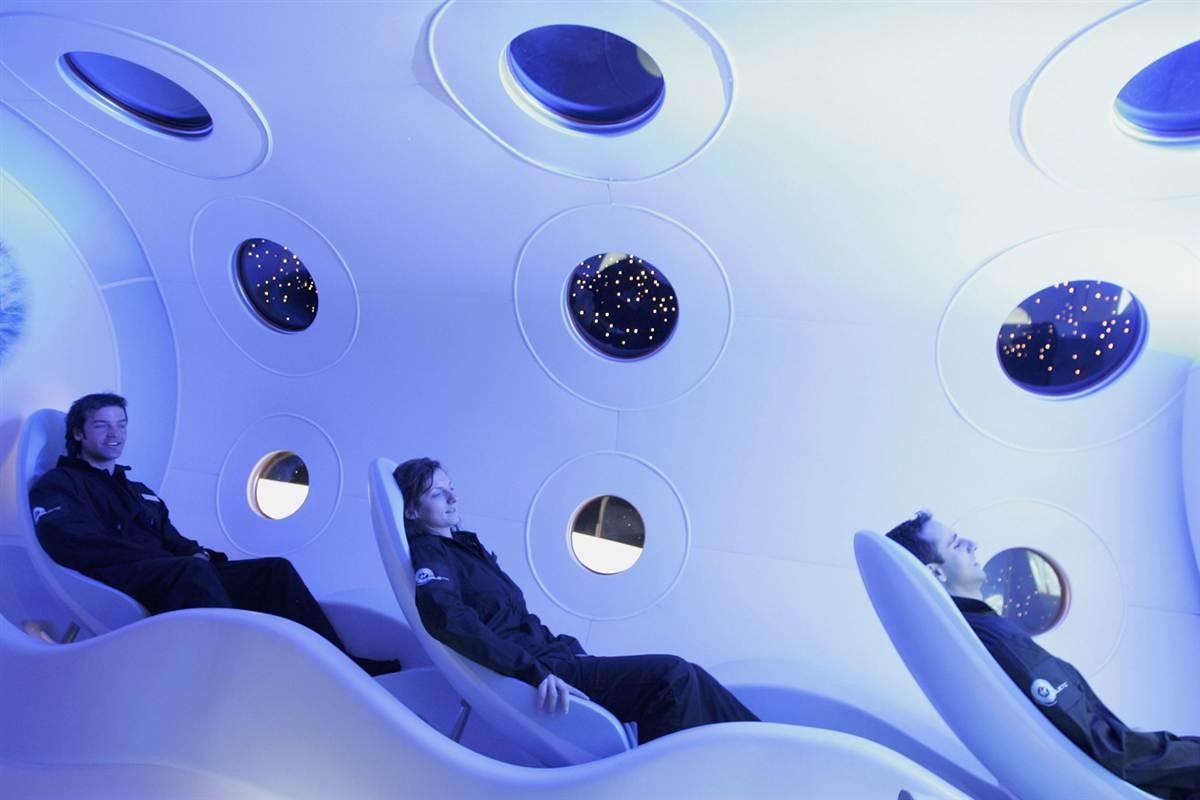
Virgin Galactic’s SpaceShipTwo is designed to be a brief passenger service flight, with an exclusive room of six seats (plus two for the pilots) per flight. At least 500 passengers have already booked their trip to space, including actor Ashton Kutcher who bought the flight’s 500th ticket. If the project commences as scheduled, the first commercial flight will take off by next year from the Spaceport America facility in southern New Mexico.
“Like our hundreds of customers from around the world, my children and I cannot wait to get on board this fantastic vehicle for our own trip to space and am delighted that today’s milestone brings that day much closer,” Branson wrote.