  1. Home
  2. Tablets
  3. Mobile
  4. News

2025 iPhones and iPads might have new Apple chips in them

Add as a preferred source on Google
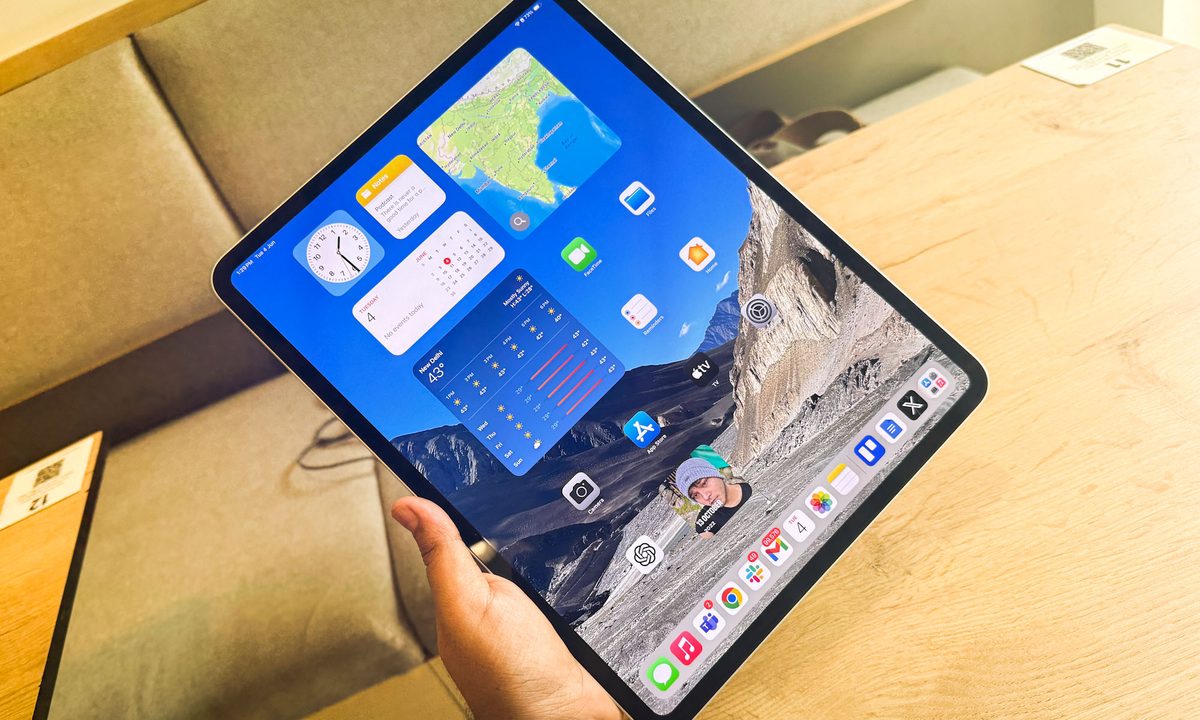
Home Screen of the M4 iPad Pro.
Nadeem Sarwar / Digital Trends

For many years, Apple has been committed to replacing third-party parts in its products with those it manufactures itself. A notable instance is when Apple moved away from Intel-based processors for its Macs and replaced them with in-house Apple M series chips. It now appears that more Apple-made parts may be incorporated into some of its mobile products as soon as next year.

According to DigiTimes, Apple plans to use its own Wi-Fi chips in the 2025 iPads and the following year’s iPhone 18 series. The upcoming iPhone SE 4 could also be the first iPhone equipped with an Apple-branded 5G chip, with the iPhone 17 series expected to follow suit later in the same year.

Recommended Videos

Excluding the two new in-house network chips (Wi-Fi and 5G) from next year’s iPhone makes sense from a supply standpoint. It also helps to reduce potential early problems with the chips. Further, it makes sense to introduce the 5G chip first in the less popular iPhone SE 4 before its flagship devices — making it a testing ground before expanding the 5G chip to other iPhones.

Apple reportedly faces challenges integrating the mmWave technology into the 5G chip. As a result, the company may need to depend on Qualcomm for assistance, as the company’s chip deal is set to last until 2027. Broadcom serves as Apple’s leading supplier of Wi-Fi chips.

This news comes as Apple officially launches the iPhone 16 series worldwide. The series includes the iPhone 16, iPhone 16 Plus, iPhone 16 Pro, and iPhone 16 Pro Max. Earlier this year, the company introduced new versions of iPad Pro and iPad Air. New versions of the regular iPad and iPad mini could make their debuts as early as next month.

Bryan M. Wolfe
Former Mobile and A/V Freelancer
Bryan M. Wolfe has over a decade of experience as a technology writer. He writes about mobile.
Asus Pad comes out as a brazen iPad wannabe, but looks like a solid OLED Android slate
Asus looked at the iPad and said “Yeah, we’ll have one too”
Asus Pad

ASUS has officially unveiled the new Asus Pad, and honestly, the inspiration is impossible to ignore. From the flat metal chassis and symmetrical bezels to the magnetic keyboard accessories and stylus support, the tablet looks heavily influenced by Apple’s iPad lineup. But underneath the familiar design language sits what could actually be one of the more compelling Android tablets launched this year.

The Asus Pad arrives at a time when Android tablet makers are aggressively trying to close the gap with Apple in premium productivity-focused hardware. While many Android tablets still struggle with app optimization and ecosystem polish, companies increasingly realize that buyers care just as much about display quality, battery life, and hardware design as they do about software exclusives.

Read more
Dumb ebook readers are about to get darn smart for you with useful AI and Android support
Your e-reader is finally getting the glow-up it deserved.
Supernote nomad in hand

E Ink and MediaTek have teamed up to bring something genuinely exciting to a product category that has seen a surge in popularity in recent years. Your next e-reader might just transcribe meetings, translate languages in real time, and finally show you colors that don't look washed out.

The two companies announced an expanded collaboration built around MediaTek's new generative AI e-reader chips, the MT8115 and MT8126. These support both Linux and Android, and pack a dedicated NPU that delivers up to 7.4 TOPS of AI computing performance. 

Read more
Xiaomi Pad 8 Pro review: I swapped my trusty iPad for this and didn’t miss it at all
A rare Android tablet that will make you stick around with it for the long game.
Person using the Xiaomi Pad 8 Pro Android tablet.

For years, I've kept a default disclaimer ready whenever I am asked to recommend Android tablets. "It's good/meh, for an Android tablet." That little clarity did a lot of heavy lifting. It excused the issues with laggy apps stretched haphazardly across an oversized screen, the ho-hum firepower, and software that always felt like a phone wearing a costume two sizes too big. So when the Xiaomi Pad 8 Pro landed on my desk, I had my disclaimer loaded and ready to unload indiscriminately.

I'll save you the suspense and tell you it never came out. This slate is a genuine powerhouse, the kind of tablet that goes after the iPad Air and the Galaxy Tab S-series without flinching, and then upturns the value debate with its attractive asking price. It runs Qualcomm's top-tier Snapdragon 8 Elite, which means it can chew through all kinds of mobile tasks with ease.

Read more