
Despite calls from the press and some members of the public for Apple to merge iOS and MacOS, the tech giant continues to plug its fingers in its ears and insist it’s not happening. And you know what? It’s the right approach. But weirdly, Apple is accidentally demonstrating what a disaster this merger would be using one of its own products: Apple Arcade.
You see, Apple Arcade is a showcase for all that’s wrong with taking two very different operating systems and mashing them together into a mixed-up medley where no one wins. Because developers have to make games that work on the tiniest iPhone and the largest iMac, they are forced into compromises that weaken the games on both platforms.
To be clear, there are reams of excellent Apple Arcade games. My beef is more with the way the platform works and its attempt to cater to all possible audiences. If Apple has any sense, it will take its own advice and fix this problem.
The Mac misses out

I recently started playing Fantasian on Apple Arcade, a JRPG developed by Hironobu Sakaguchi, the creator of the Final Fantasy series. With that kind of resumé, I was expecting a lot from his latest work. Instead, I got something that had plenty of great ideas but was held back by Apple Arcade.
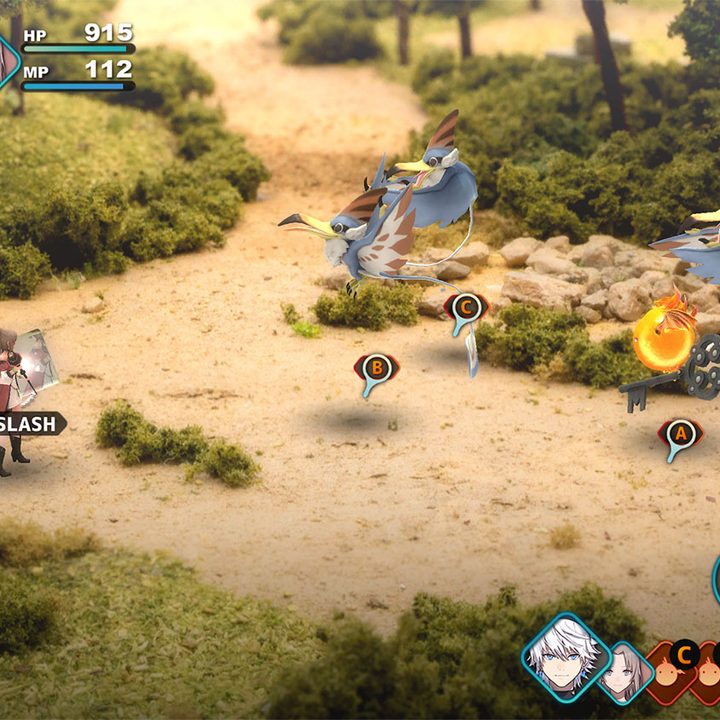
Load up Fantasian for the first time, and you quickly see its gimmick: Its world spaces take the form of handcrafted dioramas, with characters and NPCs digitally superimposed. On an iPhone, these look absolutely beautiful, and they are still pretty eye-catching on a Mac — until you look a little closer, whereupon they become a little blurry and low-res. I can only surmise this is due to the developers having to optimize the textures for a smaller screen, leaving Mac users out in the cold.
And then there are the controls. Most Mac games give you a fairly standard set of hotkeys: M for map, J for journal, I for inventory, and so on. Sometimes they vary, but the point is you always have lots of quick shortcuts at your disposal. In Fantasian, you only get two: C opens the menu and S launches a designated shortcut. There are no concessions for gamers decked out with a keyboard and mouse, only the limited options available to iOS players.
When you make it into the menu, every button is enormous, designed for fat fingers instead of precise mouse pointers. It’s pretty obvious who the developers were aiming for when they made Fantasian.
But I can’t really blame them here. They had to make a choice because games on Apple Arcade cannot have different versions for different platforms. In this case, Mac players have not only missed out on much-needed optimizations, but they have also been given a game version that doesn’t even look right on their computer. And the blame for that lands squarely at the feet of Apple.
More than just visuals
The problems with games on Apple Arcade go deeper than their graphical fidelity. Gamers on MacOS and gamers on iOS have different sets of expectations — the latter tend to gravitate toward shorter gaming sessions, while the former are much more accustomed to marathon shifts at the keyboard. This means the types of games (and the gameplay within them) differs across platforms.
But Apple Arcade cannot accommodate that. Gaming experiences have to be the same whether they are played on an iPhone, an iPad, an Apple TV, or a Mac. Again, Fantasian shows where that idea falls down.
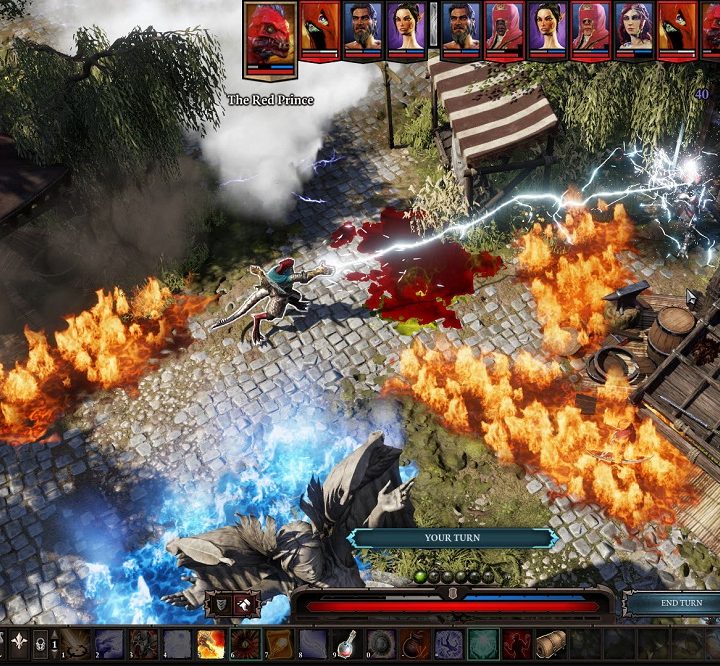
Its combat is incredibly simplistic: Hit, get hit back, hit again, ad infinitum. Compare that to RPG royalty like Divinity: Original Sin 2, where combat is deep, layered, and highly tactical. Divinity is on the Mac and iPad, where larger screens allow for more buttons and more complex gameplay, but it is noticeably absent from the iPhone. It shows cross-platform games absolutely can work, but only if they consider the needs of each device they run on. Apple Arcade bulldozes through all of that.
Bad for developers, bad for gamers
There is no doubt that Apple Arcade offers a lot of opportunities to developers and gamers alike. Developers can get their wares in front of gamers no matter their preferred (Apple) platform, while gamers get access to an ever-expanding library of games that work wherever they want to play them.
But in getting to this stage, too many compromises have to be made, from the visuals to the gameplay to the performance. When your game needs to work smoothly on radically different devices, developers have to aim for the lowest common denominator — and everything else suffers.
This is exactly what Apple has long warned about when dismissing calls to merge iOS and MacOS: That the resulting hybrid would be too compromised, without any of the unique features that make each system great. Yet this is precisely what we get with Apple Arcade.
Apple wants us to see its devices as proper gaming platforms, but it needs to be more focused if it is going to be taken seriously, at least on the Mac. Fantasian is just one example, but every Apple Arcade game has to face the same choices and barriers. As a Mac gamer, I don’t like suggesting this, but perhaps it is time to take the Mac out of the Apple Arcade equation. The result might be better for everyone.


