  1. Home
  2. Tablets
  3. Apple
  4. Computing
  5. News

Digital Trends may earn a commission when you buy through links on our site. Why trust us?

Apple’s Universal Control won’t arrive on Macs, iPads until 2022

Add as a preferred source on Google

After having dropped the latest releases of its operating systems — including iOS 15.2, iPad OS 15.2, macOS Monterey 12.1, watchOS 8.3, and tvOS 15.2 — early Monday morning local time, one highly coveted feature that Apple promoted during its WWDC presentation earlier this year was notably missing. Unfortunately, it appears that Universal Control, a KVM-like feature that allows you to share a mouse and keyboard and work seamlessly across a Mac and iPad, didn’t quite make the cut in the latest versions of the company’s new iPadOS and macOS operating system releases.

It appears that the release date for Universal Control on the Mac has now been adjusted from winter to “available this spring,” according to Apple’s information page for macOS Monterey. The company did not give any further details or explanation for the delay, though this could mean that the feature won’t arrive until macOS 12.2 drops.
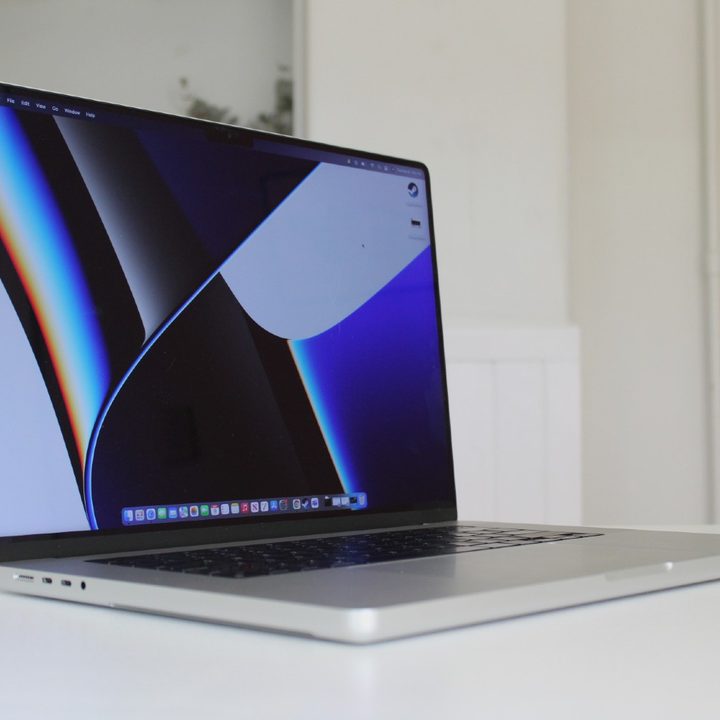
The MacBook Pro with the default wallpaper, which hides the notch.
Apple

In addition to being able to share a single keyboard and mouse across devices, Universal Control also allows you to share content between devices, so you can choose the best device to do your work.

Recommended Videos

“A single keyboard and mouse or trackpad now work seamlessly between your Mac and iPad — they’ll even connect to more than one Mac or iPad,” Apple said of the feature. “Move your cursor from your Mac to your iPad, type on your Mac and watch the words show up on your iPad, or even drag and drop content from one Mac to another.

Macs and iPad tablets within close proximity of each other will be connected via Continuity and AirPlay. To work, all devices must be logged in to iCloud with the same Apple ID, and the hardware will need to have Bluetooth, Wi-Fi, and Handoff enabled.

The much-anticipated feature has prompted tech-savvy users to create a workaround in the past to enable Universal Control on earlier betas of macOS Monterey prior to launch.

The company stated that MacBook, MacBook Air, and MacBook Pro launched in 2016 and later will be compatible with the feature, along with 2017 and newer iMac models, the iMac Pro, the 2018 and newer Mac mini, and the Mac Pro. All generations of the iPad Pro, the iPad Air 3rd generation and newer, iPad 6th generation and newer, and iPad mini 5th generation and newer will work with the feature.

In addition to Universal Control, macOS 12 brings a slew of features, including updated Maps, new privacy controls, recording indicators whenever apps access the webcam or microphone, iCloud+ privacy features like Private Relay and Hide My Email, SharePlay, and AirPlay.

Chuong Nguyen
Silicon Valley-based technology reporter and Giants baseball fan who splits his time between Northern California and Southern…
Asus Pad comes out as a brazen iPad wannabe, but looks like a solid OLED Android slate
Asus looked at the iPad and said “Yeah, we’ll have one too”
Asus Pad

ASUS has officially unveiled the new Asus Pad, and honestly, the inspiration is impossible to ignore. From the flat metal chassis and symmetrical bezels to the magnetic keyboard accessories and stylus support, the tablet looks heavily influenced by Apple’s iPad lineup. But underneath the familiar design language sits what could actually be one of the more compelling Android tablets launched this year.

The Asus Pad arrives at a time when Android tablet makers are aggressively trying to close the gap with Apple in premium productivity-focused hardware. While many Android tablets still struggle with app optimization and ecosystem polish, companies increasingly realize that buyers care just as much about display quality, battery life, and hardware design as they do about software exclusives.

Read more
Dumb ebook readers are about to get darn smart for you with useful AI and Android support
Your e-reader is finally getting the glow-up it deserved.
Supernote nomad in hand

E Ink and MediaTek have teamed up to bring something genuinely exciting to a product category that has seen a surge in popularity in recent years. Your next e-reader might just transcribe meetings, translate languages in real time, and finally show you colors that don't look washed out.

The two companies announced an expanded collaboration built around MediaTek's new generative AI e-reader chips, the MT8115 and MT8126. These support both Linux and Android, and pack a dedicated NPU that delivers up to 7.4 TOPS of AI computing performance. 

Read more
Xiaomi Pad 8 Pro review: I swapped my trusty iPad for this and didn’t miss it at all
A rare Android tablet that will make you stick around with it for the long game.
Person using the Xiaomi Pad 8 Pro Android tablet.

For years, I've kept a default disclaimer ready whenever I am asked to recommend Android tablets. "It's good/meh, for an Android tablet." That little clarity did a lot of heavy lifting. It excused the issues with laggy apps stretched haphazardly across an oversized screen, the ho-hum firepower, and software that always felt like a phone wearing a costume two sizes too big. So when the Xiaomi Pad 8 Pro landed on my desk, I had my disclaimer loaded and ready to unload indiscriminately.

I'll save you the suspense and tell you it never came out. This slate is a genuine powerhouse, the kind of tablet that goes after the iPad Air and the Galaxy Tab S-series without flinching, and then upturns the value debate with its attractive asking price. It runs Qualcomm's top-tier Snapdragon 8 Elite, which means it can chew through all kinds of mobile tasks with ease.

Read more