

The iPad has made tablets a hot commodity at CES this year. There are dozens of tablets on the show floor and, with the exception of a few highlights like the BlackBerry PlayBook, most of them are fairly forgettable. The Motorola Xoom, the first tablet to run Google’s new Android 3.0 (Honeycomb) OS, joins the PlayBook as one of the standout tablets at CES.
The unit itself feels as sturdy and well constructed as the iPad, but is actually a bit larger. It has a 10.1-inch widescreen display with a 1280×800 pixel display (slightly higher than the iPad’s 1024×768 pixel display). Like the new Atrix phone, the device is running a on the 1GHz Nvidia Tegra 2 dual-core processor and has a full gigabyte of DDR2 RAM. In addition, it has 32GB of internal storage, a 2MP front-facing camera, a micro HDMI port, a 5MP rear camera with a dual LED flash, and the ability to support 4G LTE speeds with an upgrade later this year. It is a Verizon exclusive device at this time, but Motorola representatives wouldn’t deny the possible addition of more carriers in the future.

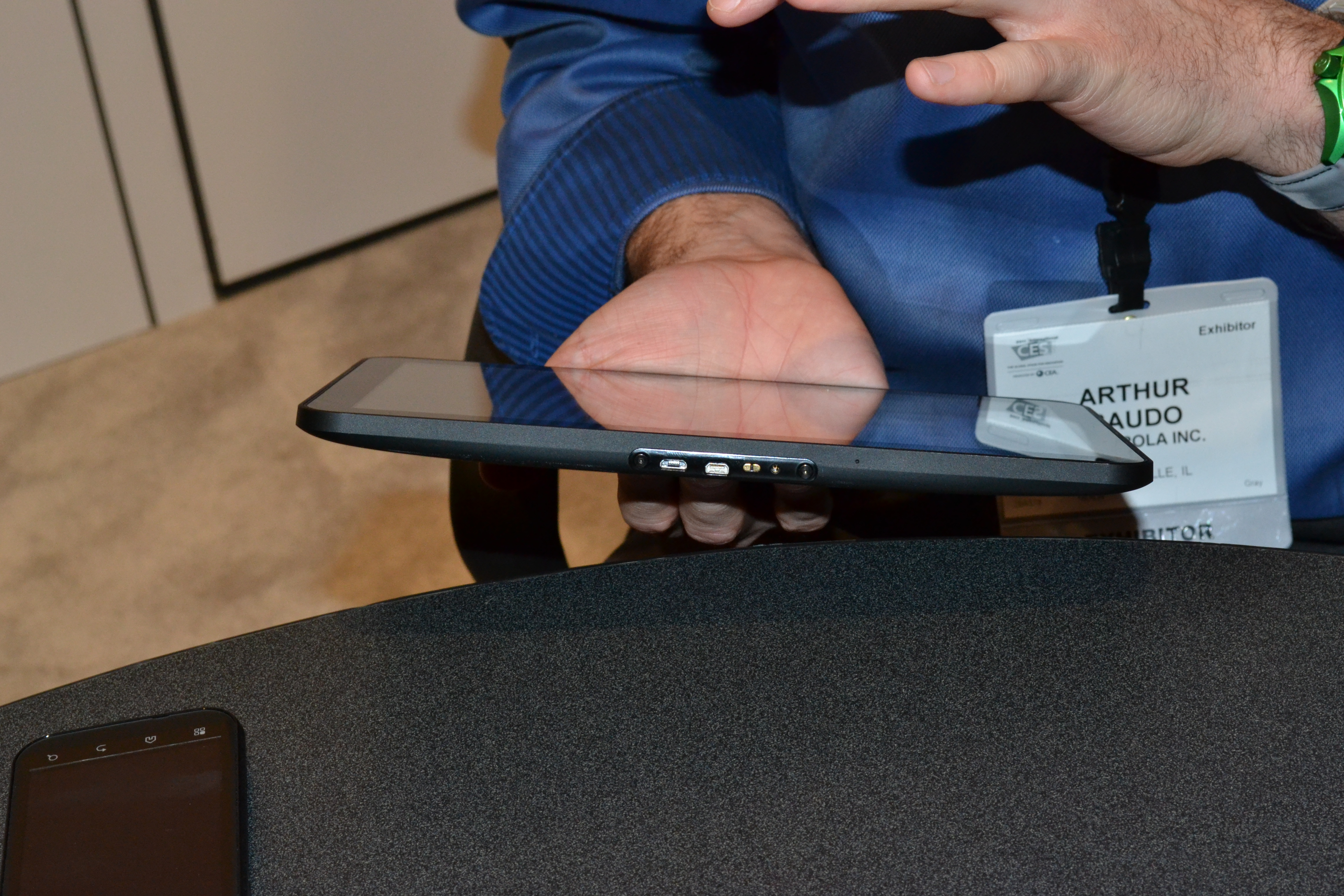
The Xoom is a bit thicker than the iPad, but has a solid feel. The 10.1-inch form feels a lot more useful than the smaller 7-inch sizes offered by some tablets like the PlayBook, but size may be a personal preference. The Xoom also has a rubberized back on it that helps alleviate the fear of it slipping out of your hands at any moment.
Android Honeycomb
Like the PlayBook, the Xoom is running a new operating system. The device was chosen by Google to debut its first version of Android built to run on touch tablet computers. Though weren’t able to spend too much time with the device, we walked away very impressed by our first look at Android 3.0 and Motorola’s integration of the operating system. The menus and speed of screen rotation are very snappy.

One of the new features of Honeycomb is the new way the main navigation buttons are displayed. Instead of having permanently lit buttons on one section of the device (even the iPad has a physical button), the Home, Menu, and Back buttons are now built into the lower left of the software. This is particularly nice with a tablet because many users will tilt it on its side or hold it vertically. Having hard-mounted buttons would limit the ease of use when turning the tablet around. The menu buttons minimize to a few pixels in thickness when unused. Touching them makes them larger.
The homescreen has some good looking widgets and is much more flexible than the heavily gridded current Android versions like 2.2. Widgets are scrollable and you can flip between homescreens by flicking to the side or get a complete view of everything that’s running by flicking up on the device.

The media player has a gridded look to it, much like the current media players in Android devices. Motorola claims that the Xoom can run continuous video for about 10 hours before needing to charge — impressive battery life, if true, but we suspect the actual performance will be about five to eight hours. Google’s eBook reading application will come pre-installed and Honeycomb apps will have widescreen modes so they work well on both tablets like the Xoom and smaller smartphones.
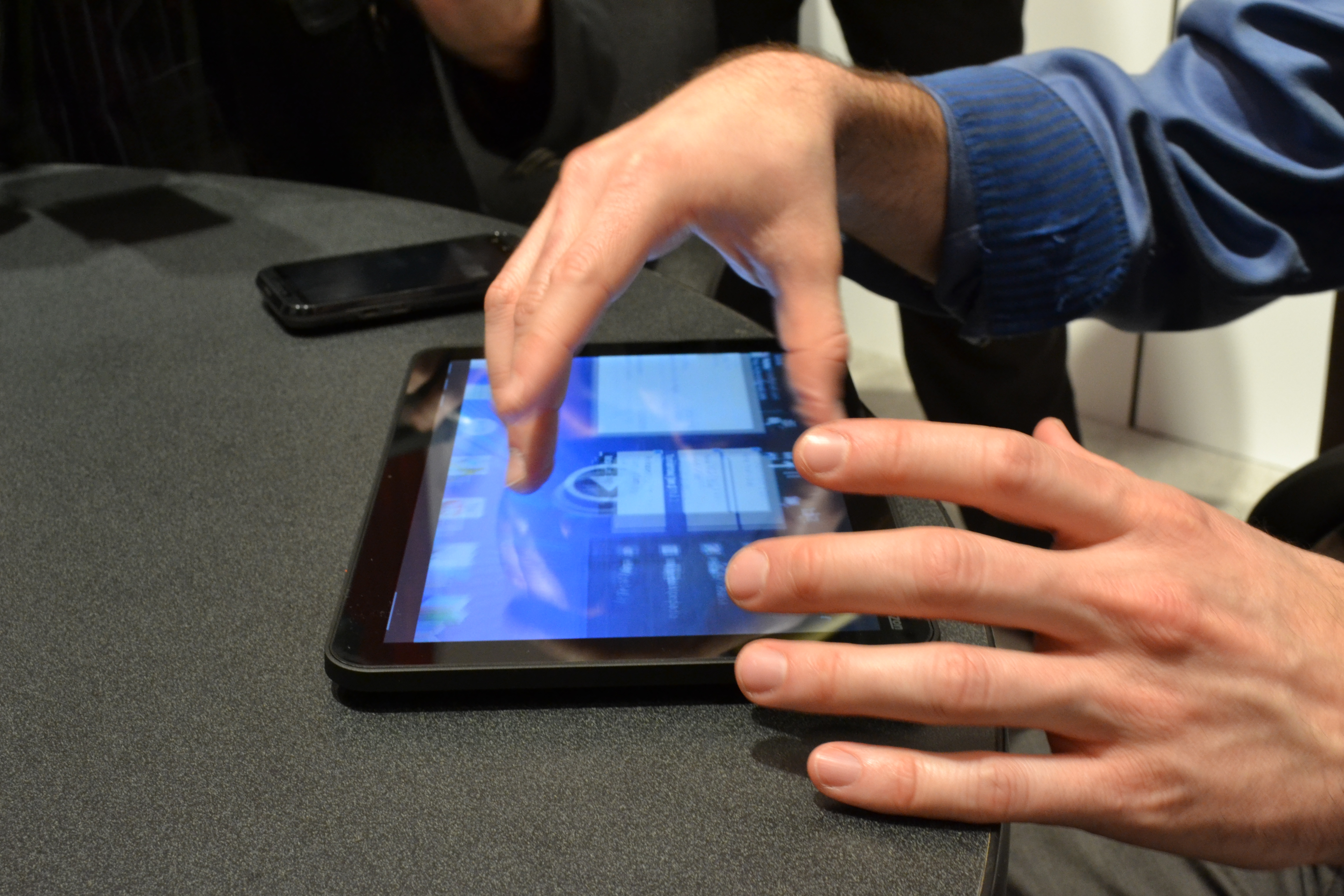
Like the iPad, the Xoom will also have 10-finger touch capabilities, which will make the on-screen keyboard much more useful. Also, it’s just fun to watch people move things around on-screen with all of their fingers. I suspect many tablets will move to a 10-finger touch in the year to come.
A true iPad competitor
Like it did with the Droid smartphone in 2009, Motorola may be the first manufacturer to offer a competent alternative to Apple’s iPad. No pricing has been announced yet, but if it’s priced at lower or comparable prices to Apple’s tablet, I suspect Motorola may have a hit on its hands. I can’t say that it knocks the iPad out of the park, but it appears to match the device in most categories. We look forward to checking it out further when the Motorola Xoom hits shelves sometime in the first few months of this year.
CES Video
Below is a long, six-minute demo we got from a Motorola representative. I apologize about the length, but was too fascinated to stop recording. Fair warning, the audio is a bit faint and I am no professional photographer. Thanks to our own Greg Mombert for the photos seen above.


