Among the many things that users and reviewers complain about with Windows RT and Windows 8 tablets is processing speed. With IDC laying part of the blame for last quarter’s abismal PC sales on Windows 8, many outlets are using this data as subtext for the news coming out of Intel’s annual developer’s conference in Beijing this week.
When Intel China’s Tan Weng Kuan, vice president and general manager of the Mobile Communications Group, took the stage at IDF 2013 to discuss the upcoming quad-core Atom processors for the next-generation of Windows 8 tablets, we couldn’t help but question whether the new chip will solve all of Microsoft’s problems, no matter how much it has improved on the technical front.
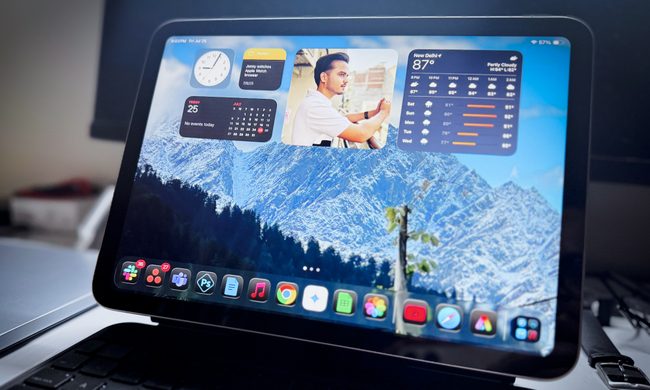
Codenamed “Bay Trail,” this next-gen Atom chip was first announced at CES and is geared for tablets. The processor is designed to be more power-efficient than the current crop of dual-core “Clover Trail” processors that already power many of the Windows 8 devices on the market, like the HP ElitePad 900 we recently reviewed (pictured above).
What makes the Atom chip a better alternative to the ARM chip found in RT devices is that the Atom processor is based on the same x86 architecture as the Core chip, so you can run full Windows 8 with all your usual software but without the higher price tag or power consumption of Intel devices.
Speed-wise, the Atom processor sits somewhere between the Core and the ARM chips. As DT’s Matt Smith wrote in Should you accept Atom in your next PC?, “Though slow compared to an Intel Core processor, [Atom’s] quicker (sometimes much quicker) than any ARM processor on the market today.”
The new quad-core processor uses a “microarchitecture [that] will [enable] the most powerful Atom processor to date, doubling the computing performance of Intel’s current-generation tablet offering,” said Tan at IDF 2013. With Bay Trail, its performance should be closer to the Core chip as they share a similar design and can make use of Intel HD 4000 graphics.
According to CNET‘s report, Bay Trail’s miniature size means it can fit inside tablets “as thin as 8mm (0.3-inches) that have all-day battery life and weeks of standby.” So we can look forward to slimmer Windows 8 slates that are due to arrive later this year.
While we certainly welcome thinner, more powerful yet more energy-efficient Windows 8 tablets, we can’t shake the feeling that it’s the Windows 8 operating system itself rather than the hardware that needs the most work to win back love from users. A device can have the best processor in the world, but it needs equally awesome software that users will enjoy using to make a device truly great.