
The Google Pixel 7, Pixel Watch, and Pixel Tablet all have something in common other than being Google-branded products with generic names. They’re part of an explicit attempt by Google to build a Pixel ecosystem of its own. The company wants to take on Apple and Samsung by luring people in with the idea that by buying Pixel devices and using Google services, they can have a similar experience as someone buying an iPad, an iPhone, and AirPods.
It’s a hard sell. Google’s new Pixel products don’t exist in a vacuum. They exist in a world where Google has attempted various iterations of its ecosystems ‘for real this time’ before scuppering them. It also comes weeks just after Google disbanded the Pixelbook and Stadia teams without warning. It also comes with the company’s now standard slew of quality control issues. An ecosystem is built on trust, but Google has torched its reputation over and over.
Google’s product-killing reputation means it has no trust
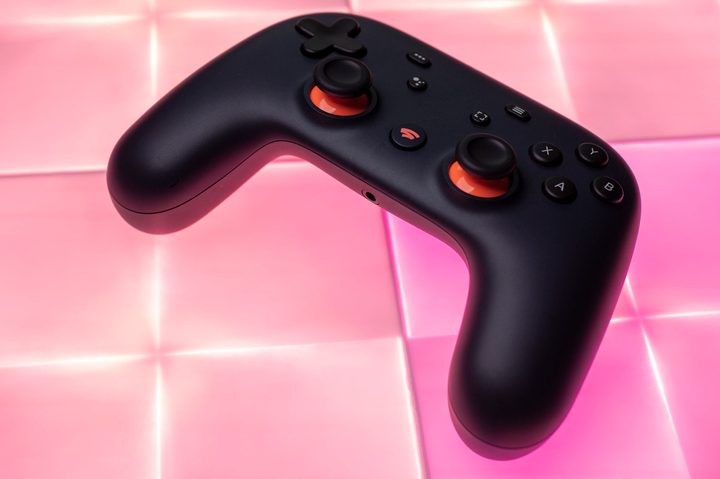
Google’s propensity for killing off products has turned it into an online meme. The Killed By Google site chronicles services the company has championed before dumping. It reached levels of self-parody hitherto unseen when the company killed off its Pixelbook division, only then to champion a large-screen Pixel experience. This happened the same week it killed off its Stadia cloud gaming service and then pushed out premium cloud gaming-focused Chromebooks just two months after emphatically denying it would ever do so.
Both incidents underline the point that simply because a product line appears to be an invaluable part of Google’s strategy, that doesn’t protect it from being canceled. That is fatal to an ecosystem play. Now, a new report from The Information claims that Google is diving into hardware full-throttle to beat back Apple. I wouldn’t hold my breath.
Follow-up is important

Buying into an ecosystem also requires some sort of follow-up. You need to have the confidence that when your product breaks 3 to 5 years later, there’s a new one that’s 3 to 5 years better. Even Microsoft, for all its flaws, has provided that with Surface. There’s no guarantee there’ll be a Pixel Watch 2 next year or even the year after, nor is there the same for a Pixel Tablet 2.
If we do hone in on that Pixel Tablet point, it’s also worth noting that the existence of the Pixel Tablet in fact highlights that failure to follow up. Google launched the Pixel C, failed to follow up on it, and immediately pivoted to Chrome OS tablets. The company launched the Pixel Slate, failed to follow up, and pivoted back to regular clamshell laptops. How did that go? You guessed it — Google failed to follow up on it and pivoted to tablets four years later. How much confidence should one have in Google following up on the Pixel Watch a year or two from now based on that track record?
To be very fair to Google, it’s kept at Pixels longer than one would expect given their market performance, but one has to imagine the bean counters are getting increasingly nervous.
It’s not early days anymore

The other part of trust also comes down to the hardware itself. Google has the habit of tossing in one game-breaking flaw in otherwise excellent devices, as a treat. Whether it be the limited RAM of the Pixel 3 series, the poor batteries of the Pixel 4, or the heating issues with Pixel 6 and Pixel 7, the company is reliable in its unreliability.
There’s the defense of Google that these are growing pains for a company starting out. It’s the company’s first smartwatch, it’s never done its own processor before, it has a small retail footprint. Those are Google’s problems, not ours. If its smartwatch is not as good as what currently exists on the market, then it is not as good. If Tensor is inferior to current processors in terms of efficiency, power, and thermals, then it is inferior.

If the Pixel is having quality assurance issues with software and hardware, then it is having QA issues. Certainly, there are good reasons to delve into why these issues are being experienced for those inclined to be sympathetic or analytic — but those are neither here nor there. For those spending real money, it’s trivial.
To wit, Google’s ecosystem is combined with very good ideas. The Pixel Buds A and Pixel 6a work well together. If it had finally rolled out Chrome OS’s Android integration, that would be another piece of the puzzle. If Android tablets had Android 13 en masse, that’s yet another piece. And yet, I can’t help but feel that a fun part of buying into the Google ecosystem is not knowing which puzzle piece will be taken off the board for some shiny new picture. It’s ultimately Google’s world, and you’re just living in it.


