

Imagine a small tablet for reading and content consumption, and the first recommendation that you will get from people around you is the iPad mini. And deservedly so. It’s a terrific little slate. Unfortunately, Android failed to step up in the segment for years. In 2025, Red Magic Astra finally shifts that status quo. And quite handsomely, if I might put it.
Now, unless you’re someone who can bravely look beyond the Apple ecosystem, you can be forgiven for not knowing about Red Magic. Android enthusiasts, however, hold the brand in pretty high regard. For years, Red Magic has made some terrific gaming-centric phones at the edge of compelling design and top-tier performance.
It was only last year that Red Magic made a no-holds-barred tablet. This year, the company delivered another knockout punch with the compact Red Magic Astra, a tablet that clearly has the iPad mini in its crosshairs, but goes beyond its Apple rival in so many ways.
There’s nothing quite like it

When I first held the Red Magic Astra in my hands, it immediately felt like a tablet that is not here to play, but to impress. The all-metal build is extremely polished, but it’s the rear shell where this tablet stands out with a unique design element.
Just like the Asus ROG Flow, the Astra has a glass strip at the back that allows you to take a peek at the silicon and vapor chamber areas, alongside the RGB-lit fan. Yes, there’s a physical fan fitted inside this palm-friendly tablet, rocking shark fin blades that can whir at an impressive 20,000 RPM.
Red Magic claims that these fans can bring down the slate’s temperature by as much as eight degrees Centrigrade. These fans actually deliver on their intended purpose. Their side-mounted position allows them to circulate the hot air and vent it through the speaker grilles. If you put a finger on the side, you can actually feel the airflow.

There are a few minor gripes that I have with this tablet, but none too make-or-break type. The off-center position of the USB-C port is a bit awkward, especially when playing games in handheld mode via touch-screen inputs. The power button at the top is a tad too thin, though the fingerprint sensor embedded within does an acceptable job at authentication.
Another minor issue is the placement of the dual-speaker array. Their enter-aligned position almost always gets covered with palms if you are playing games in landscape mode. I also miss the capacitive shoulder-mounted trigger buttons that you get on the Red Magic smartphones, such as their latest 10S Pro flagship.
Lots of flash, but even more substance
Yet, what this tablet misses out on in a few minor areas, it more than makes up for it with the perks at hand – especially if you put the asking price into consideration. Let’s start with the build. The Astra comes with an IP54 clearance for dust and water resistance. It’s not the best, but still better than nothing, as is the case with the iPad mini.

Moving on to the display, which makes the iPad mini feel like a bad value for the bill it incurs. On the Red Magic Astra, you get a slightly bigger 9-inch OLED panel with a 165Hz refresh rate, which is far better than the 60Hz LCD panel on the iPad mini. In side-by-side tests, it’s easy to see the deeper black levels and the extra punch in colors.
Another major advantage is the brightness levels. Apple’s tablet can only reach 500 nits, and coupled with the screen glare problem, it can give you trouble with outdoor visibility. The Astra offers a peak brightness of 1,600 nits, though it can manually “only” manage 1,100 nits.
It’s a joy watching videos and playing games on this screen. To go with the sharp visuals, the Astra also adopts dual X‑axis linear motors for haptics, and it makes a tangible difference while playing games. And oh, let’s not forget the bezels, by the way. Have a look:

A surprisingly strong performer
The Red Magic Astra draws power from Qualcomm’s top-tier Snapdragon 8 Elite SoC, the best silicon you can get in an Android device out there. What surprised me was the tablet’s stability, which even surpassed that of the M4 iPad Pro. After running the 20-loop 3DMark Wild Life Extreme test, the Red Magic Astra delivered an impressive performance stability of 88.4% on the synthetic run. The iPad mini, on the other hand, could only muster around 74% stability.
Next, I switched to the more demanding ray-traced simulated environment of the 3DMark Steel Nomad Light stress test. The Astra wowed me once again with an impressive stability of 93.1%, while the iPad mini with Apple’s A17 Pro silicon couldn’t go past the 80% mark.
Even under peak graphics and thermal load, the frame rates only dipped 7% below their maximum value, and even recovered over time. This is something I have rarely seen on phones powered by the same Qualcomm silicon.

Interestingly, the Astra does an even better job at delivering top-tier performance and heat management than the bigger Red Magic Nova tablet. There are a total of 13 dedicated cooling components fitted inside the tablet’s all-metal chassis.
To give you an idea, the thermal architecture of the Nova includes multiple layers of graphene and copper foil, a dual-layer vapor chamber, and liquid metal, something you only come across on high-end gaming laptops such as the Asus ROG Strix Scar 18.
Moving beyond simulated performance runs and into the realm of top-shelf gaming, the Red Magic tablet doesn’t disappoint. I have rarely seen a tablet with a metallic shell running as cool as the Red Magic Astra. Certainly not in the Android segment.
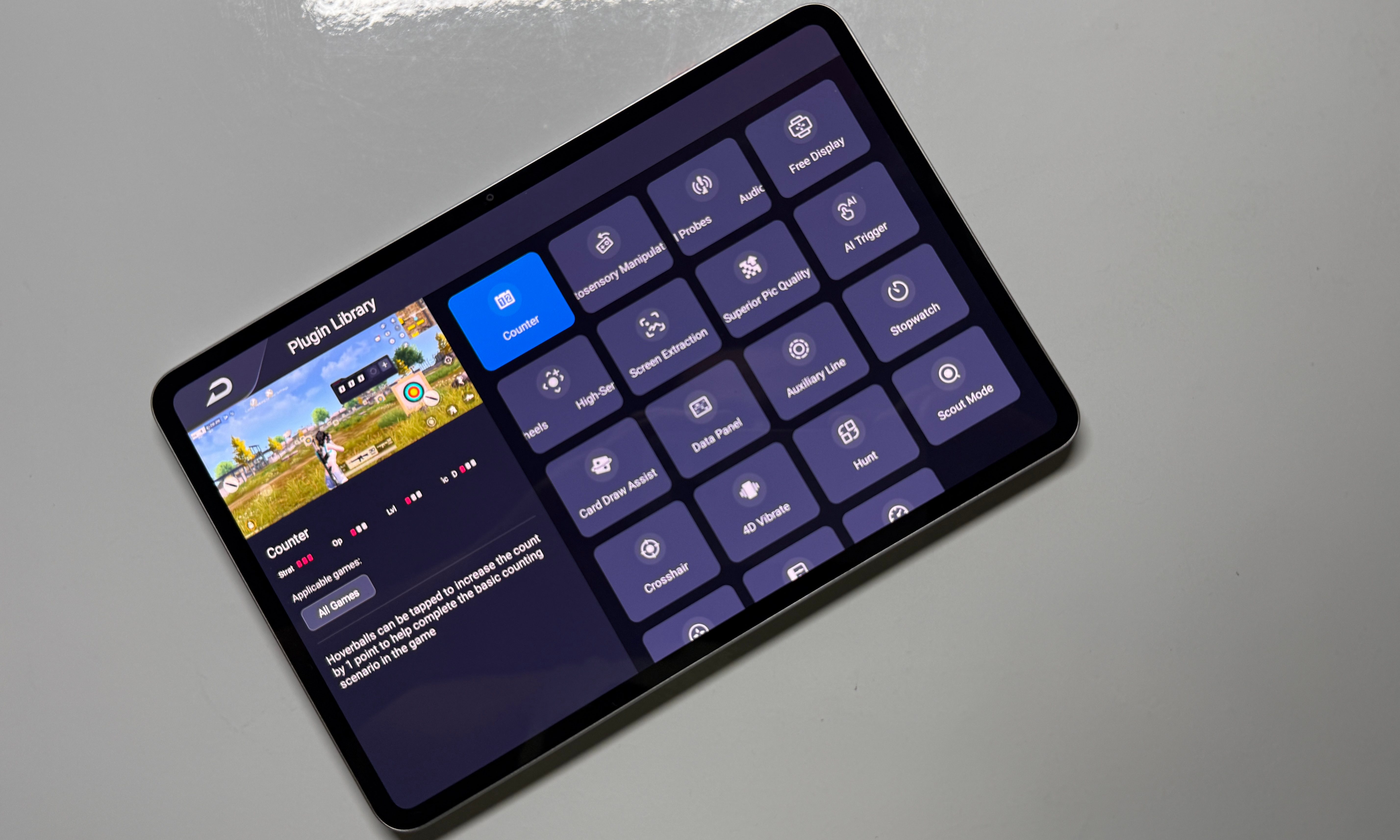
Another pretty cool aspect of the Red Magic Astra is that it fully embraces its gamer-first identity. To that end, it offers deep performance tuning controls, which let you control everything from the fan speed to CPU and GPU clock speeds, taking the latter to its GHz scale limit.
Red Magic calls it Diablo Mode. Now, there aren’t many games that can tap into this extra firepower to level up the graphics quality or deliver a sizable jump in gaming performance, the way you would expect on a gaming PC. But to give you a brief idea, it can boost the multi-core performance by around 7% and the graphics output by nearly 11% in synthetic benchmarks.
The mileage will vary depending on the workload or the game at hand. To the naked eye, the difference is hard to spot, unless you’re pushing a demanding title like Zenless Zone Zero, where you get a buttery smooth experience at the best graphics preset and peak resolution.

Diablo Mode must be enabled from the side panel, which you can access after starting games from within the Game Space launcher. This is where the fun truly begins. This launcher not only works on the tablet, but also seamlessly transforms into a desktop gaming center when connected to a larger screen.
It’s a simple plug-and-play approach, and it works just as fine for native Android games as it does for emulated titles for legacy consoles. Even with resolution and graphics upscaling, you can comfortably play console Nintendo and PSP titles, and even a few emulated PC games, without running into any performance shortfalls.
Red Magic has spent a lot of time developing game-centric plug-ins that offer an extra edge, such as color inversion to spot enemies, directional sound cues, and boosted zoom in crosshair, among others. Then there’s the in-game dashboard, which offers quick access to a whole bunch of gameplay and system utilities.
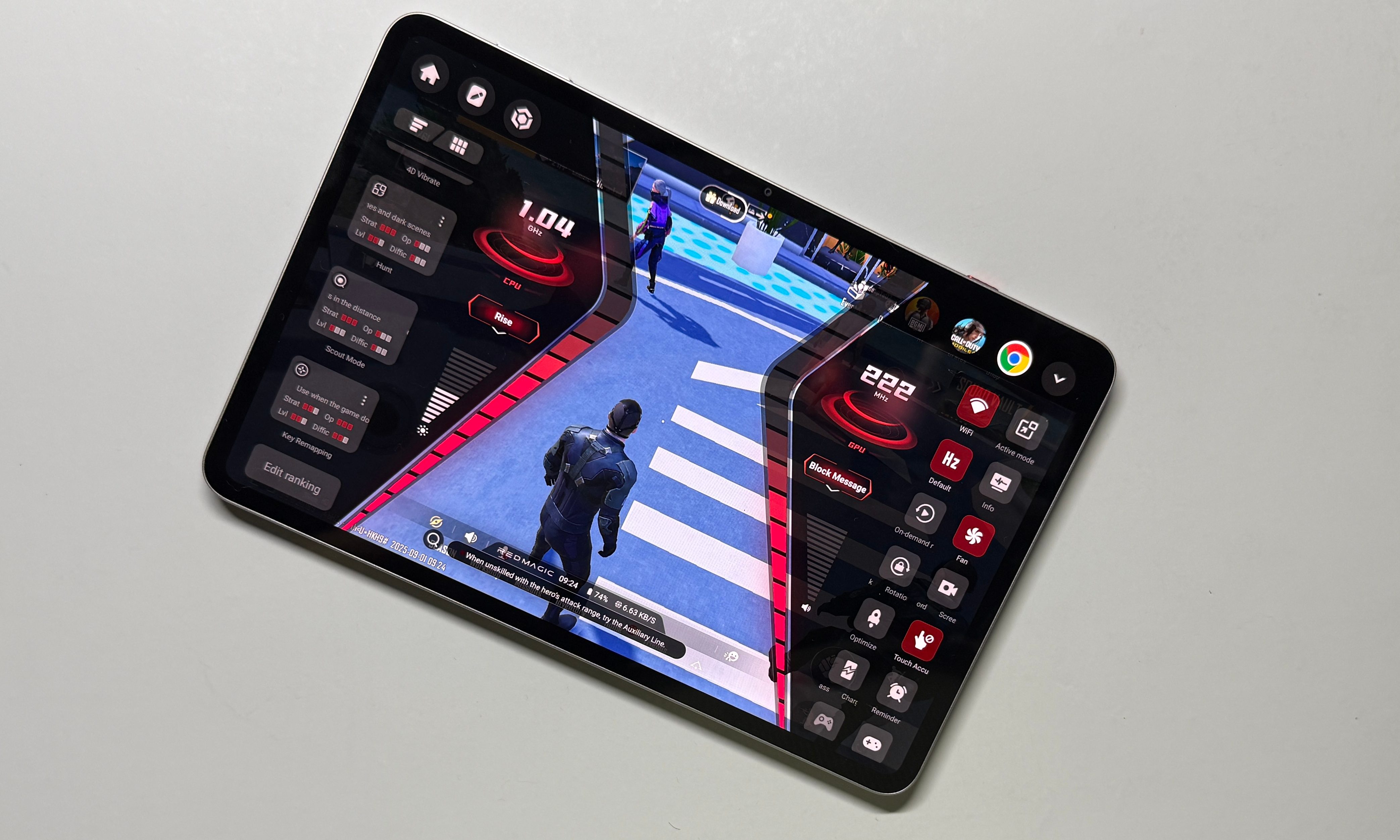
This is something that sets the Red Magic Astra apart from every other Android tablet out there. It sets out to deliver a fantastic gaming experience, and surpasses those expectations at both hardware and software levels.
As far as power efficiency goes, this one comes equipped with a dual-cell 8,200 mAh battery. Now, it’s hard to quantify the battery life because that would vary dramatically depending on the game you’re playing and the performance preset active in those sessions. But based on my non-gaming usage that includes reading web comics, articles, and a bit of sports streaming, this tablet should last around 8-10 hours.
If you’re pushing it (and I mean really pushing it) at games, the battery will be exhausted in roughly six to seven hours. Thankfully, topping it up is not a hassle. The Astra supports 80W charging, which can fill the battery up to 60% in just about 30 minutes, while a full charge takes an hour.

A cool perk is bypass charging, which separates the battery from the power draw. Simply put, the connected cable only supplies enough juice to keep the device running, and in the process, avoids heat buildup.
A pure tablet delight
Overall, the Red Magic Astra is a fantastic small tablet that fills a unique iPad mini-sized gap in the Android hardware ecosystem. But it’s really when you look at its asking price that you realize just how astoundingly good value it offers, especially when compared against Apple’s small tablet.
Starting at $499 for the variant with 12GB of RAM and 256GB of onboard storage, the Red Magic Astra is already leagues ahead of the iPad mini in terms of sheer hardware-level goodness. And as you factor in benefits like an OLED display, far superior thermal hardware, deep levels of performance tuning, way faster charging chops, and a console-in-tablet approach, the Astra seems like a stuff of dreams for compact tablet fans.
Unless you are smitten by iPadOS or can’t part ways with the conveniences of the Apple ecosystem, there is no better “small” tablet on the planet for the price than the Red Magic Astra. The only bitter pill you need to swallow is the import route and the somewhat limited 3-year OS update situation. As for the rest of the package, it’s pretty magical.


