
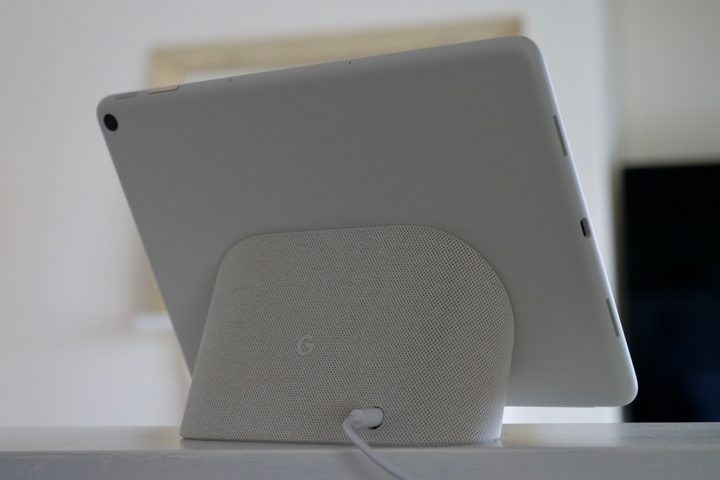
The Google Pixel Tablet isn’t the first time we’ve tried this. It didn’t end so well then and likely is going to disappear with a whimper again. And that’s a shame.
The year was 2011. It was an exciting time for Android, with the manufacturers almost tripping over themselves to release new devices faster than those of us who covered the things for a living could keep up. It wasn’t uncommon for a device announcement to actually see several new products drop at the same time. Between the evolution of the Android software, the progression of hardware it ran on, and the competition of the U.S. carriers to have the “fastest” network in all the land — things were moving fast.
Motorola already tried this 12 years ago
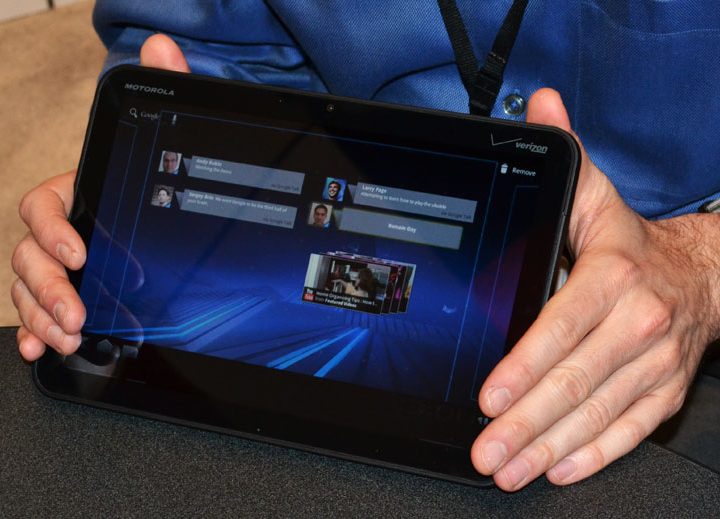
Motorola dropped four new products on us that January at CES in Las Vegas. I was there. All ultimately were forgettable, including the awkwardly (or awesomely, depending on who you asked) named Motorola Xoom. A tablet. It wasn’t the first — Samsung laid claim to that with the Galaxy Tab. But the Xoom was to be the first to run a new version of the software, Android 3.0 Honeycomb. It was powered by the Nvidia Tegra 2 platform, which excited nerds for all sorts of reasons. (Less exciting was that it launched with a 4G LTE SIM card that didn’t work yet and would require you to send the whole thing in later if you wanted to upgrade.)
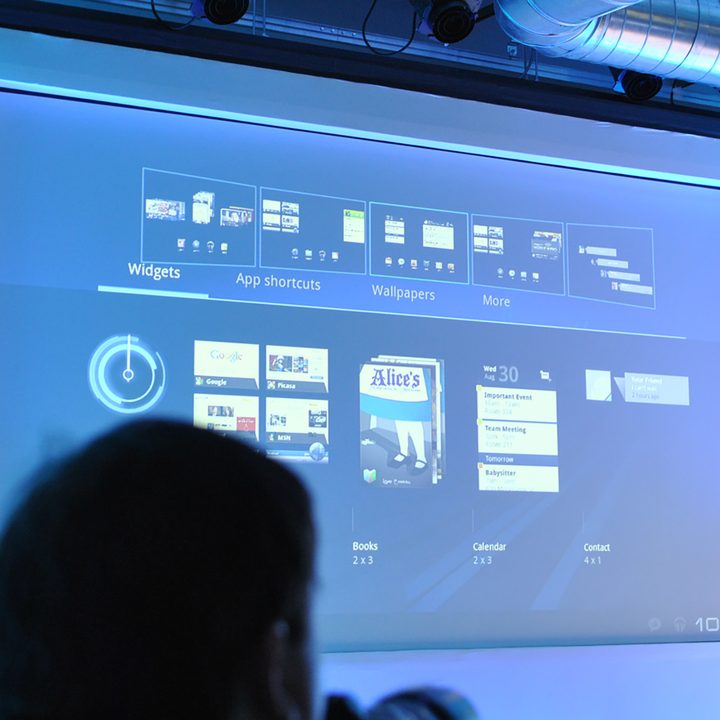
Meanwhile, a month after that CES announcement, journalists were invited to the Googleplex in Mountain View to get an inside look at the new Honeycomb software. I was there, too. Long story short there is that Honeycomb didn’t even last a year or make it onto phones; it was replaced by Android 4.0 Ice Cream Sandwich about eight months later. The Honeycomb software was, to put it politely, not exactly a success.
Bringing this story back around to the present day, The Motorola Xoom had an optional speaker dock. You’d plug the thing in (there were connectors for Micro USB and Micro HDMI), and it’d pump up the jams in a way the fledgling tablet simply couldn’t. I had one in the course of testing. The review is still live, though the publish date is now obviously wrong, and the resolution of the images hasn’t stood the test of time and multiple changes to the platform that powers the website. More’s the pity. Now? Google has its own tablet (again) with the Pixel Tablet. And (again) it’s a tablet with a speaker dock that also serves as a wireless charging dock.
Everything old is new again.
I remember at the time loving the idea of a tablet, even one as big and clunky as the Xoom. (Hey, it was a dozen years ago.) I remember loving the idea of having a tablet I could present and use in different rooms as a display or in my hands for that more personal touch.
And I remember that idea being a bit of a failure just on principle. I’d be in the kitchen, ready to watch or listing to something while I was cooking, but the tablet was still in the bedroom. Or, on occasion, it’d be the other way around. That wasn’t so much a failure of the Motorola Xoom itself — though let’s be clear, Android hardware from back then likely didn’t last two years, if that, if only because the software would have left it behind — but as a failure in the principle of the docked tablet.
Why the Nest Hub works so well
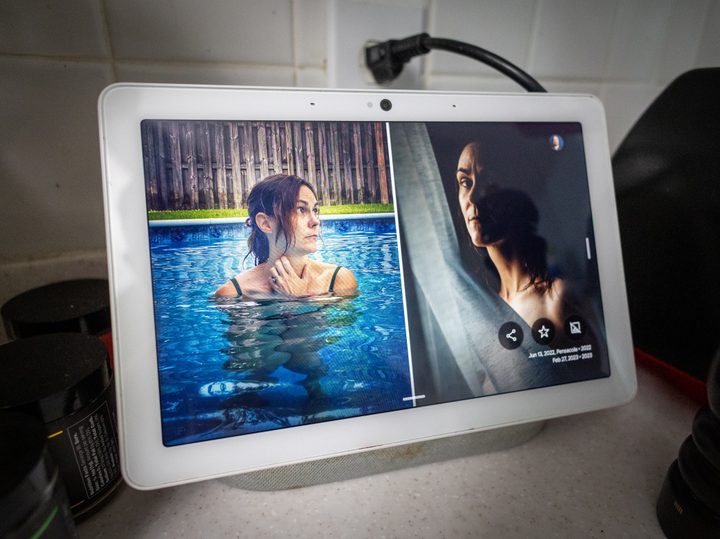
Google itself has undermined that idea a good bit with devices like the Nest Hub — the 7-inch smart display — and the 10-inch Nest Hub Max. Good displays. Speakers. Software that, ya know, works. Plus, the prices are right, at $99 and $229, respectively.
The Nest Hub is cheap enough (especially if you snag one on sale) to have several stashed throughout the home. I’ve got one on my desk here in front of me. Another in the bedroom. My kids have them. I’ve got a Nest Hub Max in the kitchen. It serves as a secondary TV sometimes or as a timer for making coffee. Or a way to control the air conditioning when I walk in the back door. Or … the options are endless. And they are so because the Nest Hub Max, like its smaller siblings, doesn’t have a habit of changing rooms. I know exactly where it is at any given time — and so does everyone else in my family.
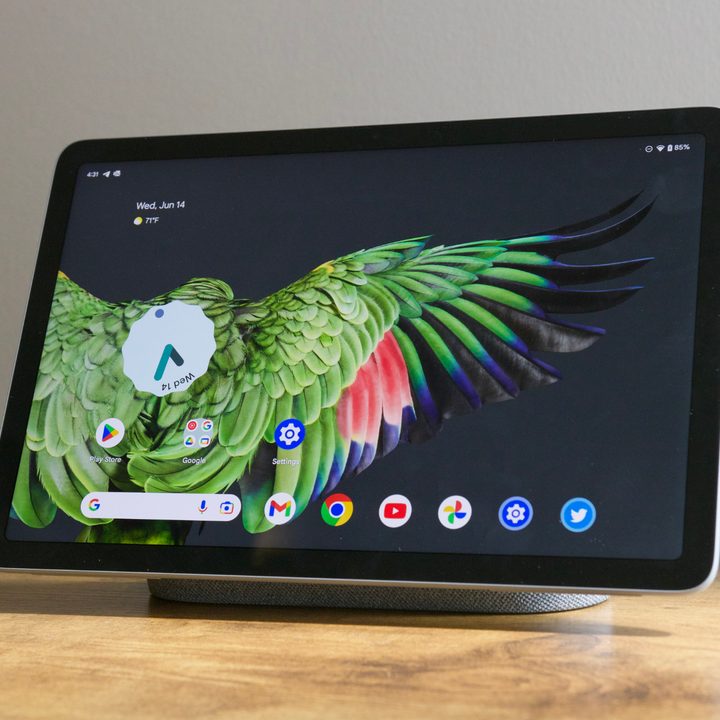
Google has attempted to bridge the software gap between tablet and hub, though our Pixel Tablet review points out that there’s obviously still some work to be done, which revives the discussion over whether Google, institutionally, is even capable of the internal focus it has to make such a complicated product be more than a minimally viable product.
The Motorola Xoom was that in 2011, and it died an unceremonious death, along with the software that ran on it and the speaker dock you would have had to pay even more for. The Nest Hubs in my home are still used today after several years, quietly doing exactly what it is I need them to do, in the spaces I need them to do it in. I don’t know what software is on them — and I don’t care.
The Pixel Tablet is a modern-day retelling of a story that’s already been written. And it’s doubtful that the ending is going to change this time.


