1. Home
  2. Trash
  3. News

Europe’s planet-hunter telescope CHEOPS observes its first exoplanet

Add as a preferred source on Google
Cheops: the science begins

Europe’s newest planet-hunting telescope, the CHaracterizing ExOPlanet Satellite or CHEOPS, has observed its first exoplanet and is ready to begin its scientific observations.

Launched in December 2019, the satellite is in orbit around Earth and captured its first image of a distant star in February this year. The next stage in getting the telescope ready to being scientific observations was confirming that everything worked as expected by imaging a known target.

Artist's impression of Cheops, ESA's Characterising Exoplanet Satellite, in orbit above Earth.
Artist’s impression of CHEOPS, ESA’s Characterizing Exoplanet Satellite, in orbit above Earth. In this view the satellite’s telescope cover is open. ESA / ATG medialab

“To measure how well CHEOPS performs we first needed to observe stars whose properties are well known, stars that are well-behaved — hand-picked to be very stable, with no signs of activity,” Kate Isaak, Cheops project scientist at ESA, explained in a statement.

The test observations went even better than expected, with the telescope achieving an even higher level of accuracy than was required. “We were thrilled when we realized that all the systems worked as expected or even better than expected,” CHEOPS Instrument Scientist Andrea Fortier said in the statement.

With that requirement met, the telescope could move onto observing its very first exoplanet.

The exoplanet CHEOPS observed is in the HD 93396 planetary system, located in the Sextans constellation around 320 light-years away. The targeted planet is the giant KELT-11b, almost three times the size of the sun but only one-fifth the mass of Jupiter. It has such low density that “It would float on water in a big-enough swimming pool,” according to David Ehrenreich, CHEOPS Mission Scientist from the University of Geneva.

The planet was first observed in 2016, and was chosen for CHEOPS’ first observation due to its large size. Because it is so big, it takes eight hours to pass in front of its star, which makes it difficult to observe using telescopes on the ground. As CHEOPS is space-based and able to observe long transit times, it could observe the planet and measure its diameter with great accuracy.

“The in-orbit commissioning phase was an exciting period, and we are pleased we were able to meet all requirements,” said Nicola Rando, CHEOPS project manager at ESA. “The satellite platform and instrument performed remarkably, and both the Mission and Science Operation Centres supported operations impeccably.”

Georgina Torbet
Georgina has been the space writer at Digital Trends space writer for six years, covering human space exploration, planetary…
The Digital Trends App Bundle is yours to try for a whole week, free
Digital Trends App Bundle

Recently, we've entered an exciting collaboration with Maple Media, creating a bundle of 17 apps worth having on your phone. From relaxed fun to serious productivity boosts, these apps cover all your bases and provide a fun boost to your phone. Normally, the bundle is $9.99 per month (far lower than the cost of using the apps individually), but for your first 7 days you can get access to the bundle for free. View the full Digital Trends App Bundle for a complete list of the apps, or read on for a summarized take.

Start your free trial

Read more
The Galaxy S26 Ultra might not see much of a battery upgrade after all
It looks like it will stay the same as the last five years.
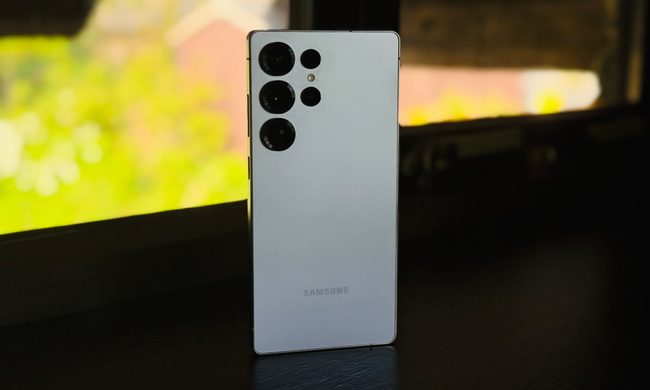
The back of the Samsung Galaxy S25 Ultra.

What's happened? This week, China's Quality Certification Center released information about a battery (EB-BS04898ABY) with a maximum capacity of 4,855mAh. That's the same capacity as was previously seen in the Samsung Galaxy S25 Ultra, and fans have taken this certification to mean the Galaxy S26 Ultra will not see a capacity increase after all.

The Samsung Galaxy Ultra models have had the same battery capacity for the last five years.

Read more
The Galaxy Tab S10 Lite is official, and it’ll be here sooner than you think
Galaxy Tab S10 Lite

What's happened? Samsung has officially announced the Galaxy Tab S10 Lite, a budget-friendly alternative to the Galaxy Tab S10. The device has been rumored for months, but this is the first time Samsung has officially acknowledged its existence.

The Galaxy Tab S10 Lite will have a 10.9-inch display and a peak brightness of 600 nits — a bit on the lower side, versus the iPad Pro's maximum brightness of 1,600 nits.

Read more