1. Home
  2. Trash
  3. News

Digital Trends may earn a commission when you buy through links on our site. Why trust us?

Gene therapy helps people with monochrome vision to see in color

Add as a preferred source on Google
Promotional image for Tech For Change. Person standing on solar panel looking at sunset.
This story is part of Tech for Change: an ongoing series in which we shine a spotlight on positive uses of technology, and showcase how they're helping to make the world a better place.
 

Color blindness is usually a hereditary condition. While there have been a few high-tech methods, such as special glasses, to help people deal with it, to date there hasn’t been much in the way of a permanent solution to the problem. Perhaps until now, that is.

An initial trial in patients suggests that a new gene therapy treatment for helping overcome color blindness, developed by researchers in Germany, is completely safe. The researchers also obtained evidence that the treatment works.

The condition in question, referred to as achromatopsia, is one of the rarer types of color blindness. Approximately 8% of men and 0.5% of women have some kind of color blindness which renders them unable to see certain colors (red-green color blindness being the most common). Achromatopsia, however, affects just 1 out of 33,000 people — which nonetheless adds up to a sizable cohort of people worldwide. The condition is due to non-functioning or absent retinal cones, and it makes the world appear entirely black and white. It also causes blurred vision and makes eyes extremely sensitive to bright light.

In around one-third of patients with achromatopsia, the condition is caused by a gene called CNGA3. The new treatment, developed by researchers at the Institute for Ophthalmic Research at the University Hospitals in Tübingen and Departments of Pharmacy and Ophthalmology at Ludwig Maximilian University of Munich, makes it possible to inject a corrected version of the gene into a patient’s retina using a harmless virus.

A trial involving nine achromatopsia patients, aged between 24 and 59, was recently carried out at the University Eye Hospital Tübingen. There were no health issues, and the retina suffered no permanent change or damage as a result of the procedure. Patients involved in the study saw their vision improve in terms of focus, contrast perception, and — most crucially — color vision.

“The study is an important first step,” Martin Biel from the Department of Pharmacy at LMU, said in a statement. “It represents a milestone on the road to a curative therapy of achromatopsia, and we expect even better treatment success in the future.”

A paper describing the research was recently published in the journal JAMA Ophthalmology 2020.

Luke Dormehl
I'm a UK-based tech writer covering Cool Tech at Digital Trends. I've also written for Fast Company, Wired, the Guardian…
The Digital Trends App Bundle is yours to try for a whole week, free
Digital Trends App Bundle

Recently, we've entered an exciting collaboration with Maple Media, creating a bundle of 17 apps worth having on your phone. From relaxed fun to serious productivity boosts, these apps cover all your bases and provide a fun boost to your phone. Normally, the bundle is $9.99 per month (far lower than the cost of using the apps individually), but for your first 7 days you can get access to the bundle for free. View the full Digital Trends App Bundle for a complete list of the apps, or read on for a summarized take.

Start your free trial

Read more
The Galaxy S26 Ultra might not see much of a battery upgrade after all
It looks like it will stay the same as the last five years.
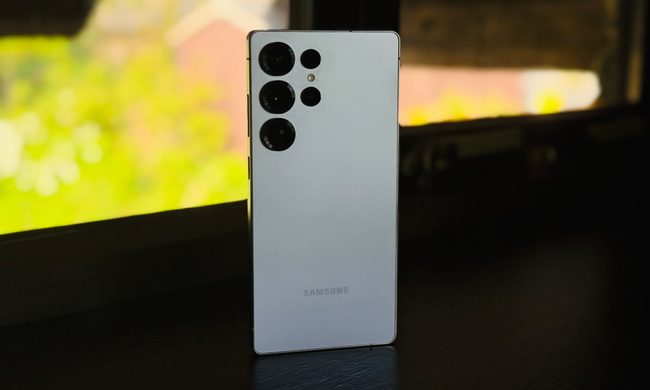
The back of the Samsung Galaxy S25 Ultra.

What's happened? This week, China's Quality Certification Center released information about a battery (EB-BS04898ABY) with a maximum capacity of 4,855mAh. That's the same capacity as was previously seen in the Samsung Galaxy S25 Ultra, and fans have taken this certification to mean the Galaxy S26 Ultra will not see a capacity increase after all.

The Samsung Galaxy Ultra models have had the same battery capacity for the last five years.

Read more
The Galaxy Tab S10 Lite is official, and it’ll be here sooner than you think
Galaxy Tab S10 Lite

What's happened? Samsung has officially announced the Galaxy Tab S10 Lite, a budget-friendly alternative to the Galaxy Tab S10. The device has been rumored for months, but this is the first time Samsung has officially acknowledged its existence.

The Galaxy Tab S10 Lite will have a 10.9-inch display and a peak brightness of 600 nits — a bit on the lower side, versus the iPad Pro's maximum brightness of 1,600 nits.

Read more