1. Home
  2. Trash
  3. News

NYC’s Mount Sinai Hospital using Google Nest to monitor coronavirus patients

Add as a preferred source on Google
 

Mount Sinai, one of New York City’s hospitals hit hardest by the coronavirus pandemic, is using Google’s Nest cameras to monitor patients while limiting the exposure of its workers to the virus.

The health care giant has partnered with Google to install Nest Cams in the rooms of patients with COVID-19, the disease caused by the coronavirus, to help workers better monitor vital signs and reduce the exposure of first responders.

The hospital began installing two cameras in each patient’s room this past week. One Nest camera will be used to check vital signs while the other will be used to communicate with the patient.

“Video from the cameras will be livestreamed to a purpose-built console located in Mount Sinai nurse stations,” said Robbie Freeman, Mount Sinai’s vice president of clinical innovations, in a blog post.

Freeman said the cameras will let the hospital conserve its protective equipment for nurses, keeping them — and nurses — safer.

“It enhances safety for patients because we can keep an eye on everyone from the nursing station, and for our staff, it minimizes the frequency of time spent in-room with COVID-19 patients,” Freeman said.

A Mount Sinai spokesperson tells Digital Trends the healthcare system currently has about 100 cameras up and running. While they did not address questions about security precautions to guard patient privacy against possible hackers gaining access to the cameras, the spokesperson did say Mount Sinai sees a long term potential in using Nest cameras to monitor patients.

“As we monitor the situation and plan for surges, we expect this to be a solution that can be easily ramped up for COVID sites,” said spokesperson Stacy Anderson. “There is potential for this technology to be applied to additional use cases and care settings post the COVID-19 crisis.”

Google will not store the footage from the cameras or have access to it, ensuring patient privacy. The tech giant has vowed to provide 10,000 Nest Cams to Mount Sinai and other health care facilities around the country to assist with patient monitoring.

Chris Morris
Former Digital Trends Contributor
Chris Morris has covered consumer technology and the video game industry since 1996, offering analysis of news and trends and…
The Digital Trends App Bundle is yours to try for a whole week, free
Digital Trends App Bundle

Recently, we've entered an exciting collaboration with Maple Media, creating a bundle of 17 apps worth having on your phone. From relaxed fun to serious productivity boosts, these apps cover all your bases and provide a fun boost to your phone. Normally, the bundle is $9.99 per month (far lower than the cost of using the apps individually), but for your first 7 days you can get access to the bundle for free. View the full Digital Trends App Bundle for a complete list of the apps, or read on for a summarized take.

Start your free trial

Read more
The Galaxy S26 Ultra might not see much of a battery upgrade after all
It looks like it will stay the same as the last five years.
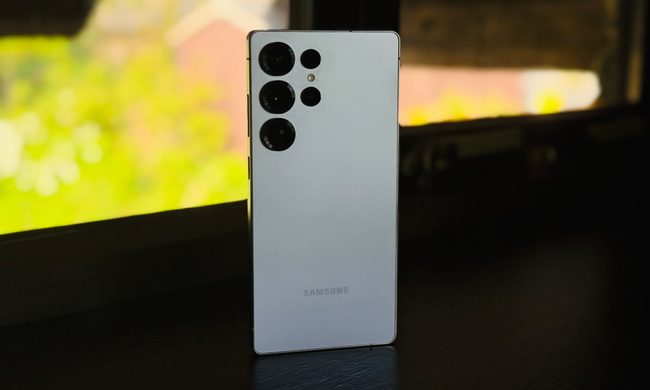
The back of the Samsung Galaxy S25 Ultra.

What's happened? This week, China's Quality Certification Center released information about a battery (EB-BS04898ABY) with a maximum capacity of 4,855mAh. That's the same capacity as was previously seen in the Samsung Galaxy S25 Ultra, and fans have taken this certification to mean the Galaxy S26 Ultra will not see a capacity increase after all.

The Samsung Galaxy Ultra models have had the same battery capacity for the last five years.

Read more
The Galaxy Tab S10 Lite is official, and it’ll be here sooner than you think
Galaxy Tab S10 Lite

What's happened? Samsung has officially announced the Galaxy Tab S10 Lite, a budget-friendly alternative to the Galaxy Tab S10. The device has been rumored for months, but this is the first time Samsung has officially acknowledged its existence.

The Galaxy Tab S10 Lite will have a 10.9-inch display and a peak brightness of 600 nits — a bit on the lower side, versus the iPad Pro's maximum brightness of 1,600 nits.

Read more