“Fast” is the word that Rachel Bull, senior footwear product director at Nike Running, uses to describe the company’s Vaporfly series of running shoes.
As word choices go, “fast” doesn’t seem particularly inspired. It’s safe to say that it’s not exactly going to have scholars scratching their heads over due to its ambiguity. Saying that running shoes are fast is a bit like saying that the key to Serena Williams’ success on the court is playing tennis really well.
But the more you delve into Vaporfly, the next-generation, high-tech running shoe technology that made its debut half a decade ago, there really can be no other description.
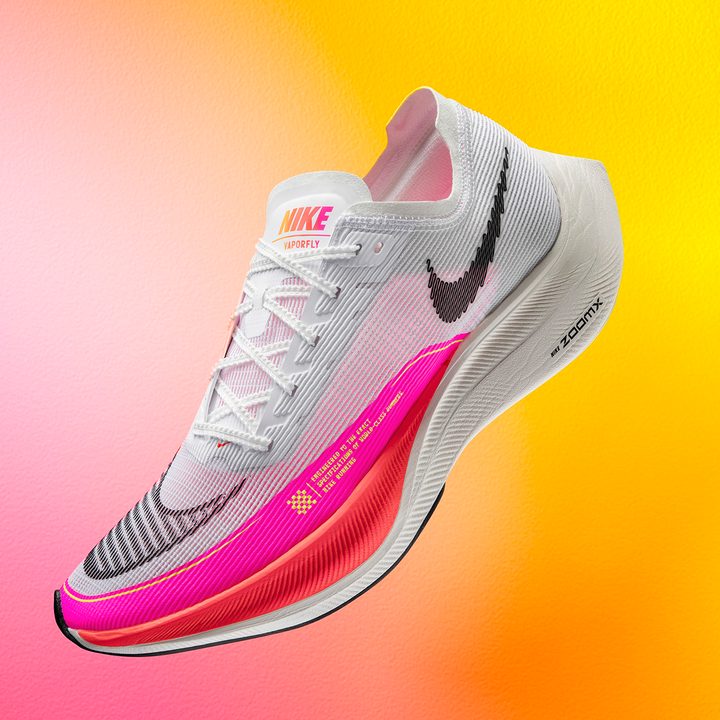
Vaporfly was the technology that first allowed an athlete to run a marathon in under two hours. A Google auto-complete search for Vaporfly also brings up the words “banned” and “controversial.” Ross Tucker, a sports scientist, wrote a blog in which he argued that the shoe technology disrupted not the sport of running, but the meaning of running. “It broke the principle,” Tucker wrote. “The premise is that running, ‘natural’ as it is, should not be decided by who wears the best shoe, but by who has the optimal combination of physiology, psychology, and tactics.”
Not too many running shoes are accused of fundamentally tearing open a rift in the space-time fabric of the sport they’re designed to be used for.
The footwear economy
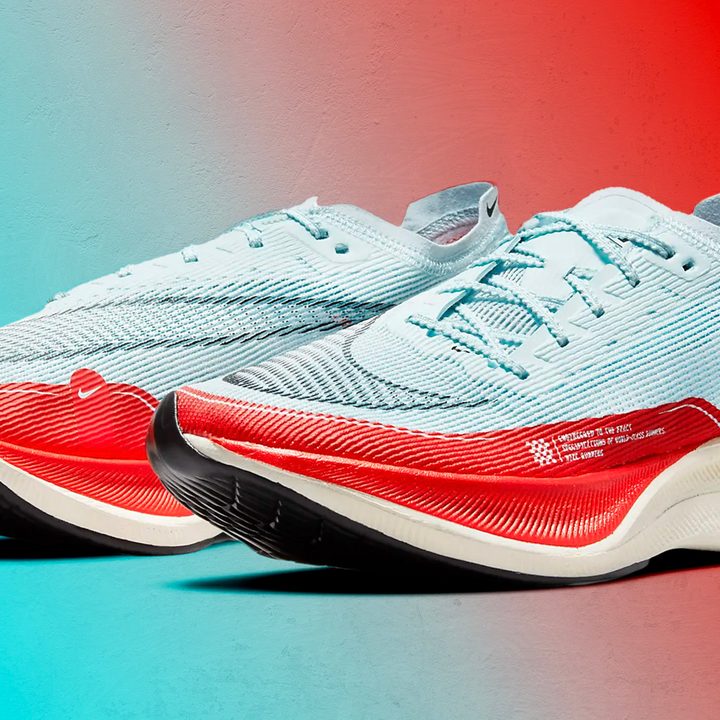
“Originally, Vaporfly was created in an effort to give athletes improved running economy through footwear,” Nike’s Rachel Bull told Digital Trends. “Our initial muse was our elite marathon runners, and specifically Eliud Kipchoge’s quest to become the first to break the two-hour marathon barrier. But then [we] unveiled a completely new approach to footwear design, a synergy between sport science, engineering, and athlete which defined an industry-leading approach to improving running economy. That technology, our NEXT% platform, has now informed several models across our portfolio and is available to runners of all levels: Whether you’re trying to break two hours, three hours, or four hours in the marathon — or simply want to reach a little further.”
Before Vaporfly shoes came along, Bull said, racing flats were the shoe of choice for elite marathoners. “We challenged ourselves with revisiting the system altogether to offer athletes the right weight of a shoe, [which is] not necessarily the lightest weight,” she noted.
In the place of these flat-soled designs, Vaporfly employs a chunky heeled design that looks a bit like wearers are sprinting in wedges. However, while that might not sound like the most aerodynamic choice, this “radical and iconic aesthetic” shift turns out to be stunningly effective: The first Vaporfly model shoes improved running economy (how much energy it takes to travel a particular distance) by 4%. In a field where a single percentage point increase in running economy is like reinventing the wheel, that’s an enormous leap forward.
What causes the massive improvement isn’t totally clear-cut (or, at least, it’s a secret sauce that Nike doesn’t spread around), although it has something to do with a combination of foam in the midsole and a carbon fiber plate that’s sandwiched inside the shoes. This design allows for the return of approximately 80% of the energy from every strike of the runner’s foot on the ground.
Technology doping?
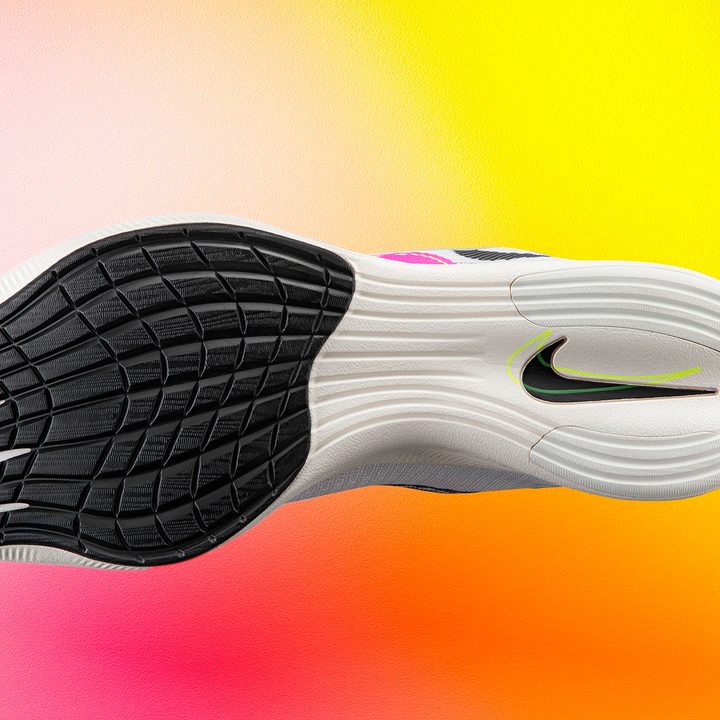
At this Olympics Games, Vaporfly will make an appearance, continuing Nike’s notable appearance at the world-famous sporting event. It very nearly didn’t, however. Accused of being an example of technology doping, giving an unfair advantage to athletes who wore them, Vaporfly was almost banned entirely from Tokyo 2020. In the end, World Athletics placed an indefinite ban on shoes with a sole thicker than 40mm, which includes the original Eliud Kipchoge Nike ZoomX Vaporfly 4% shoes. However, the shoe-tech is nonetheless represented at the Tokyo Games — albeit in a modified version. In a statement, Nike said that it respects “the spirit of the rules and we do not create any running shoes that return more energy than the runner expends.”
“Serving all athletes will always be our focus, and leading with innovation is what Nike has always done,” said Bull. “We will continue to create new and better solutions for training and competing. All of the road [and] track and field shoes that Nike athletes will be competing in in Tokyo abide by the guidelines set forth by World Athletics, including [the new] ZoomX Vaporfly NEXT% 2.”
Ah, yes: The Vaporfly NEXT% 2, also known as the next generation of Vaporfly footwear — complete with added innovations like the breathable mesh material that helps feet keep cool during races, pockets of padding for reducing lace pressure, and more.
“With this model, we fine-tuned several key features to provide a more comfortable and durable running experience, while continuing to deliver the energy return we know runners trust and want from this shoe,” Bull said.
See you at the finish line — provided such things will continue to exist in a world in which the meaning of running has been, perhaps permanently, disrupted.