
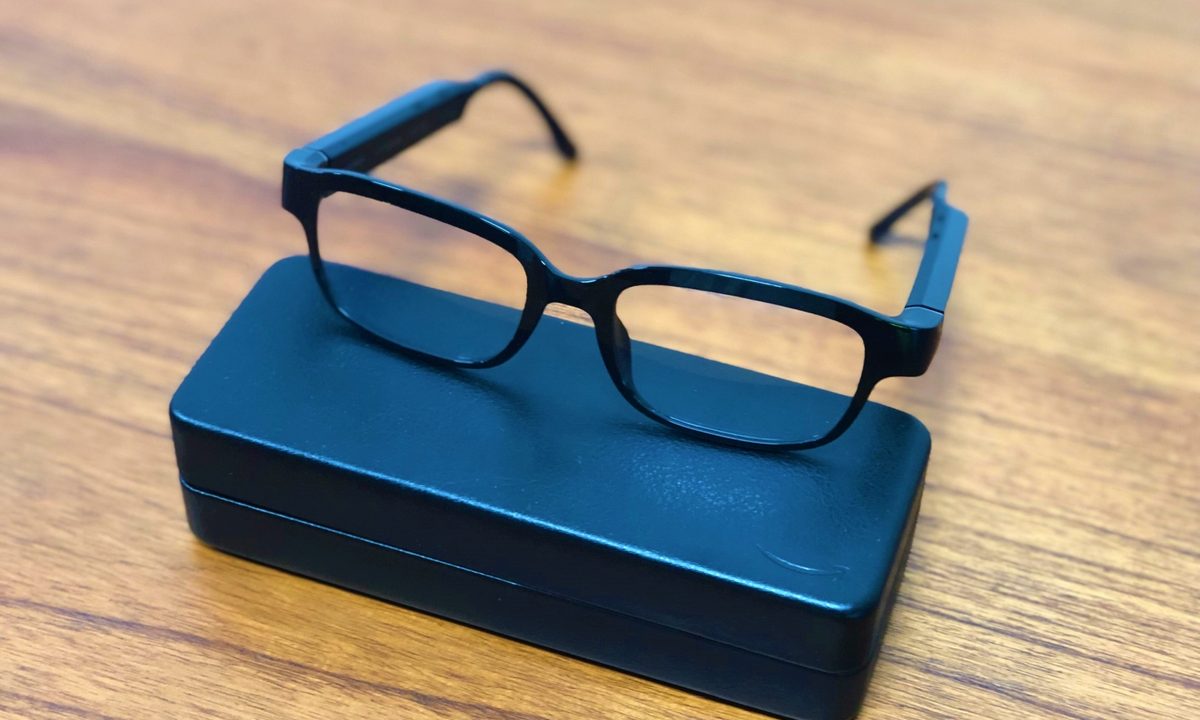
“Amazon isn't shy about getting Alexa into stuff we wear occasionally.”
- Alexa can be accessed discretely
- You can swap out the lenses in the Echo Frames
- Echo Buds noise reduction works great
- Echo Loop looks bulky when worn
- Difficult to hear Alexa with the Echo Buds
“Why you can trust Digital Trends – We have a 20-year history of testing, reviewing, and rating products, services and apps to help you make a sound buying decision. Find out more about how we test and score products.“
Amazon is going all-in on spy gear, with its Echo Frames, Echo Loop, and Echo Buds. Alexa is now in your glasses, your ring, and headphones. That means you can ask the voice assistant all kinds of questions on the go, as well as get notifications without having to pull out your phone.
Amazon Echo Frames
During Amazon’s fall 2019 event, all three products were available for demo. The Frames have microphones and speakers in them, allowing you to ask Alexa for information like weather or time, and the frames’ two speakers can also play you the latest episode of Fresh Air. The speakers are directional, so they’re aimed at your ears and passersby shouldn’t be able to creep on your notifications.
Because it might get annoying to constantly get notifications whispered in your ear by Alexa, the app lets you choose which you’ll hear. You might want important alerts from your security system or texts from your daughter, for example. When you get the jingle for the notification, you can swipe on the frame’s right arm to hear the message. Because it’s where the microphones and speakers are placed, the arms are a bit bulkier than normal. At 35 grams, they feel like a regular pair of glasses. Unlike the North Focals, though, there’s no display on the glass itself. Everything happens via voice, audio, and the swipe.
Right now, the Echo Frames only pairs with Android phones, so iPhone users are out of luck. The glasses need to be charged nightly and will last only three hours if you’re constantly listening to podcasts, but they have 14 hours of battery life on standby.
The frames will eventually retail for $179.99 but will be available only via invitation. Wear glasses for more than fashion? You will be able get prescription Frames, and Amazon says it can mold the acetate tips for a better fit. According to the company, if you need a new prescription in a couple years, you won’t have to re-buy the Frames just to get it filled.

Amazon Echo Loop
For the Loop, which is Amazon’s titanium ring, the speakers and microphone are even tinier. The ring can fit on any finger, and there’s a small button you press with your thumb when you want to summon Alexa. Speak into the ring, then hold it to your ear for the assistant’s answer. It will come in four sizes, including in extra large. Despite the micro tech instead, the ring is a bit bulky. You might not necessarily peg it for a smart ring. It can buzz to let you know there are notifications as well.
The Loop should last all day if you’re only pressing the button occasionally, according to Amazon. Like the Frames, it’s connecting to your phone via Bluetooth, and like the glasses, it’s invite only. The Loop costs $179.99 but for a limited time it’s $129.99.

Amazon Echo Buds
Finally, the Echo Buds are Amazon’s new Alexa-enabled earbuds. You have to put them in just the right way, or you won’t be able to hear the assistant at all. The man next to me put them in upside down, and then I went ahead and accidentally did the exact same thing. Even rightside up, I had to make minor adjustments to hear the responses better. It might have been my weird ear canals, but the buds do come in three sizes, small, medium, and large.
A tap on the bud turns on noise reduction. The demo room was loud, and the buds were pretty effective at muffling overlapping voices. It was hard to get Alexa to hear me in the room, but when it did, I asked for the weather and got the forecast in my ears. The battery life clocks in at five hours for the buds, while the case bumps it up to 20 hours.
It was really hard to judge sound quality in the room, so whether they’re worth the $129.99 price remains to be seen (or heard). Unlike the Frames and Loop, the Echo Buds are available for order sans invite.


