1. Home
  2. Wearables
  3. Health & Fitness
  4. News

Apple Watch heart-rate sensor can detect diabetes with 85 percent accuracy

Add as a preferred source on Google

It’s only been a few months since the Apple Watch began testing the waters as a tried-and-true medical device. But already, the wearable is proving its mettle. As per the latest study from Cardiogram founder Brandon Ballinger, the Apple Watch is capable of detecting diabetes with an 85 percent accuracy rate. There is a caveat to that figure, however — it only stands for patients who have previously been diagnosed with diabetes already.

All the same, the study suggests that the Apple Watch could be a viable healthcare accessory moving forward. The research examined data from 14,000 Apple Watch owners, and determined that 462 had diabetes by using the heart-rate sensor in the watch. How was it able to do so? According to the 2015 Framingham Heart Study, diabetes patients have heart rates that vary from healthy individuals. As such, the Watch’s heart-rate sensor could theoretically detect these irregular heart rates, and consequently, identify a diabetes patient.

As TechCrunch points out, this is the same sort of sensor other fitness wearables use, which means that this capability likely isn’t restricted to the Apple Watch.

This is by no means the only disease that wearables may be able to detect. Ballinger previously used the Apple Watch to identify an abnormal heart rhythm with up to a 97 percent accuracy when used in conjunction with Cardiogram’s AI-based algorithm. The Watch has also been able to identify sleep apnea and hypertension with impressive accuracy rates. And Ballinger wants to see exactly how useful the Apple Watch and other fitness wearables may be in the diagnostic realm — he and his team hope to examine a wide range of diseases capable of being sussed out by heart sensors.

If further research proves successful, it could be an enormous boon to the health care industry. After all, early detection is key to reducing other diseases, not to mention treatment costs. This most recent study is certainly promising — it’s the first large-scale study to show that normal heart-rate sensors (at least when paired with AI-based algorithms) can identify diabetes without using other expensive equipment.

Lulu Chang
Fascinated by the effects of technology on human interaction, Lulu believes that if her parents can use your new app…
The HIFIMAN Ananda hits $249 at Amazon, and nothing at this price competes with planar magnetic drivers
HIFIMAN Ananda drops to $249 (38% off): open-back planar magnetic, Stealth Magnet drivers
HIFIMAN Ananda deal

Planar magnetic headphones used to be the kind of thing you'd spend $500 or more to get into. The HIFIMAN Ananda changed that conversation when it launched, and at $249, it moves that conversation further still. That's $150 off its $399 list price for a full-size open-back planar magnetic headphone that competes with options costing considerably more, and it's the deal I'd point any serious listener toward right now.

get the deal

Read more
Meta Ray-Ban smart glasses might soon get new Scriber and Blazer models
Meta is doubling down on AI glasses with new Ray-Ban variants.
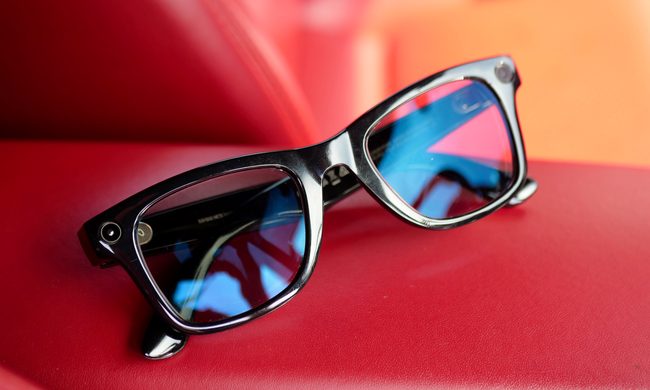
The front of the Ray-Ban Meta smartglasses.

Meta's push into AI wearables isn't slowing down anytime soon.

A new FCC filing has revealed that two upcoming Ray-Ban Meta smart glasses, namely "Scriber" and "Blazer". This listing hints at the launch being right around the corner.

Read more
Even Realities G2’s biggest software update yet brings an app store and a meeting prep tool that changes how you work
The G2 just got smarter, more personal, and a whole lot harder to put down.
Even G2 smart glasses and Even R1 smart ring

Even Realities rolled out its biggest software update since the G2 smart glasses launched, and it’s an update that makes the smart glasses useful and indispensable.

The big new feature is Prep Notes, a redesigned version of the company’s Conversate AI feature. Before any meeting, call, or job interview, you can now upload a PDF, a document, or type in notes directly from your phone. Once the conversation starts, it surfaces relevant information on the glasses’ HUD, giving you suggested responses and key facts.

Read more