With hundreds of companies exhibiting thousands of products to hundreds of thousands of attendees, there’s a lot to see at Shanghai’s CES Asia. After sifting through cases, cables, cars, and clones, we managed to uncover some real gems — technology we’re dying to get our hands on, or in some cases, praying makes it into purchasable form.
In no particular order, here’s six gadgets that had us simply in awe. Which one is your favorite?\
Related: Check out the latest tech from unique startups on Amazon Launchpad
1. PilotHUD from Horizon Technology
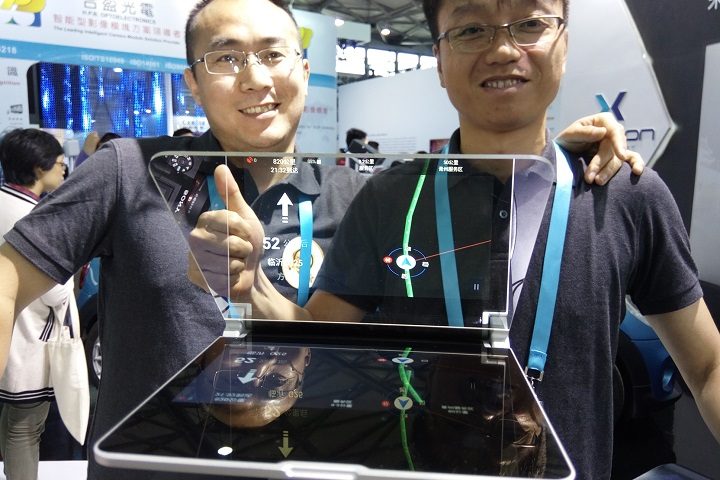
I drive a dumb car. It’s new, sure, but it’s got nothing special for a gearhead like me. No Apple CarPlay or Android Auto, no self-steering mode. It has a backup camera – that’s something, I guess. But come on. For people everywhere like me, Horizon is working on this simply beautifully designed head-up display. Flip up the clear display and you can see maps, traffic info, speed, and so on; flip it down and it’s elegantly tucked out the way. The display also deals remarkably well with sunlight: I was able to see it just fine even with a flashlight shined directly through it at me.
Reality Level: 8 out of 10. Availability: Octoberish.
2. Dlodlo Glass V1 VR shades
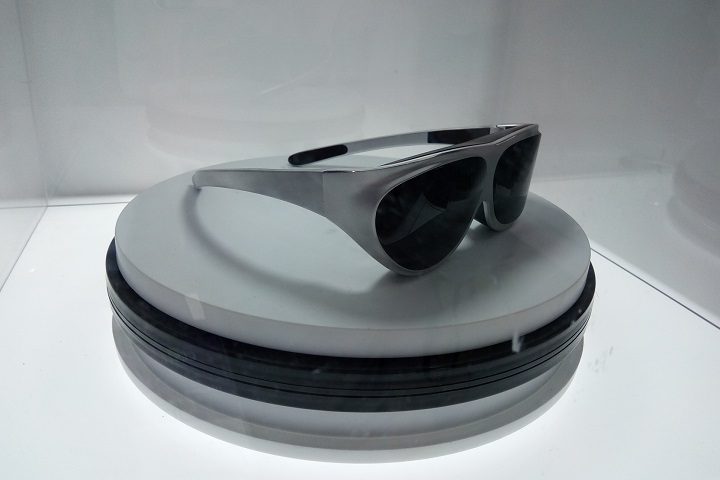
There must be a dozen companies showing VR headsets here at CES Asia. Probably more. They’re almost all rectangular boxes that look exactly like the Samsung Gear VR or HTC Vive (go figure). Shenzen Dlodlo Technologies Co., Ltd., is one of those companies, and has a black box for VR. But under glass at the company’s booth was the Glass V1, which looks for all the world like a pair of Oakleys and which the company swears they can shove a super-high-resolution VR experience into. A brochure for the product touts a 100-degree field of view and 2,560 × 1,024 resolution; for comparison, the Oculus Rift and HTC Vive are 2,160 × 1,200 and 110-degree FOV. Sure, the stats are doable, but the whole portable VR thing has us doubting that this will ever happen. Best wishes.
Reality Level: 2 out of 10. Availability: Septemberish (sure).
3. Romoss WS10 wireless quick charger

The Android platform has seen some key leaps in battery technology, first with wireless charging systems like Qi, then with Qualcomm’s Quick Charge technology, seen in Samsung’s newest Galaxy phones. Qualcomm claims to be able to charge up to 80 percent in half an hour or so. However, the two don’t go hand in hand. Want to charge wirelessly? You’ll do it slowly. Want quick charge? You’ll need to plug your phone in. Romoss claims to solve that problem with a wireless charging plate that does quick charging. The WS10 purports to support the Qi standard, making it the unicorn of portable chargers. I pushed the company as best I could for details on the product. I was left with none. But if it’s real? Epic.
Reality Level: 3 out of 10. Availability: No comment.
4. InBody Band fitness tracker

I walked 18,000 steps yesterday at CES Asia. But how many calories did I burn? One company aiming to move fitness trackers beyond simple data points is InBody, a company that makes commercial body fat measuring devices for hospitals and physical therapists. The company recently boiled its technology down into a wearable device with the same functionality: Four metal bands — two on the underside that make contact with your wrist, two on top you touch with the fingers of your other hand — let the device measure your body composition in addition to measuring heart rate, activity, and so on. How useful is on-the-go fat monitoring? Well. Hmm. That’s a valid question. Still, its fascinating to watch fitness trackers transform. Fitbit, eat your heart out.
Reality Level: 10 out of 10. Availability: Now – buy on Amazon
5. Cowa Robot

It looks like little more than a suitcase on wheels, but then again, that’s exactly what Cowarobot is. It can track you and follow you around wherever you go, like a dog that also happens to carry all your stuff. Inside is a rechargeable battery, meaning this robot should make the transfer without you ever having to plug it back in. And an embedded 3G SIM card means tracking lost luggage should be easier than ever. At CES Asia, the company set up a runway of sorts; picture a battalion of suitcases rolling back and forth and you get the idea. The company will launch a Kickstarter campaign next month. I want in.
Reality Level: 7 out of 10. Availability: Septemberish.
6. Syndiant LCOS screens

One of the biggest things hampering wearable technology today is display resolution. If you’ve tried Google Glass, you know what a crummy screen looks like. Current VR solutions offer much better displays, but at a trade-off: You have to strap a whole thing to your face. The advantage of Glass (and the promise of the Dlodlo Glass V1) was its incredibly portability. What if you could combine quality and portability? Syndiant is an optical device tech company that makes LCOS microdisplays – tiny, low-power panels that bring excellent video quality. I know, it’s a little geeky, but bear with me here. I tried a demo of the companies screens in a form factory they claim will be great for VR systems or wearables. It was like watching a 60-inch, 720p screen. Make it work in a headset and something like Dlodlo could be a reality.
Reality Level: 9 out of 10. Availability: You can buy a screen today. But in a product? Who knows?