  1. Home
  2. Wearables
  3. Mobile
  4. News

Blood oxygen tracking isn’t coming back to the Apple Watch anytime soon

Add as a preferred source on Google
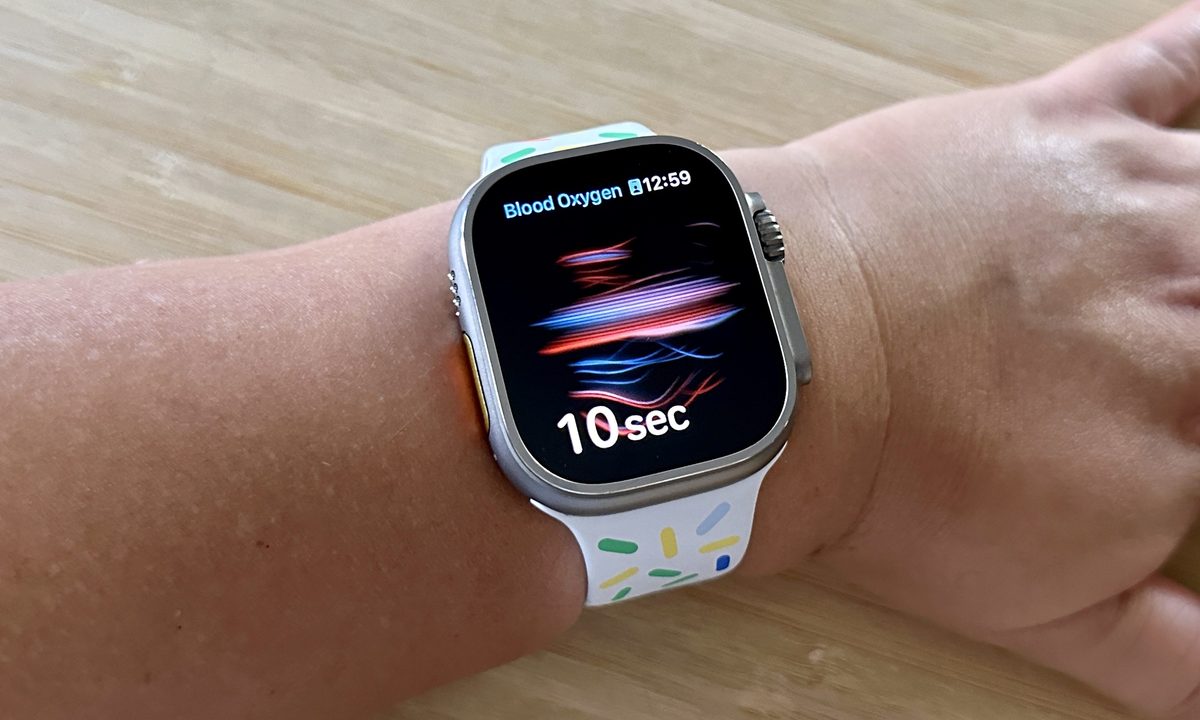
Apple Watch Ultra taking a measurement for blood oxygen levels.
Christine Romero-Chan / Digital Trends

One of the major selling points of Apple Watches in recent years has been the ability to test users’ blood oxygen levels. Unfortunately, ongoing litigation has prevented this feature from being included in Apple Watches sold in the U.S. since January. Now, it seems unlikely that this situation will change soon.

On Friday, a Delaware jury found that health-monitoring technology company Masimo infringed on some of Apple’s earlier smartwatch patents. As a result, Apple received an award of only $250. However, the same jury ruled that Masimo’s current watches did not infringe on the patents that Apple accused it of copying. Consequently, an injunction remains in effect in the U.S. that prevents the company from offering blood oxygen tracking on new watches sold in the country.

Recommended Videos

At the beginning of the year, the U.S. International Trade Commission ruled in favor of Masimo, saying Apple’s use of pulse oximeter technology in the Apple Watch violated Masimo’s patents. As such, any Apple Watch sold after January 18, 2024, couldn’t ship with the feature. Soon after, Apple appealed the decision and countersued, alleging Masimo copied Apple Watch features to use in its smartwatches. Since then, it has been unsuccessful in getting the injunction lifted by a court.

Apple’s blood oxygen feature was first available on the Apple Watch Series 6 in 2020. Since then, it has been available on every non-Apple Watch SE model up to the injunction. The all-new Apple Watch Series 10 has the hardware to support blood oxygen tracking. Therefore, whenever a resolution is reached between the two companies, Apple could push out a software update to add those features to watches currently without them.

Blood oxygen tracking measures the percentage of oxygen currently carried by a user’s red blood cells. Numbers below 95% suggest possible health issues, including respiratory conditions, sleep apnea, heart conditions, or more. It’s an incredibly helpful feature, but due to this latest ruling, it will continue to be missing from Apple Watches for the foreseeable future.

Bryan M. Wolfe
Former Mobile and A/V Freelancer
Bryan M. Wolfe has over a decade of experience as a technology writer. He writes about mobile.
Open-ear earbuds are the new headphones for people who want plausible deniability
They keep the room audible, the podcast running, and the social contract just blurry enough to survive another workday.
Simon Cohen wearing Bose Ultra Open Earbuds for Personal Surround Sound with a Bose Smart Soundbar.

I like noise-canceling earbuds because the outside world has a way of barging in without permission. A few blocks to the gym shouldn’t require hearing every motorcycle, car horn, or construction drill the city can throw at me.

The problem shows up on the walk back, usually when I stop to buy something. Suddenly, I’m at the checkout counter holding my earbuds like tiny expensive pebbles, trying not to be rude, trying not to drop them, and somehow making the whole thing look more dramatic than it needs to be. Then one slips, and I’m bent over looking for inconspicuous black earbuds on hot asphalt.

Read more
Oura Ring 5 is 40% smaller with its most scratch-resistant design yet
A slimmer Oura Ring 5 brings longer battery life
Oura Ring

Oura has announced a new version of its popular smart ring, called the Oura Ring 5. Compared to the Ring 4, the new model has a 40% smaller body (2.28mm thick), made of lightweight, non-allergenic titanium.

To achieve a thinner and lighter design, the brand has reworked the mechanical, electrical, optical, battery, and sensing architecture.

Read more
Samsung wants to take care of your Ozempic weight loss journey with its smartwatch
The study will compare Galaxy Watch8-supported guidance with standard care for adults beginning GLP-1RA treatment
Health app on Samsung Galaxy Watch 8.

Samsung is pushing its wearable deeper into the Ozempic era with a Mass General study that asks whether a smartwatch can help people understand what changes after they start GLP-1 treatment.

The six-month effort will focus on adults beginning GLP-1RA therapy, a drug category widely associated with major weight-loss results. Instead of focusing only on pounds lost, the research will track muscle, activity, heart rate, and body composition during treatment.

Read more