1. Home
  2. Wearables
  3. Emerging Tech
  4. Legacy Archives

Portal is a flexible smartphone that you strap to your arm

Add as a preferred source on Google

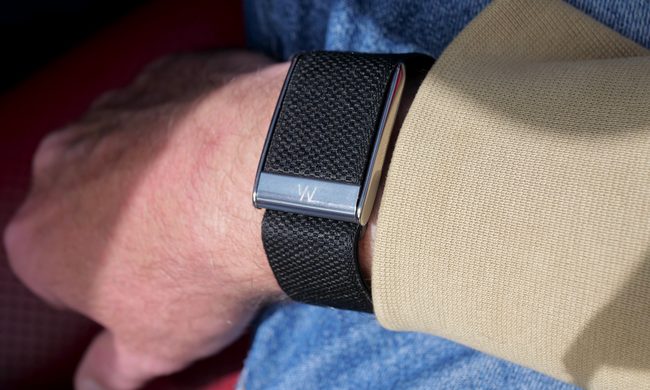
The crowdfunding sites of Kickstarter and Indiegogo are places where the strangest ideas can be pitched to the public, but we’ve seen few devices as unusual as the Portal. This “wearable smartphone” is currently looking for $300,000 in funding on Indiegogo and features a flexible 6-inch TFT display that wraps around your lower arm.

That’s right — if you find the Apple Watch and the Moto 360 just too small to get anything useful done, then you can turn to this large strap-on screen instead. Its developers say the device will feature 2GB of RAM, 64GB of storage space and a customized version of Android. Cough up $349 or more and you can have a Portal of your own when they appear this time next year.

Recommended Videos

“A category once synonymous with innovation and technological advancement has been replaced with minor yearly ‘upgrades,’ uninspired design and a lack of uniqueness,” says the Portal manifesto. “The Portal is a smartphone designed for tech enthusiasts, active individuals and on-the-go professionals who are frustrated with bulky, cluttered, non-durable phones that constantly get in the way of their dynamic lifestyles.” If the project attracts enough funding, the plan is to start mass production next July.

Portal 2
Image used with permission by copyright holder

It’s certainly different. The team behind Portal speaks about wanting to combine the advanced technology of a smartphone with the convenience of a wearable: A phone, smartwatch and fitness tracker in one. The prototype hardware is button-free, water-resistant and Kevlar-protected, and it comes with four cameras and a proprietary flexible 3200mAh battery. Wireless charging is another specification mentioned in the product listing.

“No longer will you need to carry and connect a smartwatch, fitness tracker and smartphone all at once,” promises the Indiegogo campaign site.  “Portal offers you the best of those devices at the times you choose.” Based on the mock-up images put together by the developers, it’s certainly going to turn more heads than the Apple Watch and anything running Android Wear.

David Nield
Former Contributor
Dave is a freelance journalist from Manchester in the north-west of England. He's been writing about technology since the…
Apple wants you to verify your identity before you get Education discount on products
Apple moving the US Education Store off the honor system also seems about making a globally consistent verification infrastructure that could eventually support more aggressive Education Store expansion.
Computer, Electronics, Laptop

Getting an Apple Education discount in the United States used to be as simple as claiming you’re a student or a teacher; it didn’t need a formal verification. That era is officially over. 

Starting May 8, 2026, Apple now requires formal identity verification for all Education Store purchases in the US, ending the informal honor system that was in place for years (via MacRumors). 

Read more
You can finally avail an education discount on the Apple Watch
It's Apple broadening its ecosystem play into a segment that previously had no wearable entry point, and that could meaningfully accelerate Apple Watch adoption among younger first-time buyers.
Side view of Apple Watch Series 11.

Apple’s Education Store has always been a reliable shortcut to cheaper Macs and iPads for students and teachers. However, for years, Apple Watch wasn’t allowed into the story, making people wait for third-party sales or discounts to get their hands on the smartwatch. 

That’s changing, with effect from May 8, 2026. Apple has quietly added the Apple Watch to its Education Store for the first time. The Watch Series 11, SE 3, and the Ultra 3 are now available at discounted education pricing across 21 markets, including the US, UK, India, Canada, and Australia. 

Read more
Whoop’s response to Fitbit Air and Google Health is real doctors, not just an AI chatbot.
In the race to own your health data, Google chose an AI, and Whoop chose a doctor. That single decision may define which fitness tracker serious health users reach for in 2026 and beyond.
A person wearing the Whoop 5.0.

Recently, Google launched the Fitbit Air as a direct rival to the Whoop screenless fitness band, rebranded the Fitbit app to Google Health, and released a Gemini-powered AI coach. Exactly one day later, Whoop has responded with on-demand video consultations with licensed clinicians for US users. 

The contrast is hard to ignore. While Google is betting on AI as your general health advisor, Whoop is doubling down on real, licensed doctors, and making the case that they can serve its fitness-focused users considerably better (via CNBC).

Read more