1. Home
  2. Wearables
  3. News

Report: Apple Watch accounted for two-thirds of smart wearables shipped in Q2 2015

Add as a preferred source on Google

After its first quarter joining the ranks of companies manufacturing wearable devices, Apple finished No. 2, behind Fitbit and ahead of Xiaomi. Apple’s strong debut in the wearables market is both good and bad for its competitors, according to the International Data Corporation (IDC).

Apple shipped 3.6 million units of its only wearable device, the Apple Watch, in the second quarter of 2015, giving the company 19.9 percent of the global market. About two of every three smart wearables shipped in the quarter was an Apple Watch, according to Jitesh Ubrani, senior research analyst for IDC Mobile Device Trackers.

Recommended Videos

Fitbit shipped 4.4 million units of its wearables, good for a world-leading 24.3 percent of the market. This also reflected 158.8 percent year-over-year growth from the 1.7 million units the company shipped in the second quarter of 2014.

Xiaomi finished the second quarter in third place with 3.1 million wearble units shipped, giving it 17.1 percent of the market. Garmin (0.7 million units, 3.9 percent of the market) and Samsung (0.6 million units, 3.3 percent of the market) rounded out the top five. Other wearble vendors combined to ship 5.7 million units during the quarter.

Apple’s entrance into the wearables market draws attention to the entire market, according to Ramon Llamas, research manager for IDC’s Wearables team. “Its participation benefits multiple players and platforms within the wearables ecosystem, and ultimately drives total volumes higher,” he said. “Apple also forces other vendors — especially those that have been part of this market for multiple quarters — to re-evaluate their products and experiences.”

Llamas adds that Apple will become the measuring stick for other wearable manufacturers and that “everyone will be watching to see what other wearable devices it decides to launch, such as smart glasses or hearables.”

Jason Hahn
Former Contributor
Jason Hahn is a part-time freelance writer based in New Jersey. He earned his master's degree in journalism at Northwestern…
Apple wants you to verify your identity before you get Education discount on products
Apple moving the US Education Store off the honor system also seems about making a globally consistent verification infrastructure that could eventually support more aggressive Education Store expansion.
Computer, Electronics, Laptop

Getting an Apple Education discount in the United States used to be as simple as claiming you’re a student or a teacher; it didn’t need a formal verification. That era is officially over. 

Starting May 8, 2026, Apple now requires formal identity verification for all Education Store purchases in the US, ending the informal honor system that was in place for years (via MacRumors). 

Read more
You can finally avail an education discount on the Apple Watch
It's Apple broadening its ecosystem play into a segment that previously had no wearable entry point, and that could meaningfully accelerate Apple Watch adoption among younger first-time buyers.
Side view of Apple Watch Series 11.

Apple’s Education Store has always been a reliable shortcut to cheaper Macs and iPads for students and teachers. However, for years, Apple Watch wasn’t allowed into the story, making people wait for third-party sales or discounts to get their hands on the smartwatch. 

That’s changing, with effect from May 8, 2026. Apple has quietly added the Apple Watch to its Education Store for the first time. The Watch Series 11, SE 3, and the Ultra 3 are now available at discounted education pricing across 21 markets, including the US, UK, India, Canada, and Australia. 

Read more
Whoop’s response to Fitbit Air and Google Health is real doctors, not just an AI chatbot.
In the race to own your health data, Google chose an AI, and Whoop chose a doctor. That single decision may define which fitness tracker serious health users reach for in 2026 and beyond.
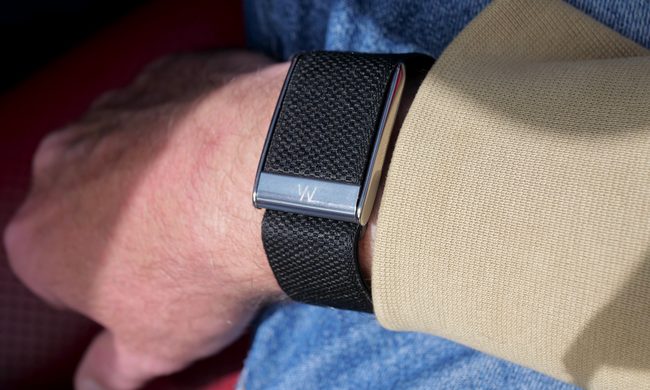
A person wearing the Whoop 5.0.

Recently, Google launched the Fitbit Air as a direct rival to the Whoop screenless fitness band, rebranded the Fitbit app to Google Health, and released a Gemini-powered AI coach. Exactly one day later, Whoop has responded with on-demand video consultations with licensed clinicians for US users. 

The contrast is hard to ignore. While Google is betting on AI as your general health advisor, Whoop is doubling down on real, licensed doctors, and making the case that they can serve its fitness-focused users considerably better (via CNBC).

Read more