  1. Home
  2. Wearables
  3. Mobile
  4. News

Strap this wearable to your head for better rest, less stress, and fast relaxation

Add as a preferred source on Google

Thync, the company behind the fascinating neurostimulation wearable of the same name, is back, and this time it’s only concerned with helping us relax. The original Thync, which was worn on the forehead, can be used to stimulate the brain to either help us calm down or increase focus at a time when it’s needed. The new Thync Relax Pro uses enhanced technology based on the original version, but only for the purposes of promoting relaxation and good sleep.

The new Thync module attaches to the back of your neck, using disposable electrode pads, and is controlled by a smartphone app. There are two modes, Thync Deep Relax and Thync Deep Sleep. It uses low-level electrical stimulation patterns to manipulate your body into lowering stress, improving your mood, and boosting the quality of sleep.

More: Our review of the original Thync

Recommended Videos

We met with Thync CEO Isy Goldwasser last year for a sneak preview of a device called the Thync Relax. The Thync Relax Pro takes essentially the same neurostimulation app modes we tried at the time, and links them to a more compact wearable module that’s closer to the original design. Goldwasser told us at the time that most people using Thync chose the programs that relaxed them over those that boosted energy and focus. Making a Thync product dedicated to that makes sense.

If you’re concerned about strapping an electrical device to your head and letting it send some stimulating waves through your brain, don’t worry — the technology is safe and has been used for many years, with almost no side effects at all. In our experience with Thync and the prototype Thync Relax, we found that it really works.

Thync has revised its pricing strategy with the Relax Pro. You pay $150 up front for the device, and then $30 each month to access the app and receive the Thync Pad packs. These contain the electrodes that make the Thync work, and are really only good for one or two uses before they need replacing.

We’re confirming the release date, and where it’ll be available. We’ll provide an update here when we have all the details.

Andy Boxall
Andy has written about mobile technology for almost a decade. From 2G to 5G and smartphone to smartwatch, Andy knows tech.
Meta’s Ray-Ban Display now types messages from your finger movements
Neural Handwriting is a really cool feature, but Meta opening the Ray-Ban Display to developers is the quiet announcement that turns a clever wearable into a platform with immense possibilities.
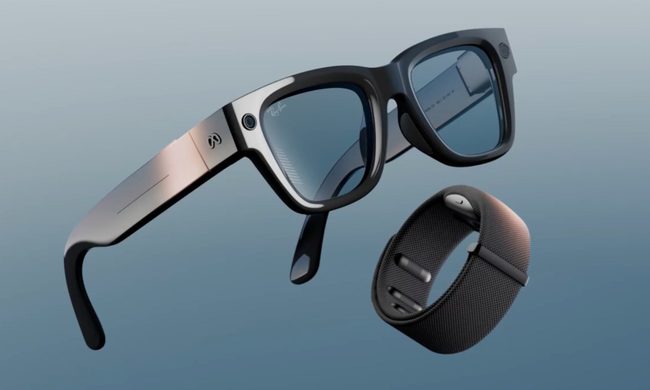
Meta Ray-Ban Display and EMG Band.

Six months into its life, the Meta Ray-Ban Display is starting to look less like an experiment, thanks to what is arguably the most significant update Meta has ever pushed for the device. 

The headline feature is Neural Handwriting, which is now available to every Ray-Ban Display owner, having spent its early months in limited access for Messenger and WhatsApp users. 

Read more
Forget smart glasses, these earbuds can see, hear, and remember everything for you
Electronics, Headphones

Smart glasses have always felt a little awkward to me. Sure, they can play music, take calls, snap photos, and even throw notifications in front of your eyes, but at the end of the day, they’re still just tiny screens sitting on your face. Now imagine removing the screen entirely.

That’s exactly what this new pair of AI-powered earbuds is trying to do. Instead of showing you information, these earbuds are designed to quietly hear, see, remember, and respond to the world around you. And honestly, this might be one of the more interesting directions wearable AI has taken so far.

Read more
Meta will allow third-party apps for Ray-Ban Display glasses. Your eyes must stay glued to digital reality.
Meta just handed developers the keys to the glasses display, and the possibilities are endless.
Meta Ray Bans Display close up shot

Meta announced its Meta Ray-Ban Display glasses with a built-in in-lens display that allows users to see what the smart glasses capture, see and respond to messages, and interact with its Meta AI.

While the built-in apps and features were good, the only way to unleash the potential was to allow third-party developers to build apps. And today, Meta is finally opening up the display on its Ray-Ban smart glasses to developers.

Read more