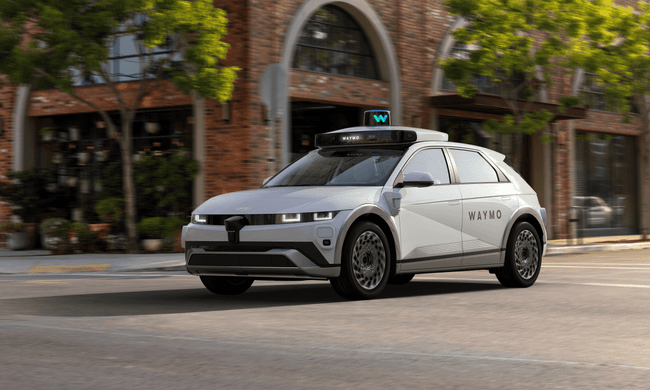
You may enjoy the summer heat, but your electronics? Not so much. Your smartphone likely can’t stand a hot day in the sun, and your computer won’t last long in a hot car. And what else is electronically-based? Why, self-driving car systems, of course. So to ensure that autonomous technology doesn’t fall victim to extreme heat, Waymo has begun testing its self-driving Chrysler Pacifica Hybrid minivans, loaded with all of Waymo’s latest sensors, in the apex of heat: Death Valley, California.
The goal of the tests is to ensure that the Alphabet-owned company’s cars are both reliable and safe, no matter its environment. Just a few months ago, Waymo took its minivans to Lake Tahoe during a period of record snowfall in order to test the other end of the spectrum. And now, the company needs to make sure that what the cars can do in the cold, they can do in the heat as well.
While extreme heat testing is actually standard in the automobile industry, a Waymo senior thermal engineer noted that self-driving systems actually generate their own additional heat, which makes rigorous testing even more important. “Our self-driving system needs to be much more reliable than your typical home electronics,” he said. “This type of testing allows us to be confident our vehicle can cool itself and continue to operate under the hottest temperatures, even with an engine running at full power and our systems running at full capacity.”
When testing the cars in Death Valley, Waymo ran its vehicles in a wide range of driving conditions, all of them in extreme heat. From stop-and-go traffic to idling for extended periods of time to driving on sloped roads, these self-driving cars were put through it all. And during all of this, Waymo engineers kept tabs on 200 different measurements per second to ensure that their sensors (all developed in-house) were functioning correctly. And of course, engineers also made sure that the cabin temperature remained comfortable even if it was sweltering outside.
Ultimately, it seems as though Waymo was pleased with the results. “Our testing confirmed the results of our drive cell work: our hardware is road-ready for extreme heat,” one engineer noted. “By pushing our car to its limits in testing, we can rest assured that no matter where our riders choose to drive — even if that’s in the middle of the desert, on a sunny day, with the air conditioning on full blast — Waymo’s cars will still be able to get them where they need to go.”