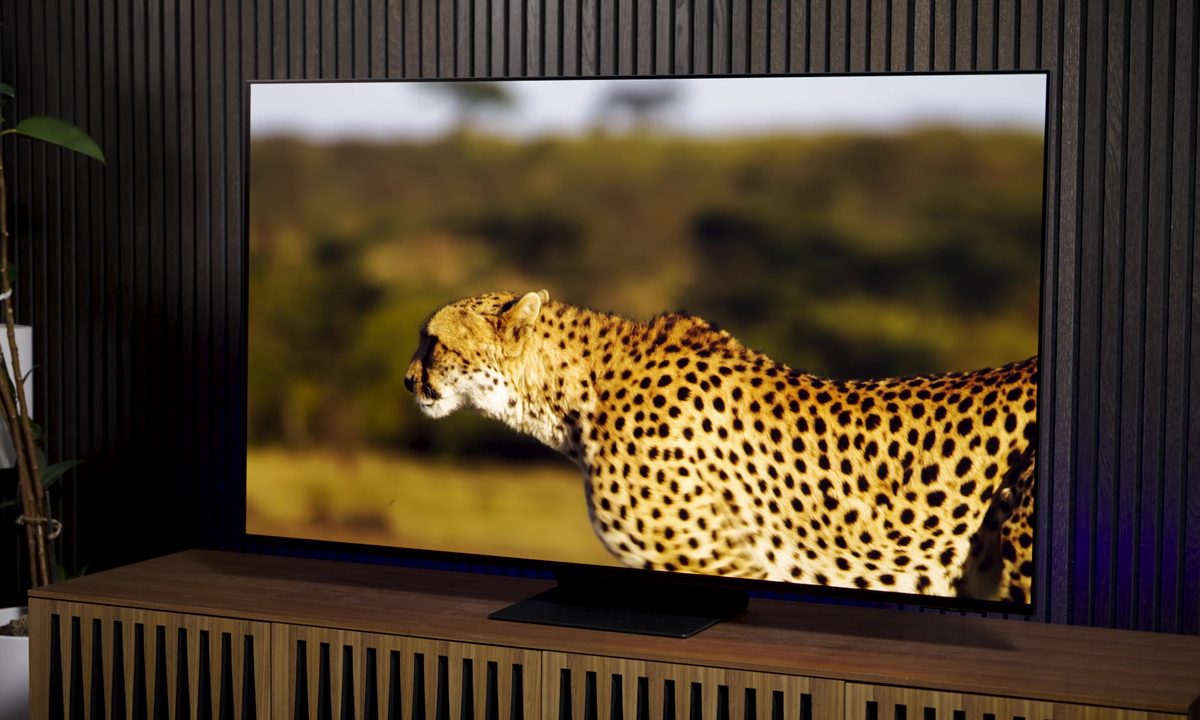
The resolution of what you’re watching or playing can have a major impact on the quality of the experience. It’s the number of pixels you see on screen, so higher resolutions (with more pixels) means greater detail. But in order to enjoy the latest 4K or 8K content at their best, you also need a display that’s compatible with them. That’s why when you buy a TV you’ll see it advertised as supporting 4K, or on smaller screens, 1080p, and similar.
Whether you’re looking to buy an OLED TV, a QLED TV, or something else entirely, the resolution really matters too. To understand why, let’s take a look at each resolution a bit more closely. Only then can you start considering what screen size is best and finally start taking a look at our list of the best 4K TVs to find the television of your dreams.
Pixels
Pixels are the building blocks for every display you’ve ever seen. They’re tiny little dots that, together, make up the picture you see on a screen. You can only see these pixels if you’re fairly close to the screen, or using a lower-resolution VR headset. From a proper viewing distance, thousands of them blend to make the image on your screen.

The same goes for all screens you own, from your phone, to your computer monitors, tablets, and indeed, your TV. How those pixels are lit up or powered can differ depending on the TV technology behind them, but largely pixels are pixels and the more of them you have (at higher resolutions) the greater detail you can enjoy in whatever you’re watching.
Resolutions
| Resolution | Total pixels | |
| 720p | 1280 x 720 | 921,600 |
| 1080p | 1920 x 1080 | 2,073,600 |
| 1440p | 2560 x 1440 | 3,686,400 |
| 4K | 3840 x 2160 | 8,294,400 |
| 8K | 7640 x 4320 | 33,004,800 |
720p
TVs that use 720p resolution are rare in 2025, but you can sometimes find particularly small and low-cost TVs that use it. It has a low resolution of just 1280 x 720 pixels, which delivers limited detail and is particularly noticeable compared to higher-resolution TVs.
Although technically known as “HD” it’s not what most people would consider Full HD. That starts at 1080p.
1080p

For many years, 1080p was the standard for new televisions and was the first resolution to be considered Full HD. Today, however, most TVs are higher resolution and 1080p is only found in smaller and very cheap TVs. Modern TVs can play games and Blu-rays at 1080p, and a lot of broadcast TV is still at 1080p, but the TV will often upscale them to a higher resolution to make them look better.
In a 1080p television, there are 1,920 columns multiplied by 1,080 rows for a total of 2,073,600 pixels — more than twice as many pixels as you’ll find in a 720p TV screen.
1440p
Although not a native resolution on most TVs, modern TVs can play games at 1440p (or 2560 x 1440) for extra detail over 1080p, but without the extra demand on the gaming system from 4K resolution. The pixel ratio isn’t the same as in 1080p or 4K however, so it can lead to a stretched image, or black bars on the edges.
4K Ultra HD
The most common TV resolution today, is 4K. This Ultra HD, or UHD resolution is roughly equivalent to four times the detail of 1080p, which make a big difference to the picture quality. It’s especially useful in larger screens, where the extra pixels retain the detail and crisp quality even at 77 or 85-inches.
In 4K TVs there here are 3,840 columns and 2,160 rows of pixels that make up a 4K TV screen, which is why you’ll occasionally see this resolution referred to as 2160p.
The marketing for 4K has bled into other industries, too, which is why you’ll also see 4K home security cameras and 4K gaming monitors, among other products.
8K UHD
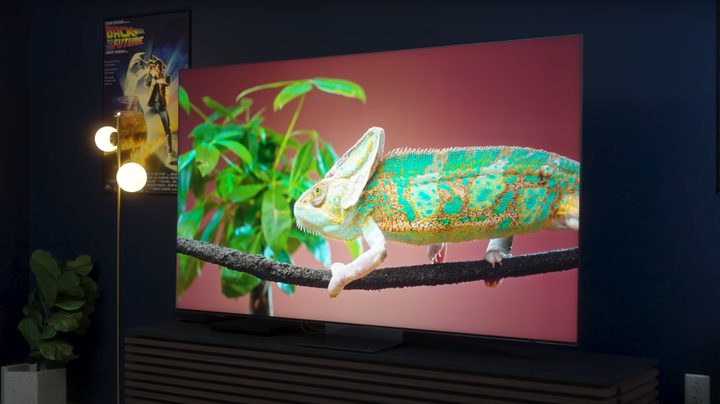
The highest resolution TVs available today are 8K resolution, which has far more pixels than even 4K. They offer the greatest detail, though you can’t notice much of a difference from 4K on smaller screens (think 50-inches). At over 85-inches though, 8K really comes into its own, giving you a crisp picture on even gigantic TVs.
The major downsides to 8K at the moment, though, are cost, and a lack of native content. 8K TVs tend to be much more expensive than 4K options and there is very little 8K content to stream, as well as no 8K Blu-ray options for local viewing. They look great with upscaled 4K, but it’s not quite the same as the real thing.
The future
Although resolutions for TVs have increased dramatically in the last 10 years, 4K is the standard that’s here to stay. TV manufacturers have been pushing up brightness and HDR support in recent years, with new RGB LEDs promising greater color support. It’s there that the future lies. While 8K is a nice to have, it doesn’t seem set to become the de facto standard for many years to come.