Up until this point, virtual reality has either been of the mobile, PC, or console variety, meaning that users need a mobile phone, high-end PC, or a PlayStation 4 to experience quality VR. That will change soon. Just as the first wave of stand-alone VR and mixed reality headsets gets ready to launch, Oculus announced that its own midtier, stand-alone headset, the Oculus Go, will hit stores next year. Here’s everything we know about the cord and device-cutting Oculus Go.
How much power will it have?
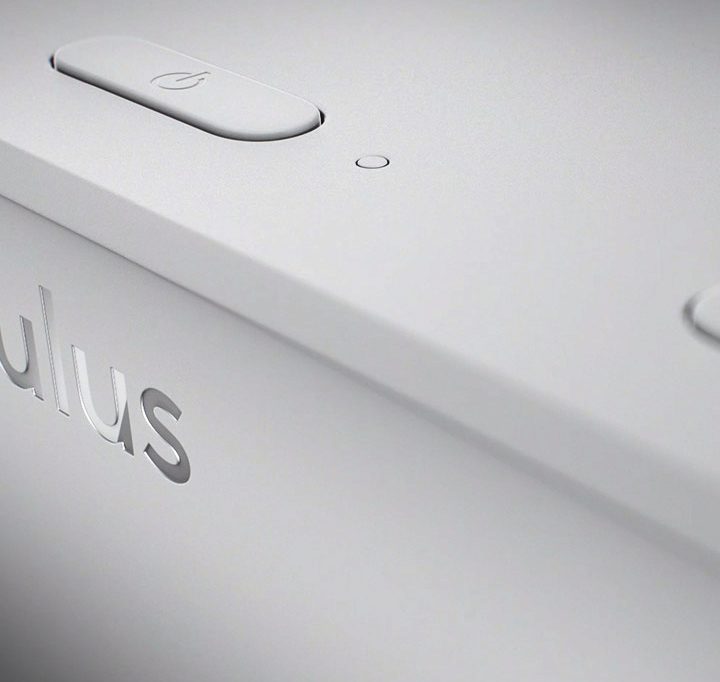
While official specs have not been revealed, Facebook head of VR Hugo Barro claimed the Oculus Go’s processing power will fall somewhere in between mobile VR and high-end PC VR. Although, it would appear that it falls closer to the mobile end, as the Go will be compatible with Gear VR software. Since Samsung’s Galaxy phones use Qualcomm Snapdragon processors, the fact that Oculus Go is capable of running the Android-based apps for Gear VR out of the box may indicate that the Go uses a processor with similar capabilities.
The real draw, though, is that you don’t need a Samsung phone — or any smartphone — to make Oculus Go … well, go. All of its components are inside the unit, thus the stand-alone distinction. The headset supports three degrees of head tracking freedom (3DOF), has “best-in-class optics,” and a reported “wide field of view.” The screen inside the headset is high resolution (2560 x 1440) and is fitted with fast-switch technology to improve visual clarity and reduce the nagging screen-door effect prevalent in mobile VR.
The headset will also include built-in integrated spatial audio to enhance the experience, and remove the need for external headphones. For example, if you hear footsteps in the distance, you can pinpoint the origin of the sound.
Oculus confirmed that the Go will support two popular game engines — Unity and Unreal Engine — as well as software developed specifically for the headset using the Oculus Mobile SDK.
Ergonomic headset design
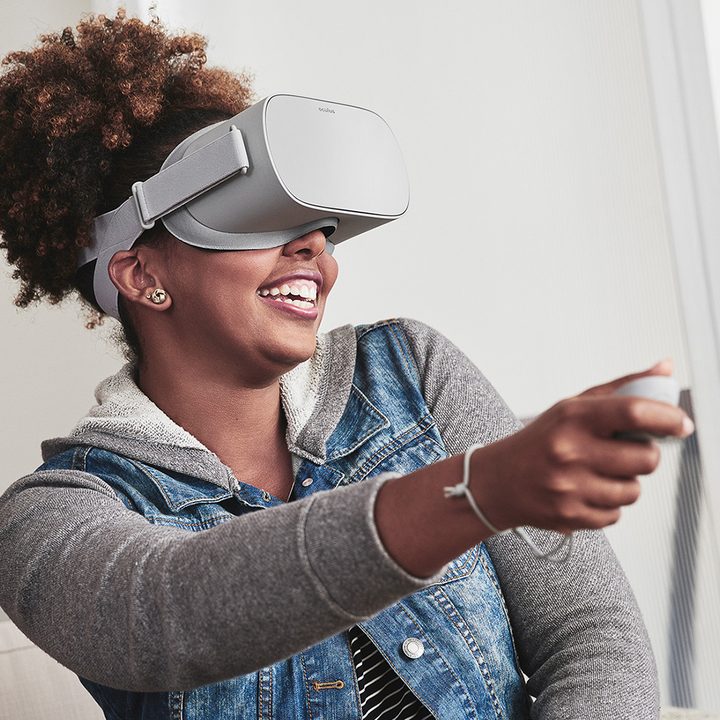
The headset itself is light gray and built for comfort. The straps are elastic bands, and the pads where you rest your face are said to be designed with a new fabric that “is soft and breathable.”
Naturally, comfort will also be increased by the fact that the headset requires exactly zero cords. Most VR headsets on the market today call for a litany of cords in order to operate, but what you see is what you get with the Oculus Go.
It comes with a dedicated controller
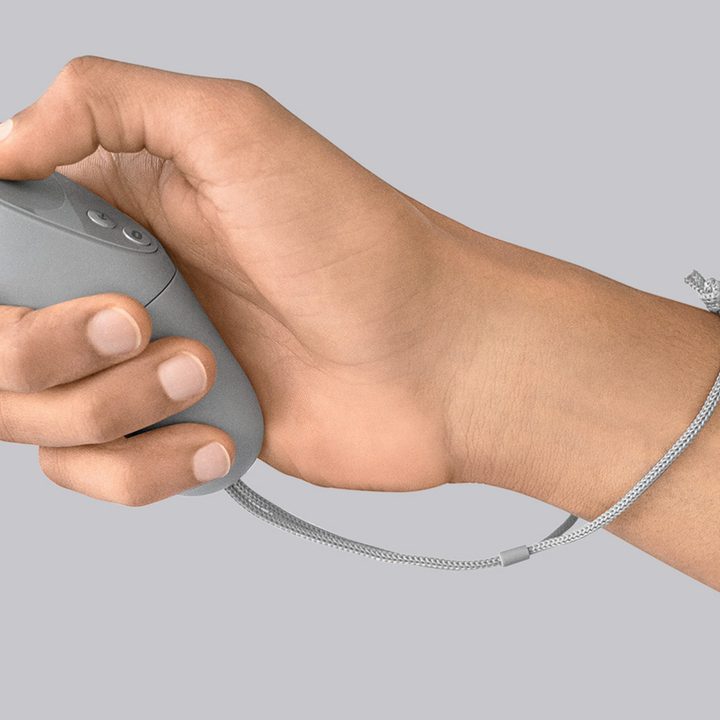
The Oculus Rift has what may be the best VR controller around in the Oculus Touch. For better or worse the Oculus Go will not use the Touch, but an orientation-tracked remote, which resembles the Wii Nunchuk. It has two face buttons, a trigger, and what appears to be a circular touchpad in the center for movement. The controller comes with a wrist strap.
Confirmed games and applications
The Oculus Go page on the company’s website features us a list of confirmed experiences coming to the headset.
In terms of games, these mobile-centric experiences are expected to land on the stand-alone headset:
- Anshar Wars 2
- Bait!
- CloudLands VR Minigolf
- Dead & Buried
- Dragon Front
- Land’s End
- Ocean Rift
- Om Nom
- Rangi
- Rush
- Sing Space
- Smash Hit
- Ultrawings
- VR Sports Challenge
As for experiences and applications, the following have been confirmed:
- A Night’s Sky
- Discovery VR
- Facebook 360
- Hulu
- Jurassic World: Apatosaurus
- Netflix
- Rooms
- Star Chart
When can you go stand-alone?
You won’t have to wait long to experience stand-alone, cordless VR from Oculus. The Oculus Go is set to launch in early 2018, and will cost $200.