

Does your mouth water at the prospect of a nice juicy steak? How about a nice juicy 3D-printed steak, made using a paste composed of vegetable-based materials like rice, peas, and seaweed? That’s what a new Spanish startup, Novameat, is working hard to bring to market.
“I developed the first 3D-printed plant-based beefsteak while I was working as a postdoc researcher in tissue engineering, and assistant professor at the UPC university in Barcelona,” founder Giuseppe Scionti told Digital Trends. “I was lucky … because this city is a great hub for both 3D printing companies and world-renowned restaurants.”
Scionti said he started his attempts to manufacture a meat-free beefsteak by choosing ingredients regularly found in agriculture, whose cultivation would not represent a threat to the environment. He listed three main advantages to plant-based meat products as compared with animal meat. These include the ethical factor of no animal slaughter, health-related factors such as no cholesterol, and environmental factors such as fewer greenhouse gas emissions and no deforestation. The ingredients are turned into a special paste, before being transformed into the finished raw steak material. This can supposedly be done at a speed of more than a quarter pound per hour.
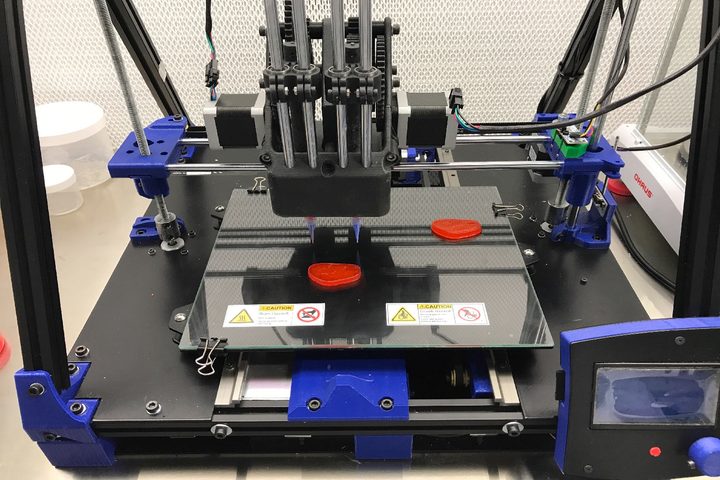
But how does it taste? After all, for many consumers, this is going to be the main question it all comes down to — regardless of any planet-saving ambitions on the part of its creator.
“The first focus of my investigation in this project was to obtain a plant-based meat substitute with the same texture, consistency, and integrity of the animal pieces of fibrous meat,” Scionti said. “In fact, although some companies have already managed well to reproduce the taste of animal meat — [such as] the Impossible Burger and the Beyond Burger — before my technology was patented there was no existing method able to replicate simultaneously the texture, the microscopic morphology, and the macroscopic appearance of a fibrous piece of meat such as a beefsteak, a chicken breast, or a tuna steak with this level of complexity.”
Scionti hopes that Novameat’s plant-based meat products will be on the market in the next three to five years. There is still much work to be done before then, however.
“At the moment, our products can mimic the texture and a simplified appearance of beefsteaks and chicken breast meats, but achieving products that are able to simultaneously mimic the texture, the appearance, the taste and the nutritional properties of specific pieces of fibrous meat is not trivial,” he said. “That will be the focus of Novameat in the first place. Then it will be fundamental to scale up the production, to bring it to the supermarkets and to the rural areas of the planet, where meat substitutes are most needed.”


