  1. Home
  2. Wearables
  3. Business
  4. Mobile
  5. News

FCC approves Google’s research into radar controls for smart devices

Add as a preferred source on Google
Welcome to Project Soli

Touching our devices is so last decade, and Google thinks it’s time for an alternative. In Project Soli, Google is working on technology that would use radar waves to detect hand gestures and control smart devices — and the U.S. FCC has approved a waiver that would allow Google to continue tinkering with this tech, paving the way for truly gesture-based controls.

Recommended Videos

We’ve been following Project Soli since it was announced way back at Google I/O 2015, and over the years we’ve seen development versions of the tech power an experimental smartwatch, and even an invisible violin. It works by using radar waves to detect and interpret various hand gestures; so you can use your finger and thumb as a button, a slider, or a volume dial, as the gestures would be picked up and translated into on-device actions.

The FCC’s approval is important though, as it allows Project Soli to take bigger, much needed steps. The reason FCC approval was needed comes down to power. The accuracy of Project Soli’s radar waves have been hampered by the power limits imposed by the FCC, and Project Soli apparently struggled to detect movement accurately at these lower power frequencies.

Google applied to the FCC to allow Soli to operate at a higher frequency band than usually allowed in the U.S. (the application is still within the standards established by the European Telecommunications Standards Institute). That application was granted on December 31, 2018, on the grounds the tech provided little “potential of causing harmful interference,” and was in the public interest. Thanks to this waiver, Google will be able to experiment even more with Project Soli, and potentially reach out to third-party developers. The approved FCC application also allows “certification and marketing” of the tech, which should permit Google to move further toward a commercial version of the project.

Gesture controls in smartphones are nothing new, but Project Soli would go far beyond previous attempts in this space, offering an exceptional level of accuracy in an exceedingly small footprint. While small wearables are the most immediately revolutionized by the tech, it’s worth noting this technology could see use across the board. Bluetooth speakers and even TVs would benefit from the technology, and it’s entirely possible we could see Project Soli take the place of traditional buttons in smartphones. Keep watching this space — we certainly will be.

Mark Jansen
Former Mobile Evergreen Editor
Mark Jansen is an avid follower of everything that beeps, bloops, or makes pretty lights. He has a degree in Ancient &…
Samsung Display just showed why XR’s future may come down to better tiny screens
Its AWE USA lineup connects high-brightness OLEDoS, MR demos, and glasses-free 3D concepts into one bigger bet.
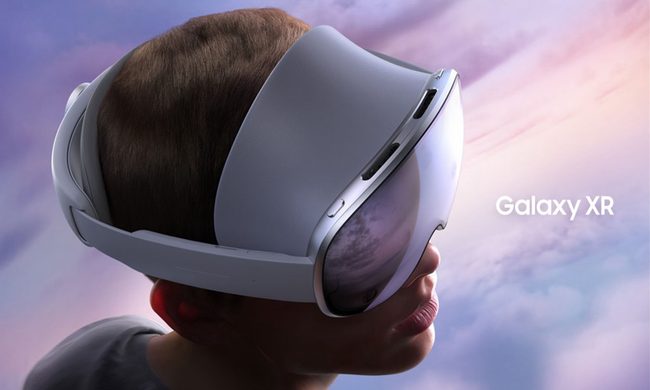
Galaxy XR

Samsung Display is using AWE 2026 to push RGB OLEDoS as a core building block for the next wave of XR hardware. The showcase centers on displays designed for mixed reality headsets and augmented reality smart glasses, where brightness, size, and efficiency all collide.

The standout spec is a 1.3-inch RGB OLEDoS panel rated at 40,000 nits. Samsung Display is presenting it in a dark-room Big Dipper installation, where only two of seven panels use the ultra-bright tech to make the brightness and color gap obvious. It’s a booth demo with a sharper message underneath.

Read more
Got a smartwatch? You can now join a study measuring how the football world cup is affecting your heart
Your World Cup heartbreak might be valuable smartwatch data now
Heart rate on the Apple Watch Series 7.

Watching the World Cup can be an intense (and fun) affair that makes your heart race. And now, your smartwatch could be ready to track just how worked up you got over your favorite team winning or losing. Researchers at Bielefeld University are inviting football fans to join the World Cup Fever Study, a project that uses smartwatch and fitness tracker data to measure how fans physically respond to matches during the 2026 FIFA World Cup.

The study is looking at heart rate, stress levels, movement, and sleep to understand how football events like goals, wins, losses, and tense moments show up in the body.

Read more
Beats Studio Buds get a critical fix for a creepy microphone flaw
The security update addresses a Bluetooth issue involving the earbuds’ microphone before pairing is complete.
Beats Studio Buds+ in Transparent case closed in garden pillar

Apple's Beats Studio Buds security update fixes a Bluetooth microphone flaw with an unsettling setup-stage risk. Firmware 1B211 patches a vulnerability affecting Beats Studio Buds that haven't been paired yet and are still looking for connection requests.

Apple says an attacker within Bluetooth range could potentially listen through the microphone under those pre-pairing conditions. That detail makes the update harder to ignore, even though it doesn't add any visible features.

Read more