Guru Somadder, the Engineering Lead on Google Stadia, came to his deep-dive session at Google I/O armed with a fact. “One out of every four bytes on the internet today is from a Google service or travels Google’s network,” he told the crowd. Then he dropped the mic, threw on some shades, and left the stage.
Ok. That’s not what really happened. He followed that quote by leaping into more detail about Google’s infrastructure. But I’m not sure he had to say anything more, because he’d already made his point clear. No one beats Google on network stability. Period.
You can bet game developers are paying attention.
We handled Apex Legends. We can handle your game.
‘Reliable infrastructure’ may seem a dull talking point, but the lack of it is a surefire way to stoke Twitter rants and YouTube scream fests. Recent examples include Bioware’s Anthem, Bethesda’s Fallout 76, and Grapeshot Games’ Atlas. All three launched with white-hot hype that sent servers into meltdown. Players couldn’t connect. Players raged. And then players moved on to the next big thing.
It’s a common story, but not inevitable. Google went to I/O ready to talk about two recent success stories that demonstrate its stability; The Division 2 and Apex Legends. The second in this pair handled over two million concurrent players in its first weekend, but you wouldn’t know the strain from playing it. Most players could connect without noticeable lag from day one.
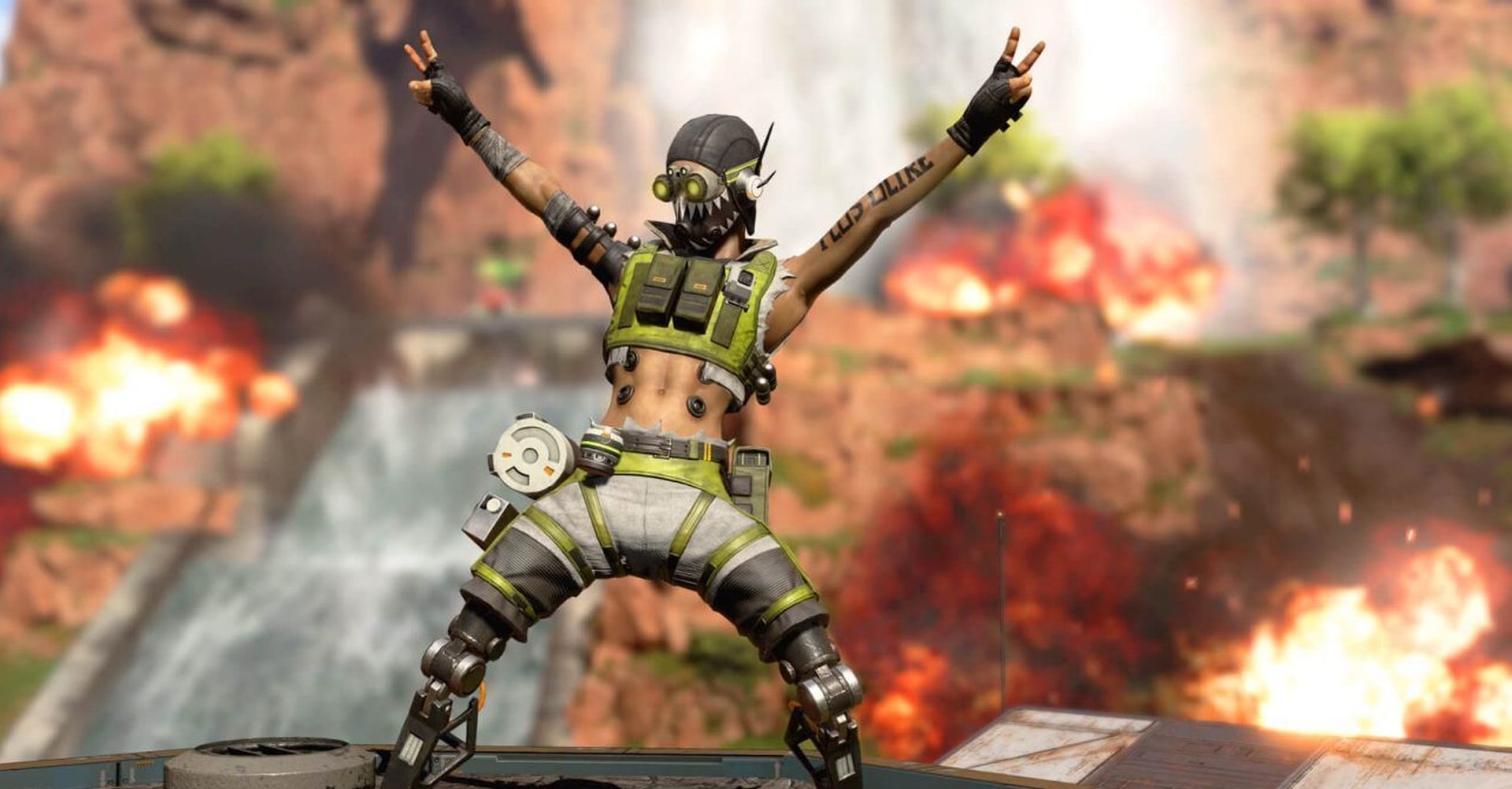
Both games are backed by Google’s infrastructure. Apex Legends uses a service owned by Unity called Multiplay, which itself relies heavily on Google Cloud. A retrospective blog says Multiplay was “spinning up 3,000 vCPU a minute on Google Cloud for Apex Legends.” Amazon’s AWS service was also used for support. The Division 2 connected with Google directly and relied entirely on Google Cloud for its infrastructure.
Game developers and publishers need big, stable wins to back their increasingly ambitious games. The failure of a game like Anthem, which spent years in development only to stumble at the gate, is a problem. Both the people making games, and the fans eager for the next title in their favorite franchise, want the next big game will live up to the hype.
Gaming demands consistency. That’s exactly what Google promises to deliver.
Stadia at scale
Apex: Legends and The Division 2 may rely on Google Cloud, but they have nothing to do with Stadia. Google’s new cloud gaming platform is a different breed, and it’s extending Cloud’s promise of stability to entirely new realms.
Consider the potential ease of development. As Google has eagerly pointed out, modern game development is a complex multi-platform mess. Better tools for making multi-platform games have been met with increased demand for games on all platforms. Rewind the clock 20 years, and you’d find most game developers targeting just one console (or the PC). Ten years ago, most were targeting the Xbox and PlayStation. Today, developers target some combination of Xbox and PlayStation, Switch, PC, iOS, and Android.
Stadia promises to throw away those complications. Testing on different platforms? Forget that. Stadia is the same everywhere. A game that’s bug-free in Stadia’s development environment will be bug-free when a player loads it, guaranteed. There’s no variation in hardware or operating system to worry about. Every instance of Stadia is the same.
One particularly awesome moment of the Google I/O Stadia deep-dive showed the platform’s Playability Toolkit. Khaled Abdel Rahman, Product Manager on Stadia, demoed the toolkit to developers by showing how it can emulate network environments or quickly capture the entire video pipeline from a stream to pinpoint a playability issue. It was a brief but impressive look into how Stadia could simplify the grueling process of game QA.
Stadia needs games. Players won’t care unless it can offer access to what they want to play, and right now, Google doesn’t have any major announcements. Google hasn’t listed a single exclusive or even major cross-platform title that’s guaranteed to arrive at launch. Hell, Google hasn’t even provided a launch date.
But these early efforts show that Google at least understands its problem. Promising stability is its answer. And that – fortunately for Stadia — is what game developers need most right now.