Concern is growing as cases of COVID-19, better known as the coronavirus, continue to show up in countries around the world. The virus has so far killed more than 4,000 people, many of them in China, and infected more than 100,000 people worldwide. On March 11, the World Health Organization officially categorized the outbreak as a pandemic.
During such times, false information — whether posted by accident or with ill intent — can take hold very quickly via social media and other means, creating confusion for those looking for reliable data. Aiming to provide accurate information on the spread of the coronavirus, the Maryland-based Center for Systems Science and Engineering (CSSE) at Johns Hopkins University has created an online tool that brings together data from several official bodies, including the WHO and the Centers for Disease Control and Protection (CDC).
The dashboard displays the number of confirmed and suspected cases of the coronavirus, as well as the number of deaths and those who have recovered. A world map marks the locations of the outbreaks.
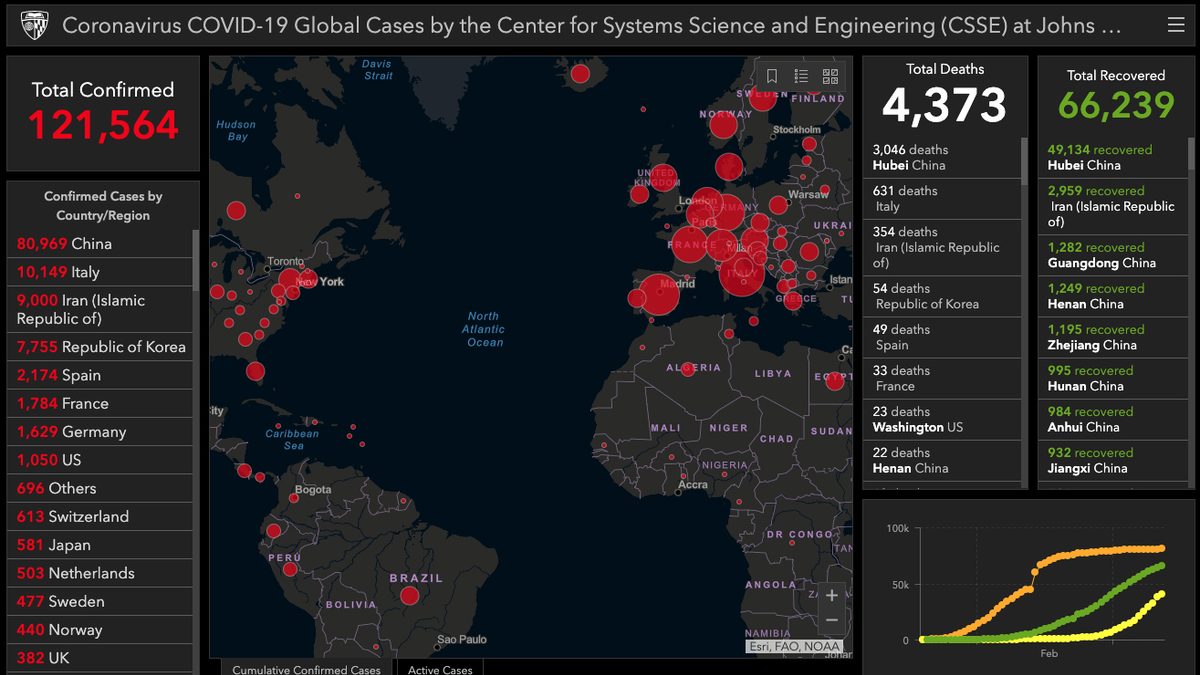
“The dashboard is intended to provide the public with an understanding of the outbreak situation as it unfolds, with transparent data sources,” the CSSE said in a message posted on its website. Of course, the true number of cases is impossible to know, but the dashboard at least offers reliable data for reported cases and can indicate trends and hot spots for the coronavirus.
Fear that the virus may be harder to contain than first thought emerged after China’s National Health Commission Minister Ma Xiaowei said that it was possible for someone to transmit the coronavirus during the incubation period, which can last up to 14 days.
Xiaowei also revealed that around 5 million people left Wuhan — the Chinese city where the outbreak was first detected — before the city was locked down by the government. The WHO was first informed of the outbreak on December 31, 2019, when the Chinese authorities described it as “pneumonia of unknown cause.” Since then, the country and the world have been roiled by fears.
Widespread panic over the outbreak has dealt a huge blow to manufacturing in China, where much of the world’s electronics components are produced, and has caused stocks to tumble. An expert on international supply chains told Digital Trends the situation is “horrendous … the worst I’ve ever seen — and we’re only seeing the beginning.” He warned that electronics products will likely be in short supply in the coming months. The outbreak has also shuttered many major events, including Mobile World Congress, SXSW, and E3.
The U.S. has so far reported 938 cases of the coronavirus. The latest risk assessment posted by the CDC states that, “For the majority of people, the immediate risk of being exposed to the virus that causes COVID-19 is thought to be low. There is not widespread circulation in most communities in the United States,” adding that “People in places where ongoing community spread of the virus that causes COVID-19 has been reported are at elevated risk of exposure, with increase in risk dependent on the location.”