1. Home
  2. Emerging Tech
  3. News

Stanford scientists built an AI that can design healthier, greener burgers

The new system balances nutrition, taste, cost, and environmental impact to create better recipes.

Add as a preferred source on Google
Burger, Food, Food Presentation - Man picking a burger
Fernando Martinez / Pexels

Artificial intelligence has already helped write code, discover drugs, and generate videos. Now, it’s trying to make a better burger. Researchers at Stanford University have unveiled BurgerAI, a new AI system that designs burger recipes by balancing taste, nutrition, sustainability, and cost. The surprising part? In blind taste tests, diners liked some of the AI-created burgers just as much as, and in some cases more than, a popular fast-food burger.

BurgerAI is designed to invent recipes, not copy them

According to Stanford, BurgerAI was trained using more than 2,200 burger recipes to understand how different ingredients interact. Rather than predicting which existing burger someone might like, the model generates entirely new recipes based on factors such as age, nutritional needs, personal taste, and even sustainability goals.

Recommended Videos

The researchers say there are an estimated 1043 possible burger combinations, making it an ideal challenge for AI-driven design.

To see whether the AI actually worked, the team prepared five BurgerAI recipes and served them to more than 100 diners in a blinded taste test. Two of the AI-designed burgers matched or outperformed a popular fast-food burger in overall liking, flavor, and texture. Even more impressively, one sustainable mushroom-based recipe delivered a significantly lower environmental footprint without sacrificing consumer acceptance.

Lead researcher Ellen Kuhl says that’s exactly the point. Instead of asking, “What burger is most likely?” BurgerAI asks, “What burger best satisfies these competing objectives?” In other words, the AI isn’t simply predicting outcomes. It’s inventing entirely new ones.

Interestingly, this isn’t really about burgers

The funny thing is that BurgerAI isn’t meant to revolutionize fast food. The burger simply serves as a proof of concept. The researchers believe the same AI framework could eventually help design everything from new medicines and biomaterials to sustainable manufacturing processes, where engineers must constantly balance competing goals rather than optimize for just one outcome.

That’s what makes this research so interesting. Most generative AI models today focus on creating content that resembles what already exists. BurgerAI takes a different approach by generating solutions that have never existed before and then validating them in the real world. However, the burger is just the beginning. If AI can successfully navigate trade-offs between taste, health, cost, and sustainability, it may eventually help solve far more consequential engineering problems than what’s on the dinner menu.

Varun Mirchandani
Varun is an experienced technology journalist and editor with over eight years in consumer tech media. His work spans…
Everything is not okay with DuckDuckGo and its AI
A coordinated Reddit campaign appears to have tricked multiple AI search assistants into spreading false information.
The DuckDuckGo logo.

DuckDuckGo has built its reputation on privacy-first search, but this week, its AI assistant landed in hot water for an entirely different reason. Apparently, Duck.ai confidently claimed that U.S. President Donald Trump had died of rabies earlier this month, complete with fabricated details about Vice President JD Vance, Robert F. Kennedy Jr., and fake supporting news reports. None of it was true.

A fake Reddit campaign managed to fool Duck's AI

Read more
OpenAI reveals its most advanced GPT-5.6 model, but you can’t access it yet
GPT-5.6 brings new reasoning, autonomy, and cybersecurity capabilities, but its rollout is currently limited to government-approved customers.
OpenAI ChatGPT 5.6 Sol Terra Luna Announced

OpenAI has officially taken the wraps off GPT-5.6, its most advanced family of AI models to date. There's just one catch: unless you're one of a handful of approved customers, you won't be able to try it anytime soon. Instead of a broad launch, the company is beginning with a tightly controlled preview while it works through a new U.S. government review process.

GPT-5.6 is here, but only a few people can use it

Read more
Bacteria could be the secret sauce to keeping your computers cool
Scientists find bacteria can grow thermal materials that outperform current cooling tech.
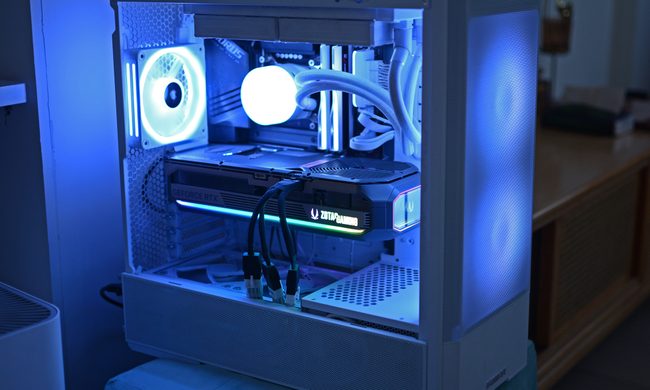
The Zotac RTX 5070 Ti Amp Extreme Infinity plugged into a white gaming PC

Your PC and laptop runs hotter every year, especially now that AI tools and heavy software push it harder than ever. Heat is a real bottleneck for performance, which is why people have gone to wild lengths to solve it, like strapping an actual ice machine to an RTX GPU. A new study points to a far less extreme fix for this problem, and it involves bacteria (via TechXplore).

Researchers have developed a new way to grow thermal interface materials, the substances that sit between a chip and its cooling system to help heat escape faster. The process involves feeding bacteria sugar and metal ions, letting the microbes build the material naturally instead of relying on traditional chemical manufacturing.

Read more