
Apple has taken the plunge. It’s officially beginning the transition away from using Intel processors in Macs. By the end of 2020, the first Mac with Apple Silicon will be shipped, with the rest of the line transitioning over the next two years.
Whether it’s a new MacBook Pro or iMac, should you wait to buy one of these newfangled Apple computers over the current Intel options?
The risk of early adoption

It’s usually a good idea to avoid buying first-generation products. They tend to be experimental, rife with reliability problems, and more limited in scope than its predecessors. That’s why buying something like the first Samsung Galaxy Fold isn’t smart. Let the early adopters weed out the potential issues and buy the next generation.
That conventional wisdom could certainly be applied to these new Apple Silicon-based Macs. There are plenty of issues that could arise, even from the limited information we have at the moment.
The first problem is the designs themselves. We don’t know much about what designs these first Apple Silicon Macs will be. We know a mini-LED, 14-inch MacBook Pro is in the works, as is a redesigned iMac — and rumors say these could be the first Macs we see. These are exciting products in themselves, and Apple says the transition to ARM will allow for fresh, new designs.
Mac fans are likely wary of such new designs. While iterations on the iPhone or iPad design have been well-received, the same can’t be said about the Mac in recent years.
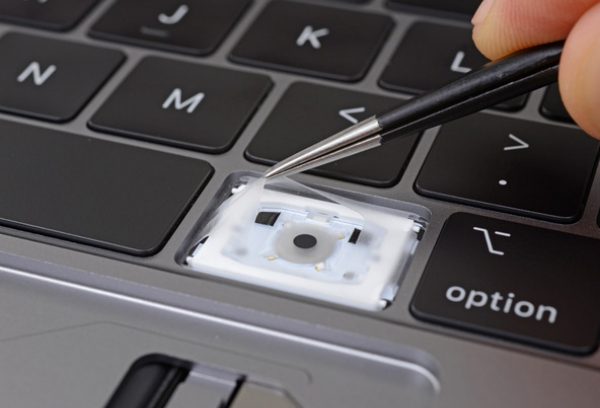
The butterfly keyboard is a good example. Apple decided its users wanted a more stable keyboard key, so completely redesigned its laptop keyboards to meet this objective. The result, though, was an unreliable key mechanism that Apple never fixed. If you dived straight in and bought a Mac equipped with a first-generation butterfly keyboard, you would have been in for an unpleasant shock. Ultimately, Apple had to abandon the butterfly keyboard altogether.
The 12-inch MacBook is yet another example. Impossibly thin and light, this device was meant to represent the future of Apple’s MacBook development. But its lack of ports and disappointing performance led to it being one of the lowest-selling Apple products of all time.
Of course, there’s no guarantee these first Apple Silicon Macs will come with a radical new design. The software concern is the bigger concern.
Software stumbling blocks
Will your favorite app be ready when the first ARM Mac launches? Will you be forced to make do with an alternative? Will you have to repurchase software?
Even if your favorite app does work on the first ARM Mac, will it do so without sacrifices? When Apple announced MacOS High Sierra in 2017, it tellingly declared it would be the last Mac operating system to support 32-bit apps “without compromise.” Apple tends to draw lines in the sand, and that can cause compatibility problems.
Heading into the announcement at WWDC, there was plenty of reason to be dubious about this transition. Microsoft’s multiple failed attempts have left me skeptical about the success of such a transition. Apple’s harsh divide between MacOS and iPadOS also left many curious how they bridge the app gap between the two platforms.
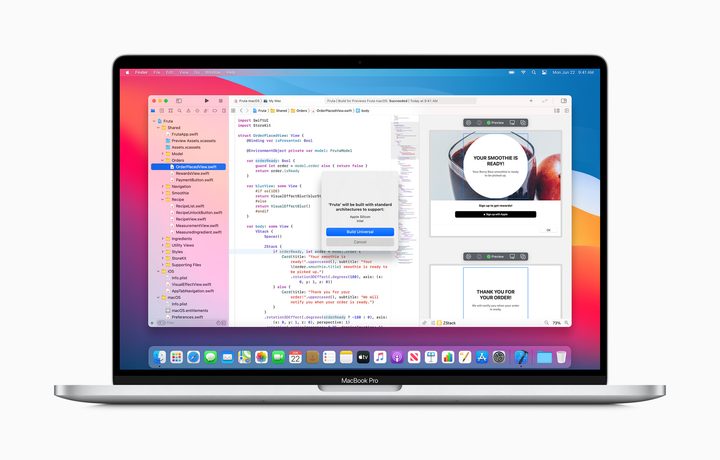
Fortunately, what Apple announced was a comprehensive plan to make sure every application imaginable will function in these new Macs. Apple hopes most developers will choose to transition their applications to run natively on ARM using the tools available in a new version of Xcode. Apple says key developers like Microsoft and Adobe will have its software ready to go on day one. That’s great news for early adopters.
For apps that don’t transition, the company introduced a new version of Rosetta to “translate” these apps to run smoothly on ARM. Apple took a similar approach 15 years ago when it moved from PowerPC to Intel.
There are even software advantages to buying one of these new Macs. According to Apple, iPhone and iPad apps will run directly on them, and will even be automatically published to the Mac App Store. That’s a wealth of new apps that’ll run natively right on these new Macs.
Buying Intel is still safe

Despite Apple’s careful patience, there is no guarantee its first attempt will turn out to be a success. There are bound to be hiccups on day one. With software, in particular, it’s almost inevitable. If your daily work depends on the performance and functionality of intensive applications, it’s definitely smart to wait and see how they play out.
Furthermore, buying an Intel-powered machine now puts you at no significant disadvantage. Apple even says it still has Intel Macs in its roadmap. That means it’ll be a long time before support runs out for them.
Performance remains the primary question mark. The iPad Pro is extremely fast, but we don’t know how well that will carry over to the Mac. Apple seems confident in the performance of these new Macs, and its WWDC demos did seem impressive. That is further backed up by a recent report from Bloomberg’s Mark Gurman, who alleges that internal testing at Apple has shown its ARM-based Mac chips outperforming Intel equivalents, especially in the areas of graphics and artificial intelligence. They are also said to be much more energy-efficient.
Apple isn’t in a rush, and it never has been.
But Apple still has a lot to prove, especially when competing with the higher-end MacBook Pro or iMac models. If it ever wants to eventually replace the iMac Pro or Mac Pro, it has a long road ahead.
The good news? Apple isn’t in a rush, and it never has been. It takes a slower approach to releasing new products. It doesn’t often try to be first to market with a new piece of technology. Instead, it tries to release a more mature product than its competitors. That was true of the iPod, the iPad, and even the Apple Watch.
That patient approach, along with Apple’s well-executed transition plan, gives us confidence that the first-generation ARM Mac won’t be a bust. In the long run, we’ll all be using them.
But Apple is playing the long game with its Mac platform, so if you need a new Mac now, don’t punish yourself by waiting. Unless running iPhone apps on your Mac is a must-have feature, you won’t regret buying a new Intel-powered machine right now.


