
For the first time since the inception of gaming, digital game sales are starting to overtake physical sales. The gaming industry is soaring in 2020, and a lot of the revenue stimulating the industry comes from digital game sales. Buying digital games is convenient and often cheaper, but it comes with one big caveat: DRM. But, what is DRM in video games? And more importantly, how does it work?
In this guide, we’re going to cover everything you need to know about DRM in video games. In addition to giving you a rundown, we’ll also cover some of the risks and benefits of using a DRM platform, as well as the pros and cons of buying DRM-free games. Before getting to that, though, let’s start with a definition.
What is DRM, and how does it work in video games?

DRM stands for digital rights management. Whenever you purchase some form of digital media, you usually aren’t actually buying the content. Rather, you’re buying a license to consume that content on a specific platform. For example, Steam is a DRM platform. Whenever you buy a game on Steam, a license to download and play that game is added to your account, and you can take advantage of that license whenever you want. Consoles are no different. The PlayStation Store and Microsoft Store (formerly Xbox Marketplace) are DRM platforms.
Although there are DRM-free games — we’ll showcase a few marketplaces with such games below — the vast majority of digital games have DRM in one form or another. The DRM doesn’t impact the game in any way. It’s simply there to validate that you have a license for whatever game you purchased and want to play.
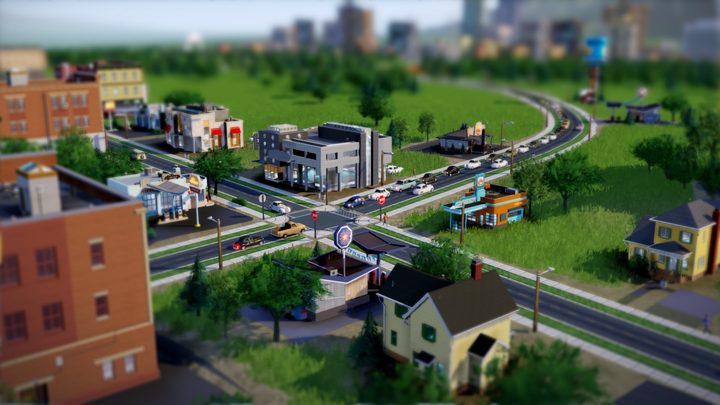
Publishers use DRM to deal with piracy. When you launch a game, the DRM platform checks for a license associated with your account, and if it finds a match, it launches the game. If it doesn’t find a license, the game doesn’t launch. In extreme cases, DRM requires an active internet connection at all times. Thankfully, most publishers have backed off this tactic, especially after the disastrous launches of Diablo 3 and 2013’s Sim City.
Without a DRM platform, you’d simply have access to whatever game you wanted to play, no matter how you got access to it. If a publisher released a PC game without DRM, for example, buyers could take the executable that installs the game and share it online. However, if the publisher launches the game with a DRM platform, there’s no way for buyers to share the game online. Even if someone decided to upload all of the game files, the license check wouldn’t come back valid.
Although it’s easy to dismiss DRM as a restrictive anti-privacy measure, there are upsides. Steam trading cards, PlayStation trophies, and Xbox gamerscores all owe a lot to DRM. These features aren’t directly tied to managing your games or licenses, but they are afforded by restricting how games are distributed.
So, DRM in video games is simple: You buy the digital rights to a game, and the platform of your choice manages those rights and everything that comes along with them. Not all platforms are built to last forever, though, and that can cause some issues.
Risks of DRM for games
Delisted Games is an archive of all games that have been delisted from digital marketplaces over the years. As of late 2020, there are currently 1,097 in the catalogue, ranging from the PlayStation 2 to the Nintendo Switch. When a game is delisted from a digital marketplace, you can no longer buy that game from the marketplace in question. However, if you already own a license, you can usually continue to download and play that game (barring any network-related restrictions).
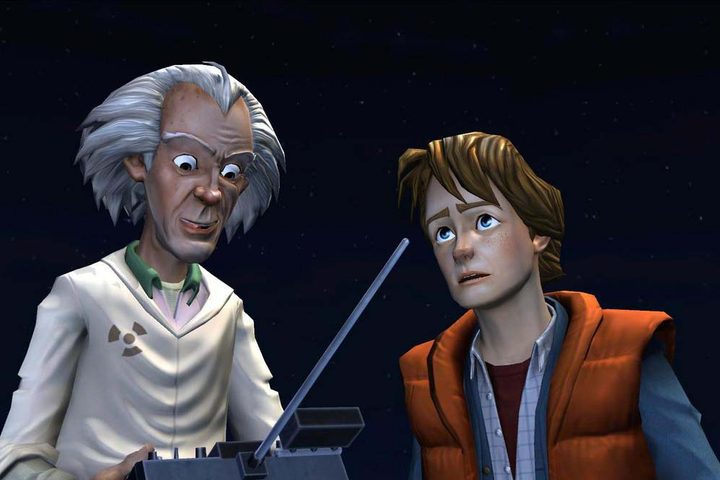
Delisting can be damaging, though, particularly for digital-only games and games with limited physical releases. Transformers Devastation, for example, is a title from Platinum Games (Nier: Automata, Astral Chain) that was delisted a few years ago. Although you can find physical copies on Xbox One and PS4, there’s no way to buy and play the game on PC anymore. Another notorious example is Telltale’s Back to the Future. Technically, there are physical copies available. However, they’re only available secondhand, and they sell for around $60, even on consoles like the PlayStation 3 and Wii.
Availability is an issue, but accessibility is a larger one. The main fear with DRM platforms is that they’ll simply shut down. If, for example, Steam fizzled out or Microsoft decided to leave the console race, all of your digital games would be gone. We’ve seen that happen with other digital goods before.
The Microsoft Store and Steam both generate billions in revenue, though, so they’re unlikely to shut down. Given the scale of major DRM platforms, none of them are likely to disappear. That doesn’t, however, protect from acquisitions and mergers.
This is particularly an issue for new digital marketplaces entering the ring. Although Steam probably won’t shut down, newer platforms like the Epic Games Store may. The issue is also present with cloud gaming. Stadia, in particular, is risky with Google’s history of killing services. Amazon’s upcoming Luna service could face similar issues if the Crucible launch is anything to go by.
Going DRM-free: Should you do it?
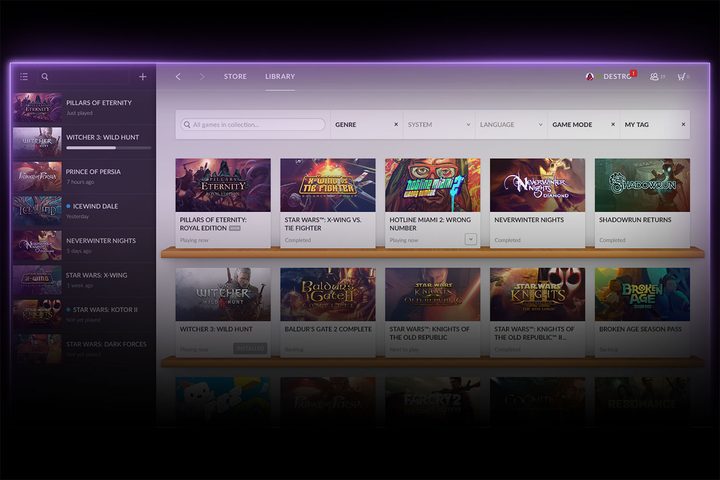
If you’re a PC gamer, you can buy most of your games DRM-free. GOG — a subsidiary of CD Projekt — is the poster child for DRM-free games, but there are other similar marketplaces. Itch.io is a haven for indie games, all of which are DRM-free, and Steam even has DRM-free games. For example, games from Paradox Interactive (Europa Universalis IV, Stellaris) work without the Steam client itself.
The best place to shop for DRM-free games, though, is Humble Bundle. Although Humble mostly sells Steam keys, some games come with a DRM-free version, too. Shovel Knight: Treasure Trove, for example, comes with a Steam key and a DRM-free version, so you can still use Steam while keeping a backup copy handy.
GOG still reigns supreme if you want a fully DRM-free library, however. GOG Galaxy offers all of the benefits of other platforms — including cloud saves and achievements on certain games — while keeping the games in your library DRM-free. GOG certainly has the most diverse library of games out of any of the DRM-free marketplaces, and it maintains a dedication to retro games, updating them to run on modern systems.
There aren’t any DRM-free options for consoles. Console gamers can always buy physical copies of games, though. Even if a digital marketplace shuts down, you will always be able to put a disc into your console (as of the launch of PS5 and Xbox Series X, at least). That said, DRM on consoles comes from the console itself. Theoretically, that means the platform holder could revoke your access to a game even if you have a physical copy. Without attempting to hack the game files, there’s no way around that on consoles.
It’s hard to avoid DRM entirely. On PC, most major AAA releases have DRM while DRM-free marketplaces mostly deal with indie titles (Itch.io deals exclusively with indie titles, even). GOG continues to add AAA titles to its library, and some big publishers don’t require DRM through Steam. However, you’ll still probably need to deal with DRM at some point if you want to play the latest games.


