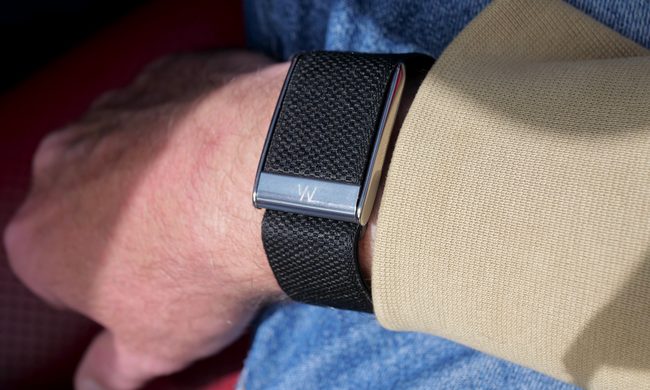
Myzone has launched the MZ-Switch, a versatile heart rate sensor that can be used in three different ways, depending on what exercise you’re doing, to return the most accurate heart rate data available. It’s designed to be worn most of the time, just like a regular fitness tracker, but instead of providing goals based on steps, you collect Myzone Effort Points (MEP) which are awarded for exercise and general physical activity.

Sounds like a spin on most other fitness products, right? There are some key differences that make the MZ-Switch special. Most interestingly, the small tracker takes your heart rate using either photoplethysmography (PPG) technology, like that fitted to the Apple Watch and other wearables, or with a far more accurate electrocardiogram (ECG), often used during intensive exercise by dedicated athletes, all depending on where it’s placed on your body.
The MZ-Switch gets its name from its versatility. Wear it on the wrist strap to track normal movement and exercises which involve repetitive arm movements, like running or swimming, and your heart rate will be taken by the PPG sensor. This is also used when you move the sensor onto the forearm strap for exercises like weight lifting or rowing. Clip it to the chest strap and it automatically switches over to ECG mode, ready for far more intensive exercise where getting a highly accurate heart rate reading is most important.

This combination makes the Myzone MZ-Switch unique. It has the convenience of a wrist-worn tracker with the generally acceptable PPG readings, combined with a more hardcore, chest-worn ECG sensor, all in the same product. It’s ideal for those just getting started with a dedicated exercise regime, who may want more accurate results from the heart rate tracker as they progress, or for those who are already regular exercisers who want greater insight without sacrificing accuracy.
This is where the MEPs come in, as they’re Myzone’s way of motivating you. The more effort you put in, the more points you are awarded, all of which count towards your goals. Due to the MZ-Switch’s flexibility, you’ll earn them for pretty much any activity, but you’ll get more when you activate the exercise tracking. Myzone’s platform is often found in gyms and is used by many companies to help encourage an active lifestyle, but can be used personally too. There are competition elements included, so you can challenge and take on friends and family.

The small MZ-Switch sensor has a battery that should last up to six months on a single charge, depending on how it is used. If you use it on your wrist with the PPG sensor, this will drop to about 35 hours, so not much more than you get from a normal smartwatch. It stores 36 hours of data in its own memory, and will automatically sync with your phone, or the system at your gym. It also connects with various fitness platforms including Strava, MapMyRun, and Apple Health. If it’s worn with another wearable, like the Apple Watch or Wear OS smartwatch, a live view of your stats can be shown on the screen.
The Myzone MZ-Switch will cost $160, or 140 British pounds, and will be released on March 24. It comes with all the strap options for your wrist, arm, and chest, plus a storage pouch to keep it all safe.