
After more than a year of bad news, AMD CEO Lisa Su finally has some good news about the chip shortage. Speaking with CNBC, the semiconductor executive said the the chip shortage will improve throughout the second half of 2022, though she warned that supply will remain tight until then.
Although we’ve mainly focused on the GPU shortage, the implications of the chip shortage reach much further. As Su noted in her interview at the Code Conference tech event, the semiconductor industry has always experienced peaks and valleys in balancing supply and demand. “This time, it’s different,” she noted.
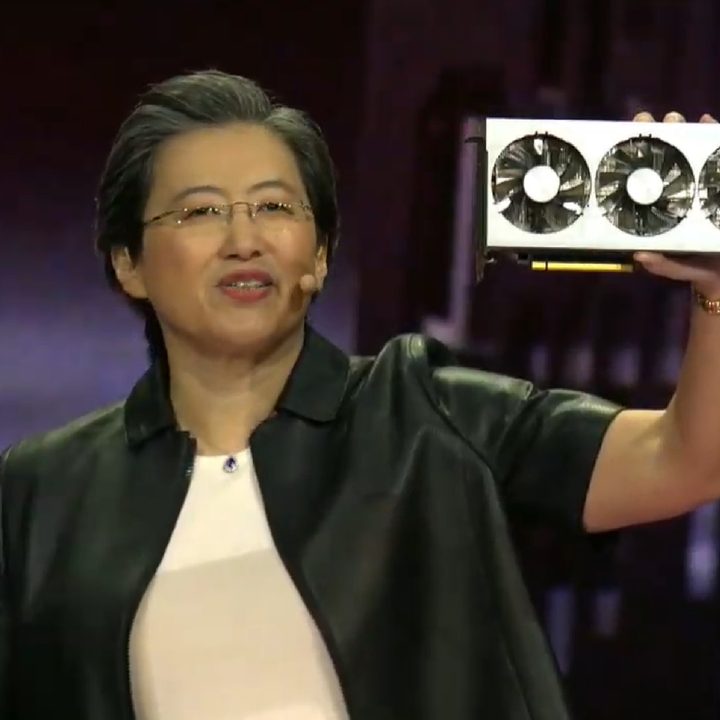
It’s different for a number of reasons, but they boil down to the turmoil spurred on by the COVID-19 pandemic. The PC market grew massively at the onset of the pandemic in response to an exodus of workers from the office into the home. An ongoing trade war with China pushed business to chipmakers outside the region, too, piling on orders at factories that were already at their limit.
This is the main reason for the chip shortage — too much demand and not enough supply (or capacity to create it). It’s not the only reason for graphics card shortages, however. Cryptocurrency miners have also played a role, as the prices of coins like Ethereum have skyrocketed, making the hefty investment in a GPU (or multiple GPUs) worth it.
At the conference, Su finally acknowledged the role cryptocurrency miners have played in the shortage. “We are trying really hard to get more products to gamers; I get so many ‘Dear Lisa, can you help me get a gaming card?’ At the end of the day, we’re building for sort of consumer applications, and that’s where the focus is,” Su said, according to reporting from The Verge.
“The pandemic has just taken demand to a new level,” Su said.
Although it’s an acknowledgement, it’s far from a solution. Nvidia implemented Lite Hash Rate cores on its RTX 30-series graphics cards to limit the demand from crypto miners, but Su’s response is AMD’s first comment on the matter. She said that cryptocurrency sales are a small part of AMD’s business and that gamers are still the core audience, according to a report from Barron’s.
Jon Peddie Research notes something different. In a report published in June, the research outfit noted that around 25% of all GPU sales in the first part of 2021 went to crypto miners. That includes sales from AMD and rival Nvidia.
The good news is that an end to the chip shortage is in sight. The bad news is that it’s about a year away. “The pandemic has just taken demand to a new level,” Su said. Although semiconductor companies are working to improve the situation, Su notes that most of these deals take a while to materialize.
“It might take, you know, 18 to 24 months to put on a new plant, and in some cases even longer than that,” Su said, noting that many investments started about a year ago. New deals are happening, too, mainly on the back of the U.S. CHIPS for America Act. This act, passed by the Senate on June 8, 2021, includes $52 billion in investments for design, research, and manufacturing in the semiconductor industry.
AMD, along with Intel and several other semiconductor companies, have jumped on the new proposal. Still, it takes time for that money to start working. Intel announced plans to invest $20 billion in a new factory in Arizona in March, but the company only started the expansion this week.
The chip shortage has ravaged prices for cars, appliances, graphics cards, and everything in between. An end is in sight, but the impacts are still being felt today.


