  1. Home
  2. Wearables
  3. Android
  4. Mobile
  5. News

The Moto Watch 100 might skip out on Google’s Wear OS entirely for a custom OS

Add as a preferred source on Google

A new Motorola-branded smartwatch, the Moto Watch 100, has been in the works for months now, with the chip shortage being a major factor in its delay. Now, the wearable is on the cusp of launch — and a new leak from Evan Blass (@evleaks on Twitter) says it may not be running Google’s Wear OS as expected.

The Moto Watch 100 is a cheap Motorola-branded watch by CE Brands that’s had some of its specifications leak earlier. As far as hardware goes, it will be quite standard, should the rumors pan out. It’ll be a light watch at 29 grams, with a 355mAh battery and support for Bluetooth 5.0. All the old familiar sensors, from accelerometers to gyroscopes, are there, and it’ll be a fitness-focused watch. What is interesting about this watch is the alleged choice of operating system. Rather than adopting Google’s Wear OS as expected, the Motorola Watch 100 will, according to Blass, run an all-new Moto Watch OS.
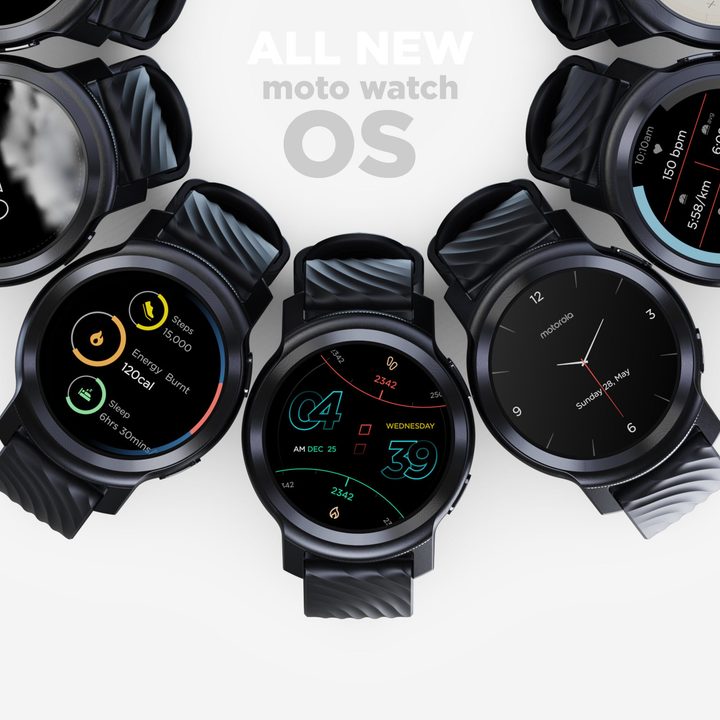
The Motorola Watch 100.
Evan Blass

The Motorola smartwatch brand owner is not the only smartwatch maker to roll out its own operating system. Another prominent Android phone maker, OnePlus, has done so recently with the OnePlus Watch and its real-time operating system (RTOS). The main disadvantage with this approach is that there is a lack of third-party app support compared to more mainstream smartwatches. When one considers how smartwatches end up being used in practice, it may not be such a huge loss if the basic fitness-tracking features sync up with your smartphone.

Recommended Videos

It may be all the same to your average person, but this poses a challenge for Google despite Samsung recently returning to the fold. Smartphone makers are used to making Android phones simply because they have no real choice. With Wear OS-powered watches being massively outsold by the Apple Watch (and Google’s own lackadaisical treatment of the platform), watchmakers may try to break away from Google.

Even with Google’s Wear OS 3 being by all accounts an excellent revamp, the smartwatch market might still end up fragmented between different unrelated operating systems for the foreseeable future.

Michael Allison
Former Mobile News Writer
A UK-based tech journalist for Digital Trends, helping keep track and make sense of the fast-paced world of tech with a…
Meta’s Ray-Ban Display now types messages from your finger movements
Neural Handwriting is a really cool feature, but Meta opening the Ray-Ban Display to developers is the quiet announcement that turns a clever wearable into a platform with immense possibilities.
Meta Ray-Ban Display and EMG Band.

Six months into its life, the Meta Ray-Ban Display is starting to look less like an experiment, thanks to what is arguably the most significant update Meta has ever pushed for the device. 

The headline feature is Neural Handwriting, which is now available to every Ray-Ban Display owner, having spent its early months in limited access for Messenger and WhatsApp users. 

Read more
Forget smart glasses, these earbuds can see, hear, and remember everything for you
Electronics, Headphones

Smart glasses have always felt a little awkward to me. Sure, they can play music, take calls, snap photos, and even throw notifications in front of your eyes, but at the end of the day, they’re still just tiny screens sitting on your face. Now imagine removing the screen entirely.

That’s exactly what this new pair of AI-powered earbuds is trying to do. Instead of showing you information, these earbuds are designed to quietly hear, see, remember, and respond to the world around you. And honestly, this might be one of the more interesting directions wearable AI has taken so far.

Read more
Meta will allow third-party apps for Ray-Ban Display glasses. Your eyes must stay glued to digital reality.
Meta just handed developers the keys to the glasses display, and the possibilities are endless.
Meta Ray Bans Display close up shot

Meta announced its Meta Ray-Ban Display glasses with a built-in in-lens display that allows users to see what the smart glasses capture, see and respond to messages, and interact with its Meta AI.

While the built-in apps and features were good, the only way to unleash the potential was to allow third-party developers to build apps. And today, Meta is finally opening up the display on its Ray-Ban smart glasses to developers.

Read more