  1. Home
  2. Computing
  3. Emerging Tech
  4. Legacy Archives

David Braben develops $25 PC for schoolchildren

Add as a preferred source on Google

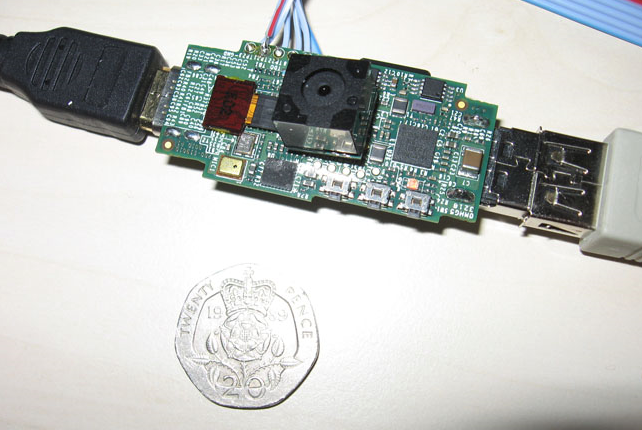
raspberry-piDavid Braben, British game developer and co-founder of Frontier Developments, has created an ultra-low cost computer the size of a USB stick called Raspberry Pi. The expected price would be a measly $25 for a fully-configured system. He says he’s developed the PC in order to encourage the pursuit of computer programming in children.

But what can you expect from a system that comes for less than the cost of a video game? The tiny PC sports an HDMI port at its head and a USB port at its tail, giving it the ability to be plugged into a TV, hooked up to a USB keyboard or combined with a touch screen for a low cost tablet. The computer packs a 700MHz ARM11 processor with 128MB of SDRAM. As far as graphics go, it runs OpenGL ES 2.0 and has 1080p output.

Recommended Videos

At the stage the prototype is in now, developers seem to be favoring the Linux based Ubuntu OS for Raspberry Pi’s initial equipment; which means OpenOffice, Firefox, GIMP for image editing etc., all ready for a user to play around with.

Braben feels that the way schools teach children about computers leaves them uninspired, that too much gets in the way of their enthusiasm; today’s computer classes only prepare kids to navigate office jobs. He says these low cost PC will allow children to do typical things such as go on Facebook or tweet, but it will also give them the freedom to become creators of products they typically consume.

A BBC article says that there’s a lot of work needed for the Raspberry Pi and compares David Braben’s project to the One Laptop Per Child idea, which attempted to distribute $100 laptops to developing world children. The laptop program has had problems delivering on the prices it advertised to governments.

Braben believes he’ll be putting out the little computers within a year. The distributing will be done by the Raspberry Pi Foundation, a new charitable organization.

Jeff Hughes
Former Digital Trends Contributor
I'm a SF Bay Area-based writer/ninja that loves anything geek, tech, comic, social media or gaming-related.
Open-source GIMP reskin gives it a familiar Photoshop look without the hefty fee
This open-source Photoshop lookalike starts with good old GIMP
PhotoGIMP announced to make GIMP feel like Photoshop

Switching from Photoshop to GIMP might feel like a big move. Everything is suddenly in the wrong place, and the UI could feel alien. This is exactly where PhotoGIMP comes in. PhotoGIMP is a free, community-driven patch for GIMP 3.0 and newer that reshapes the open-source image editor into something much more familiar for Photoshop users.

It doesn’t turn GIMP into Adobe Photoshop. The patch just shakes up the layout, shortcuts, and app identity to match Photoshop, so that new users don't feel lost on day one.

Read more
Google I/O 2026: What to expect from Gemini, Android 17, and more
Google is about to put AI into everything again
Google I/O 2026

Google is preparing to kick off its annual developer conference, Google I/O 2026, and this year’s event is shaping up to be heavily focused on artificial intelligence, Android 17, and the future of Google’s ecosystem. The conference begins on May 19 at the Shoreline Amphitheatre in Mountain View, California, with CEO Sundar Pichai expected to lead the keynote presentation. The event will be livestreamed globally through Google’s official I/O website and YouTube channels.

While Google I/O has traditionally focused on developers, this year’s announcements are expected to directly affect everyday users across Android phones, Search, Chrome, Workspace, and smart devices.

Read more
Microsoft is retiring the Together Mode in Teams in favor of something cleaner and simpler
Teams is retiring Together Mode for layouts people may actually use
Computer, Electronics, Laptop

Microsoft Teams is retiring one of its more recognizable meeting features, and it might be for the best. The company announced that Together Mode is going away in Teams as Microsoft is shooting towards a simpler set of meeting layouts.

To recall, Together Mode was introduced during the pandemic-era video call boom, placing participants inside shared virtual environments such as auditoriums or classrooms. It was a cute idea at the time, but it never became the everyday meeting view for most people.

Read more